How Hard Are Lawn Mower Blades? A Practical Guide for Homeowners
Discover blade hardness, how it affects cutting performance, edge retention, and maintenance. Learn material differences, sharpening tips, and safety steps for homeowners in 2026.


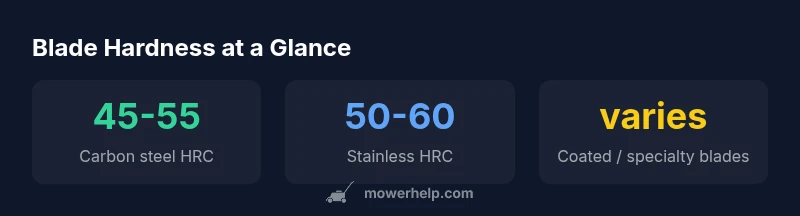
How hard are lawn mower blades? In most mowers, blade hardness falls in the 45-60 HRC range depending on material, heat treatment, and coating. Carbon steel blades typically run 45-55 HRC, while stainless options trend higher, around 50-60 HRC. Harder blades offer better edge retention but can be more brittle; softer blades sharpen more easily but dull faster. This balance influences cutting performance, fuel efficiency, and safety checks.
How hard are lawn mower blades? What it means for performance
Blade hardness is a material property defined by alloy composition and heat treatment, typically measured on the Rockwell C (HRC) scale. For homeowners, the practical impact is on edge retention, cutting quality, and safety. In common mower blades, carbon steel blades usually fall in the 45-55 HRC range, while stainless steel blades often sit around 50-60 HRC. These ranges are general; exact figures vary by manufacturer and batch. The Mower Help Team emphasizes that hardness is important, but blade geometry, tempering, and coating also shape performance. In 2026, repair guides converge on the idea that a blade's hardness should be considered alongside toughness (the ability to resist shattering) and sharpness retention. When you strike rocks or dirt, harder blades can resist dulling longer but are at greater risk of chipping if the steel is brittle. Softer blades edge quickly but can flex and recover from light impacts. In practice, homeowners should pair the right material with good sharpening discipline and regular inspection.
How blade hardness is measured in practice
Hardness is typically quantified in a lab using standardized tests (Rockwell C for most mower blades). Homeowners rarely measure hardness directly. Instead, you infer performance from edge retention, burr formation, and resistance to dulling. Real-world factors—blade geometry, coating quality, heat treatment, and even mower weight—shape how a blade feels in practice. While some manufacturers publish generic hardness ranges, the precise figure for your batch may vary. When evaluating blades, use hardness as one of several signals: sharper edges, uniform grind, and consistent balance matter as much as the reported hardness. The key takeaway is: hardness matters, but it is not the sole predictor of performance.
Common blade materials and hardness ranges
Carbon steel blades typically run in the 45-55 HRC range, offering good balance of price, sharpenability, and toughness. Stainless steel blades commonly sit around 50-60 HRC, delivering better corrosion resistance and longer life in damp conditions. Some coated blades vary in hardness because coatings affect surface hardness and wear characteristics. High-speed steels (less common in consumer mow ers) can push hardness higher, but cost and availability limit their use for many home lawns. Remember, a blade’s finish, coating, and tempering play as much a role as the base material in how long it will stay sharp and resist chips.
How hardness affects mowing performance and maintenance
Harder blades generally cut more aggressively and stay sharp longer, reducing downtime for sharpening. However, increased hardness can raise brittleness, making blades more prone to chips if rocks or dense debris are encountered. Softer blades can bend or deform on impact but are easier to repair with re-sharpening and less likely to shatter. For most homeowners, the best approach is to select a material that matches the local terrain (rocky vs. smooth lawns), maintain a disciplined sharpening schedule, and inspect blades for nicks and cracks after every few mowing sessions. The goal is a balance: good edge retention without sacrificing toughness.
Maintenance implications: sharpening, replacement, and safety
Sharpening frequency often depends on cutting conditions, mower type, and user technique. Regular inspection for nicks, burrs, and heat discoloration is essential. A dull blade can require more power, leading to higher fuel use and uneven cuts. When sharpening, use proper safety gear and avoid overheating the blade, which can reduce hardness and temper. Replacement becomes necessary when cracks or excessive wear appear. Always disconnect the spark plug and drain fuel before handling blades, and keep a firm grip on the blade while loosening or tightening the mounting bolt. Following manufacturer guidance and using correct sharpening tools will help preserve correct blade geometry and ensure safe operation.
Choosing blades for your mower: practical guidance
Start by assessing your typical mowing conditions (rocks, compact soil, damp grass). If you encounter stones frequently, a slightly softer blade with robust toughness may resist chipping better than a very hard blade that shatters. If you live in a moist climate, stainless or coated blades can offer better corrosion resistance. Pair material choice with a consistent sharpening schedule and safe handling practices. In 2026, the consensus among experts is that blade hardness is important, but the overall performance hinges on how you maintain, sharpen, and replace blades when wear becomes evident.
Blade materials and their typical hardness ranges
| Material | Typical hardness (HRC) | Pros | Cons |
|---|---|---|---|
| Carbon steel | 45-55 | Affordable, easy to sharpen | Prone to corrosion without coating |
| Stainless steel | 50-60 | Better corrosion resistance, longer life | More brittle; higher cost |
| Coated blades | Varies | Improved wear resistance, lower maintenance | Coating wears off over time |
| High-speed steel (rare) | 60-66 | Excellent edge retention | Expensive; not common in homeowner mowers |
Got Questions?
Does blade hardness affect mowing performance?
Yes. Harder blades can cut more aggressively and resist dulling longer, but they may chip if the steel is brittle and rocks are struck. Soft blades dull faster but can tolerate minor impacts better. The best choice depends on your terrain and maintenance habits.
Harder blades cut a bit cleaner and last longer, but they can chip if you hit rocks; softer blades dull faster but bend less under impact.
What blade material should I choose for a home lawn?
For most homeowners, carbon steel blades are affordable and easy to sharpen, while stainless blades offer longer life and better corrosion resistance. Your climate and mowing conditions will guide which material suits you best.
Carbon steel is common and affordable; stainless lasts longer and resists rust.
How often should I sharpen lawn mower blades?
Inspect blades regularly and sharpen when you notice dullness or decreased cutting efficiency. A typical homeowner might sharpen every 8-12 hours of use or at least once per mowing season, depending on terrain and debris exposure.
Sharpen when dull; many people do it every 8–12 hours of mowing.
Can I rely on factory blade hardness ratings?
Factory hardness ratings are guidelines; actual hardness depends on the batch and alloy. Use them as a general reference and focus on edge quality, steel toughness, and maintenance practices.
Factory specs are helpful, but real-world checks matter more.
What safety steps should I take when sharpening blades?
Disconnect spark plug wire, drain fuel, wear gloves and eye protection, and secure the blade in a vise before sharpening. Work in a well-ventilated area and avoid overheating the blade.
Unplug the spark plug, drain fuel, wear protection, and clamp the blade securely.
“Hardness is an important factor, but blade geometry and maintenance determine actual performance on your lawn.”
The Essentials
- Balance blade hardness with toughness for real-world use
- Harder is not always better—consider your environment
- Sharpen consistently to maintain cutting quality
- Inspect for chips and replace if damage is severe