Nearby Lawn Mower Blade Sharpening: Local Guide
Learn how to find nearby lawn mower blade sharpening services, weigh DIY vs pros, and maintain sharp blades for a cleaner cut and healthier lawn. Practical steps, safety tips, and cost considerations for 2026.


You can sharpen lawn mower blades near you by locating a nearby sharpening service or doing it at home with the right safety gear. Look for local hardware stores, mower shops, or service centers that offer blade sharpening, then verify blade compatibility and balance. This guide shows quick steps to both options for a sharp, even cut.
What the phrase lawn mower blade sharpened near me really means for homeowners
For homeowners, the search term lawn mower blade sharpened near me typically means two practical paths: professional sharpening at a local shop or DIY sharpening at home. A sharp blade improves cut quality, reduces mower strain, and can extend blade life. According to Mower Help, locating a nearby shop or service can save time and downtime while ensuring the correct bevel and balance. This section explains how to evaluate local options, what to expect from pros, and how to safely sharpen blades yourself when you choose DIY. You will learn how to assess service quality, turnaround times, and standard costs so you can make an smart, informed decision that keeps your mower running smoothly throughout the season.
How a sharp blade affects mowing performance
A sharp blade slices grass cleanly rather than tearing it, which promotes healthier turf and a tidier lawn. A dull edge can cause ragged cuts, increased blade friction, and higher fuel consumption. Sharpening restores the blade’s edge geometry—typically a bevel on both faces—improving airflow, balance, and cutting efficiency. When vendors or DIY sharpeners maintain proper angles, the mower experiences less vibration and provides a more even the lawn. The Mower Help team notes that consistent edge geometry translates into fewer re-cuts and longer-lasting blades, making blade sharpening a worthwhile maintenance step for most homeowners.
Finding local blade sharpening near you: a practical approach
Start with a local search for lawn equipment shops, hardware stores with sharpening services, or mower repair centers. Check reviews for consistency, confirm that they balance blades after sharpening, and ask about turnaround times and guarantees. If you want a DIY path, search for a reputable sharpening file or grinder and read up on proper bevel angles. When evaluating options, ask about blade thickness compatibility and whether they service your mower brand. Remember to verify that the service uses a balanced, well-ground edge to avoid vibration and tire wear from uneven blades. This is where Mower Help’s analysis helps you choose trusted local providers without guesswork.
DIY sharpening at home: safety, gear, and workflow
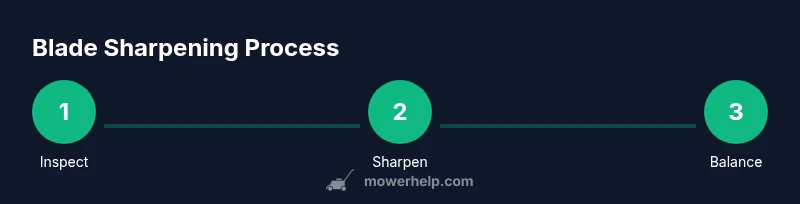
DIY blade sharpening can save money and provide quick turnarounds, but it requires strict safety precautions. Before you start, unplug the mower, remove the spark plug cap, and secure the blade. Use a vise to lock the blade firmly, then select a sharpening tool: a proper mill file for light touch-ups or a bench grinder for heavy dull edges. Maintain the original bevel angle (commonly around 30 degrees) and avoid overheating the blade. After sharpening, deburr the edge and check balance with a blade balancer or by placing the blade on a nail to see if it tilts. Finally reinstall with the blade oriented correctly and test on a non-critical patch of grass.
Choosing sharpening methods: file vs grinder vs professional service
The choice between hand filing, grinder sharpening, or sending blades to a professional service depends on blade condition, budget, and comfort level. A simple touch-up with a file is inexpensive and safe for minor dullness, while a grinder can restore a severely dulled edge quickly—if you control heat and maintain balance. Professionals often offer fast turnaround, precise balancing, and standardized bevel angles tailored to your mower model. For most homeowners, a light file touch-up every 15–25 hours of mowing or season-long maintenance can be sufficient, with professional sharpening as needed for very dull blades.
Blade inspection and balancing: ensure true edge
Inspect blades for nicks, warping, or cracks; do not sharpen damaged blades. After sharpening, balance the blade to prevent vibrations that can damage the mower and decks. A simple balancer or balancing technique can reveal whether you’ve created an uneven edge. If the blade tips toward one side when balanced, remove a small amount of material from the heavier side and recheck. Balanced blades give cleaner cuts, less wear on the engine, and a longer blade life.
Cost, turnaround times, and service quality to consider
Average costs for professional blade sharpening vary by region and blade size, but expect a modest fee for a standard edge. Turnaround times can range from same-day to a few days, depending on demand and availability. When comparing services, verify if balancing is included, whether they re-check the blade after reassembly, and if they provide a short warranty. If you opt for DIY, calculate the cost of tools, the time spent, and the potential risk of nicking the blade or damaging the mower if you mis-handle the edge.
Maintenance tips for longer blade life
Keep blades sharp by scheduling regular inspections and avoiding mowing over rocks, roots, and thick debris. After every use, wipe the blade and check for nicks. Replace a blade when it shows visible cracks or a deep gouge. Store blades dry and clean to avoid rust, and use a blade cover when not in use. A sharp blade also helps you use less energy and reduce wear on the engine. Regular maintanence ensures better performance and lower long-term costs.
Common mistakes and safety reminders
Common mistakes include attempting to sharpen a bent or cracked blade, over-sharpening, or using a dull file that leaves burrs. Never sharpen if the blade is cracked; always replace instead. Wear eye protection and heavy gloves, secure the blade, and disconnect the spark plug. Take care to avoid overheating the blade, which can alter its hardness and performance. Finally, test the mower on a small patch of grass to ensure even cutting before resuming normal mowing.
Quick-reference glossary: blade angles, terms
Bevel angle: the acute angle forming the edge. Balance: blade weight distribution around the center; wobble causes vibration. Overheating: excessive heat can soften steel and reduce hardness. Deburr: remove burrs after sharpening to ensure a smooth edge. Spin balance: ensure the blade stands evenly for safe operation. These terms help you communicate clearly with shops and ensure you get the right service.
Step-by-step reference checklist
- Unplug mower and remove blade; 2) Secure blade in a vise; 3) Choose file or grinder and set bevel angle; 4) Sharpen evenly from the cutting edge; 5) Deburr and cool if using grinder; 6) Balance blade and inspect for cracks; 7) Reinstall correctly aligned; 8) Test on turf; 9) Clean workspace and store tools properly.
Tools & Materials
- Safety equipment (gloves, eye protection)(ANSI-rated gloves; ANSI Z87.1 or equivalent)
- Blade removal tool or socket wrench(Use the correct size for your mower model)
- Bench vise or blade vise(Secure the blade firmly before sharpening)
- Flat mill file or triangular file(For precise, controlled sharpening)
- Bench grinder with a dressing wheel or wheel dresser(Use with care to avoid overheating)
- Blade balancer or balancing nail(To verify even balance after sharpening)
- Rag and degreaser(Clean blade and mower deck after work)
- Replacement blades (optional)(Keep as backups in case of damage)
Steps
Estimated time: 45-75 minutes
- 1
Prepare and unplug the mower
Park on a flat surface, disconnect the spark plug, and remove the battery on electric mowers. This prevents accidental starts and ensures safety before touching the blade.
Tip: Double-check there is no power source connected. - 2
Remove the blade
Use the proper socket to loosen the blade bolt, then carefully remove the blade from the spindle. Note blade orientation for reinstallation.
Tip: Take a photo before removal to guide reassembly. - 3
Inspect and secure the blade
Check for cracks or damage; if damaged, replace. Clamp the blade securely in a vise with the cutting edge accessible.
Tip: Ensure the blade cannot slip during sharpening. - 4
Choose your sharpening method
For light dullness, use a flat file; for heavy dullness, use a grinder, keeping the edge cool to avoid microcracking.
Tip: Maintain the original bevel angle; avoid rounding the edge. - 5
Sharpen the edge
Stroke the file evenly along the edge, alternating sides to keep symmetry. Match the existing bevel and remove burrs after sharpening.
Tip: Alternate sides in small, consistent motions. - 6
Deburr and cool
Remove burrs with a lighter touch and cool the blade if using a grinder to prevent heat damage.
Tip: A cool blade holds its edge better. - 7
Balance the blade
Test balance by mounting on a nail or using a blade balancer. If it tilts, remove a small amount from the heavier side and re-check.
Tip: Balanced blades reduce vibration. - 8
Reinstall and test
Reinstall with the correct orientation and torque; test on a small patch of grass to verify an even cut.
Tip: If vibrations persist, stop and re-check balance.
Got Questions?
Can I sharpen lawn mower blades at home, or should I always use a professional service?
You can sharpen blades at home if you follow safety protocols and maintain the original bevel. For severe dullness or damaged blades, professional sharpening guarantees balance and accuracy.
Yes, you can sharpen at home if you follow safety steps and keep the bevel intact, but for severe dullness, a professional is recommended.
How often should I sharpen or replace my mower blade?
Sharpen when the cut begins to look ragged or you hear extra engine strain. Replace blades if damage is visible or if sharpening reduces the blade's integrity.
Sharpen when the cut is uneven or loud, and replace if the blade is cracked or bent.
What signs indicate a blade is too dull or damaged to sharpen safely?
Signs include deep nicks, warping, or extensive corrosion. If the edge is chipped too deeply, consider replacement rather than sharpening.
Look for chips, cracks, or warping; these mean replacement is safer.
Will sharpening affect blade balance?
Yes, improper sharpening can unbalance a blade. Always balance after sharpening to prevent vibration and deck wear.
Balancing after sharpening is essential to prevent vibrations.
Is it safe to sharpen blades while they are still on the mower?
Sharpening on the mower is not recommended due to risk of kickback and blade movement. Remove and sharpen off the mower for safety.
Never sharpen a blade while it’s mounted; remove it first.
Watch Video
The Essentials
- Identify local sharpening options and compare service quality.
- Sharpen blades safely with proper tools and angle control.
- Balance blades to prevent vibration and ensure a clean cut.
- Weigh DIY sharpening vs professional service based on blade condition and time.