Metal File for Sharpening Lawn Mower Blade: Step-by-Step Guide
Learn how to sharpen a lawn mower blade using a metal file. This guide covers file types, bevel angles, safety, and maintenance for DIY homeowners.


A metal file is a reliable tool for sharpening a lawn mower blade. This method preserves the blade’s temper and avoids heat damage when you maintain a steady bevel. You’ll need a stable work surface, basic PPE, and a suitable file to start, then follow careful, repeatable strokes.
Why a metal file remains a reliable tool for sharpening lawn mower blade
For homeowners who want to maintain peak cutting performance, a metal file for sharpening lawn mower blade is a classic, approachable option. The metal file provides precise material removal with excellent control, allowing you to restore the bevel without overheating the edge. Unlike power grinders, hand filing reduces heat buildup, minimizes edge chipping, and keeps the blade temper intact when used carefully. In this guide, we discuss how to select the right file, how to set up your workspace, and how to perform consistent, safe strokes that bring back crisp, even cuts to your lawn. According to Mower Help, this traditional method remains a trusted choice for routine blade care and maintenance. The goal is not to remove as much material as possible but to restore a sharp edge that can cut evenly across the blade’s length. As you proceed, remember that blade geometry matters: a uniform edge across the whole blade yields the best cutting performance and longest blade life. The metal file approach also offers a low-cost entry point for DIYers who want to avoid sending blades to service shops. By understanding how bevel angle, file type, and stroke technique interact, you’ll be able to extend blade life and improve mowing results.
Understanding file types and sharpening angles
Sharpening a mower blade with a metal file involves choosing a file type and maintaining a consistent angle along the edge. File types include flat files, bastard cuts, and smooth cuts. A flat file provides a broad, even surface ideal for long strokes across the bevel. A bastard cut (coarser) removes material more quickly but can leave rough edges if you’re not careful. A smooth cut yields a finer finish and reduces heat creation. If you have a bevel gauge, use it to estimate the angle and then aim to keep that angle steady as you work. If you don’t own a gauge, you can orient the file so its edge rides along the existing bevel and use light, uniform passes. When sharpening, always file toward the tip of the blade and avoid undercutting the edge. Avoid grinding or removing large amounts in a single pass; slow, controlled strokes produce the best edge geometry. The goal is a clean, symmetrical edge that can cut evenly without snagging on grass blades. Remember that the bevel should be consistent along the entire length of the edge to prevent uneven cutting and reduced blade life. These principles apply whether you’re working on a standard lawn mower blade or a longer, heavier edge on a riding mower.
How to choose the right metal file for sharpening lawn mower blade
Selecting the right file means considering length, cut, and edge quality. A standard 8–10 inch flat file is a versatile choice for most residential blades. For stubborn hard steel, a bastard-cut file can help remove material more efficiently, but you must monitor for overheating and edge rounding. The tang length matters for grip and control, especially when you’re guiding the file along a curved edge. If you already own a sharpening jig or bevel guide, these tools can help you maintain a uniform angle across both sides of the blade. Always choose a file that is comfortable in your hand and provides enough reach to cover the entire cutting edge without moving your hand into the path of the blade’s edge. Consider keeping a second file with a finer cut for light deburring after the primary sharpening stroke. Finally, ensure the file is clean and free of burrs; a clogged file will leave scratches and uneven bevels. Remember that cheaper, low-quality files may wear quickly and degrade edge quality; investing in a single reliable file can pay off over many sharpenings. The right file helps you achieve a consistent bevel with less effort and a sharper, longer-lasting cut.
Safety and workspace setup before you sharpen
Set up a stable, well-lit workspace and wear appropriate PPE. Disconnect the mower battery or remove the ignition key to prevent accidental starts. Wear safety glasses or a face shield and sturdy gloves to protect your hands from metal shavings. Secure the blade in a bench vise or clamps so it cannot slip during filing, and position yourself so your body remains out of the blade’s potential kick zone. Clear the bench of loose tools to avoid accidental contact with the blade edge. If you’re new to blade sharpening, consider working on a single blade first to develop a feel for steady pressure and angle control. Keep a small brush or rag on hand to wipe away filings as you go; trapped filings can rust and injure the edge if left to accumulate. After you finish, set the blade down on a writeable surface to visually inspect the edge for symmetry and burrs. This preparation reduces the chance of errors and increases your comfort level during sharpening.
Common mistakes and how to avoid them
Common mistakes when using a metal file for sharpening lawn mower blade include over-sharpening one side, removing too much material, and losing symmetry. Always check both edges for consistency, especially if the blade has two cutting faces. If you notice heat buildup or discoloration on the metal, pause and let the blade cool before continuing; overheating can soften or weaken the edge. Avoid grinding; filing should remove material gradually. Do not rush the process or apply excessive pressure; let the file do the work and maintain a light, even touch. When finished, wipe the edge and remove burrs with gentle passes; burrs can cause uneven cuts and tear grass. If you ever need to modify the blade geometry, compare your results to a strobe or cut lines left by the original bevel. Finally, never sharpen a blade that is cracked, bent, or excessively corroded—these blades require replacement to avoid breakage during mowing.
Maintenance after sharpening and blade care
After sharpening, clean the edge to remove filings and inspect for chips. Reinstall the blade with the proper torque specified by the mower manufacturer and ensure it is balanced so that it runs true in the cut. Use a blade balancer if you have concerns about vibration; an imbalanced blade can wear the mower’s spindle and deck. Store the sharpened blade in a dry place to prevent rust; apply a light coat of oil if desired to slow oxidation. Regularly inspect blades for cracks or rounding and schedule sharpening before performance deteriorates. Pair sharpening with routine mower maintenance, including oil changes, air filter checks, and spark plug assessment for gasoline models. Through consistent care, you’ll extend blade life and keep mowing performance high. The Mower Help team notes that disciplined blade maintenance leads to more even cuts and a longer blade lifespan.
Signs of wear and when to replace a blade
Even with regular sharpening, blades wear down and eventually become unsafe or ineffective. Signs that the blade should be replaced include severe nicks, cracks radiating from the mounting hole, visible warping, curved edges, or a blade that no longer holds a sharp edge after multiple sharpenings. If the blade has lost significant metal thickness, is bent, or has deep gouges, replacement is the safer choice. Maintenance cost and risk of damage to the engine are also factors when deciding whether to continue sharpening or replace the blade. Always consult your mower’s manual for the recommended replacement interval and verify with a quick visual test of the edge. The Mower Help team emphasizes proactive replacement to prevent costly repairs and uneven mowing.
Tools & Materials
- Metal file (flat file, bastard cut preferred)(Flat surface, 8–10 inches long for comfortable strokes)
- Safety glasses or face shield(Protect eyes from metal chips)
- Work gloves (leather or cut-resistant)(Grip and protect hands)
- Bench vise or sturdy clamps(Secure the blade firmly)
- Screwdriver or pliers (for blade removal)(Use if blades are attached with hardware)
- Blade sharpening guide or bevel gauge (optional)(Helps maintain consistent angle)
- Rags or clean cloth(Wipe filings and inspect edge)
Steps
Estimated time: 60-90 minutes
- 1
Remove and secure the blade
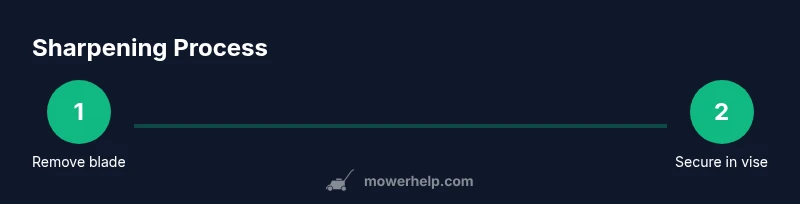
Power down the mower and remove the spark plug wire if applicable. Disconnect power or ignition to prevent starts. Detach the blade using the correct wrench, then clamp it firmly in a bench vise so it cannot move during filing.
Tip: Use a magnet on the wrench to avoid dropping the blade and keep the blade edge away from your body. - 2
Inspect for damage
With the blade exposed, look for cracks, major nicks, or warping. Any of these issues means damage beyond simple sharpening; replace rather than repair if found.
Tip: If you’re unsure about a crack, err on the side of replacement to prevent failure in use. - 3
Set your bevel angle
Identify the existing bevel and plan to restore it. If you don’t have a gauge, align the file with the current edge and maintain that angle as you work.
Tip: Keep the file’s edge flat against the blade to avoid creating a stepped edge. - 4
File one side
Begin with light, steady strokes along the edge, moving from the center toward the tip. Apply consistent pressure and avoid grinding, which can over-sharpen or heat the edge.
Tip: Short, controlled passes are better than long pulls at high pressure. - 5
Flip and file the opposite edge
Repeat the same process on the opposite side to preserve symmetry. Compare edges frequently to keep both sides evenly sharpened.
Tip: If one side runs longer, adjust your stance and hand angle to balance pressure. - 6
Deburr and clean
Wipe away filings and run a fine pass on both faces to remove burrs. Inspect for a uniform edge and minor imperfections.
Tip: A gentle deburr helps prevent grass snagging during the first cuts. - 7
Reinstall and test
Reattach the blade with proper torque per the mower manual. Spin by hand to ensure it isn’t loose and test on a patch of grass to evaluate cut quality.
Tip: Balance the blade if you notice vibration after reinstalling.
Got Questions?
Can I use any metal file to sharpen a lawn mower blade?
A flat file with a smooth cut is suitable for most blades; avoid coarse files that remove material too quickly. Ensure the file width matches the edge so you avoid dulling the shoulders.
Yes, a flat file with a smooth cut works well, but avoid coarse files that remove material too fast.
What bevel angle should I aim for when sharpening a lawn mower blade?
Restore the original bevel if possible. If unsure, start with a moderate angle and adjust based on cutting performance.
Try to keep the original bevel, or start with a moderate angle and test.
Is it better to sharpen the blade off the mower or while attached?
Sharpen off the mower on a stable surface to maintain control and safety. Do not grind while the blade is mounted.
Do the sharpening off the mower on a stable surface.
How can I tell if a blade is too worn to sharpen?
Look for cracks, deep chips, or a significantly thinned edge. If you see damage or the edge cannot be restored with a uniform bevel, replace the blade.
If you see cracks or major damage, replace the blade.
How often should I sharpen mower blades?
Check edge quality regularly and sharpen when mowing performance declines or you notice uneven cutting. Frequency depends on use and grass conditions.
Check the edge regularly and sharpen when performance declines.
Are there safety steps after sharpening?
Reinstall with correct torque, ensure balance, and verify by testing on a small area. Wear PPE during testing and cleaning.
Balance the blade, reattach securely, and test safely.
Watch Video
The Essentials
- Maintain a consistent bevel for clean cuts.
- Choose the right file and use controlled strokes.
- Secure the blade and inspect for damage before sharpening.
- Deburr, clean, and recheck edge after sharpening.