When to Replace Ryobi Lawn Mower Blade: A Practical Guide
Learn when to replace the Ryobi lawn mower blade, how wear shows, and a safe, step-by-step replacement guide to keep cutting performance sharp and consistent.


You should replace a Ryobi lawn mower blade when you notice dull edges, chips, bends, or a noticeable drop in cutting performance. Other signs include ragged grass, increased vibration, or frequent blade contact with the mower deck. Regular inspection after mowing makes wear easier to detect and keeps your yard looking clean.
Understanding Blade Wear and Replacement Timing
Blades wear out from contact with grass, dirt, and small stones. Over time, the edge dulls, grows burrs, or chips, reducing cutting efficiency and increasing engine strain. For Ryobi mowers, the blade is mounted on a fixed spindle and spins at high speed, so even small defects can cause streaky cuts or scalping. The key is to monitor performance and inspect the blade regularly—especially after heavy use in tough conditions. If you notice the mower struggles to cut evenly, or you have to go over sections twice, that’s a strong signal to inspect the blade. Keeping an eye on wear and replacing promptly prevents further deck damage and preserves overall mower health.
Signs Your Ryobi Blade Needs Replacement
A dull edge is the most obvious sign, but chips, cracks, or a blade that no longer sits evenly in the spindle indicate replacement is due. Rough, ragged cuts, an unusual vibrating feel, or increased noise during operation also point to a tired blade. If the blade looks bent or has developed a noticeable wobble when the mower is hand-turned, replace it to avoid safety risks and uneven lawn appearance. Don’t ignore debris-damaged blades—chips can break off and damage the deck or engine.
How to Inspect a Ryobi Blade Safely
Before you touch the blade, switch off the mower and disconnect power (gas: remove the spark plug wire; electric: unplug or remove the battery). Tilt the mower on a stable surface with the blade facing up, and wear eye protection and gloves. Visually inspect the edge for nicks and burrs; check the blade’s entire width by looking for thinning from edge wear. If you can’t feel a sharp edge with your finger (careful—do not run fingers along the edge), or you see obvious chips, it’s time to consider replacement. Balance is also important—a blade that’s significantly heavier on one side should be replaced.
Replacement vs Sharpening: When to Choose
Sharpening can restore a marginal edge, but it’s not a cure for a blade that's worn past its effective life. If you see deep chips, a bent blade, or you’re removing more than a small burr after sharpening, replacement is the safer and more reliable option. A damaged or unbalanced blade stresses the mower’s spindle and can lead to more costly repairs. If your blade has been sharpened multiple times, it’s usually best to replace it.
Factors that Accelerate Blade Wear
Hard mowing conditions—wet grass, sandy soil, stones hidden in turf—speed up edge dulling. Repeated contact with rocks and soil causes chips and micro-cracks that propagate over time. Grass with dense, fibrous blades can also dull blades faster, especially if the mower is not set to an appropriate cutting height. Improper blade balance or loose blade bolts can cause vibrations that accelerate wear and shorten blade life.
How to Check for Sharpness without Removing
In a pinch, you can test sharpness by gently brushing a finger across the edge from the side (never from the top) to feel if it has a clean edge. A properly sharp blade should bite rather than slide. If you’re unsure, remove the blade for a full inspection. Regular checks help you decide whether to sharpen or replace and prevent disappointments at the end of the cutting season.
Replacement Frequency Guidelines (Broad Recommendations)
There isn’t a universal replacement interval for Ryobi blades; it depends on use, terrain, and maintenance. A good rule of thumb is to inspect after each mowing season and replace when wear is evident, you see chips, or the cut quality declines. If you frequently hit rocks or dense brush, plan for more frequent blade checks. Keeping a log of mowing conditions and wear can help you estimate replacement timing for next season.
How to Remove and Replace a Ryobi Blade
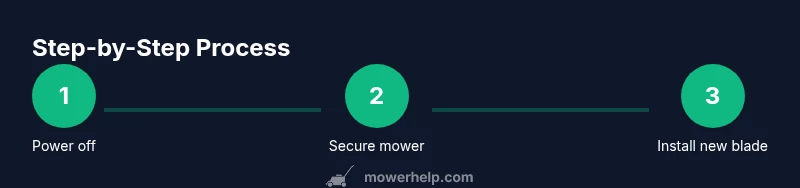
Follow the manufacturer’s safety guidance: disconnect power, brace the mower, and use the correct size socket to loosen the blade bolt before removing the blade. Install the replacement blade with the correct orientation and tighten to the manufacturer’s torque spec. Reattach any guards and perform a quick spin test to ensure balance before use. If you’re unsure about torque, err on the side of caution and replace screws rather than force-fitting.
Safety Checks After Replacement
After replacing the blade, reattach all guards and ensure the blade spins freely without wobble. Do a brief dry run in a safe area to listen for unusual noises or vibration. If you notice anything off—excessive vibration, unusual noise, or the mower smells hot—shut down and recheck your work. Proper blade installation is essential for safe mowing.
Common Mistakes and How to Avoid Them
Common mistakes include using the wrong blade type, over-tightening, or reinstalling with the edge facing the wrong direction. Always confirm blade direction, torque specs, and correct mounting hardware. Don’t work with a dull blade just to save time; it increases the risk of injury and damages the mower.
Maintaining Blade Health: Prolonging Life
To extend blade life, set the mower height to avoid scalping, mulch or bag grass properly, and avoid mowing over rocky patches. Regularly inspect for nicks, burrs, and balance issues, and keep blade bolts clean and tight. A sharp, well-balanced blade not only cuts better but also reduces stress on the engine and deck.
Quick Reference Checklist
- Inspect blade edge after each mowing session
- Replace if dull, chipped, or bent
- Use correct replacement blade and torque spec
- Wear safety gear and disconnect power during maintenance
- Recheck balance after installation
Tools & Materials
- Safety glasses(Protect eyes from debris)
- Work gloves (leather or cut-resistant)(Grip and protect hands)
- Socket wrench set(Size matches blade bolt)
- Screwdriver set(Flathead and Phillips as needed)
- Replacement mower blade (Ryobi-compatible)(Ensure correct model compatibility)
- Block of wood or wedge(Support mower during blade removal)
- Marker or tape(Log blade orientation)
- Rags or towels(Clean up and catch debris)
Steps
Estimated time: 20-30 minutes
- 1
Power off and disconnect
Turn off the mower and disconnect power. For gas mowers, remove the spark plug wire; for electric, unplug or remove the battery. Let the blade stop completely before proceeding.
Tip: Double-check that the blade cannot move before you touch anything. - 2
Secure the mower for blade access
Place the mower on a flat surface and tilt so the blade faces upward. Use a block of wood to stabilize the deck and prevent movement while you work.
Tip: Have a helper hold the mower steady if possible. - 3
Loosen and remove the blade bolt
Wedge the blade with a rag and use the correct socket to loosen the bolt in a counterclockwise direction. Do not remove the blade yet until the bolt is fully free.
Tip: Hold the blade to avoid it spinning once the bolt loosens. - 4
Take off the old blade
Carefully remove the blade from the spindle. Note its orientation so you can install the new blade correctly.
Tip: Inspect the Mount surface for burrs before installing a new blade. - 5
Check the blade for wear
Visually inspect for dull edges, chips, and cracks. If you detect any of these, replacement is recommended over sharpening.
Tip: If unsure, replace rather than risk a blade failure. - 6
Install the replacement blade
Position the new blade so the cutting edge matches the correct orientation, then tighten the bolt to the torque spec. Avoid overtightening.
Tip: Use a torque wrench if available to ensure proper tightness. - 7
Reinstall guards and cover
Reattach any blade guards or safety covers. Ensure there are no loose parts and the blade spins freely without contact.
Tip: A quick spin by hand can help check clearance. - 8
Test run and safety check
Return mower to a stable position, reconnect power, and perform a brief dry test in a clear area before mowing.
Tip: Listen for irregular noises and stop immediately if you notice vibration.
Got Questions?
What are the signs that indicate blade replacement is needed?
Dull, chipped, or bent blades, ragged cuts, increased vibration, and unusual noise indicate replacement is needed. If in doubt, replace the blade rather than attempting risky sharpening.
Watch for dull edges, chips, or bending, plus rough cuts or vibration; those mean it’s time to replace.
Can I sharpen my Ryobi blade instead of replacing it?
Sharpening can restore a marginal edge, but deep chips or a bent blade should be replaced. Repeated sharpening shortens blade life and can create imbalance.
Sharpen if it’s just a small burr; replace if there are chips or bending.
Should I remove the spark plug before blade replacement?
Yes. For gas mowers, disconnect the spark plug to prevent accidental engine start. For electric mowers, unplug the power source or remove the battery before work.
Always disconnect power sources first to stay safe.
Is it safe to replace the blade without professional help?
With proper safety steps, the task is doable for many DIYers. Follow the manual, keep tools organized, and never rush. Seek professional help if the blade is difficult to remove or you suspect damage to the spindle.
It can be a DIY job if you follow safety steps and have the right tools.
How do I know if the new blade is installed correctly?
Ensure the blade is oriented with the cutting edge toward the grass, the bolt is tight to the recommended torque, and there’s no wobble when you spin the blade by hand.
Check orientation, torque, and balance by a careful hand spin.
Watch Video
The Essentials
- Inspect blade after each mowing session.
- Replace when dull, chipped, or bent.
- Follow torque specs and orientation when installing.
- Always prioritize safety and proper maintenance.