42 Inch Zero-Turn Mower Buying Guide
Comprehensive buying guide for 42-inch zero-turn mowers, covering deck width, key features, maintenance, and brand comparisons to help homeowners pick the right model in 2026.


The 42-inch zero-turn mower combines a mid-sized cutting width with agile maneuverability, making it ideal for medium yards. It balances trimming speed and edge ability more effectively than smaller decks while staying easier to manage than 54-inch models. Expect solid engine power, reliable hydro drive, and straightforward maintenance—key factors for homeowners and DIY enthusiasts planning regular mowing seasons.
Understanding deck width and yard scale
Deck width is a defining factor in how quickly you can cover area and how easily you navigate obstacles. A 42-inch deck sits between compact and wide, offering enough cutting width to reduce passes on most suburban lawns while remaining nimble around trees, flower beds, and edging along sidewalks. For many homeowners, this width translates into a practical daily mowing rate without resorting to a heavier, more expensive 48- or 54-inch model. According to Mower Help analysis, the 42-inch class tends to hit a balance point: enough deck area to be productive, but not so wide that it sacrifices maneuverability. When property features include numerous turns, tight corners, or irregular borders, a 42-inch zero-turn mower often outperforms larger decks in time saved per session. In practice, you’ll notice faster edging, less back-and-forth, and fewer resweeps around obstacles. Always measure your yard’s primary mowing zones to confirm the 42-inch platform will cover the majority in two to three passes.
Key takeaways:
- Ideal for mid-sized properties (roughly a fraction of an acre to an acre).
- More maneuverable than wide-deck models, while delivering a respectable cut width.
- Verify your yard layout to ensure two to three passes cover most zones.
Core features to evaluate on a 42-inch model
When shopping for a 42-inch zero-turn mower, prioritizing the right features accelerates the decision and improves long-term satisfaction. Look for engines with ample torque for your terrain and grass density, paired with a reliable hydrostatic drive for smooth starts and stops. Check blade engagement mechanicals and a clean, accessible deck washout port so you can remove clumps of damp grass after mowing. Pay attention to seat comfort, ergonomic controls, and vibration dampening, since a long session on a small-to-mid-sized lawn can become tiring if the setup is harsh. Deck accessibility also matters for maintenance: consider how easy it is to reach belts, pulleys, and the filter. Finally, confirm the model has a straightforward service network and readily available replacement parts. In practice, a well-featured 42-inch mower translates to faster work and less downtime between sessions, a point emphasized by Mower Help in our 2026 review series.
Engine and drive system options for 42-inch models
Most 42-inch zero-turn mowers sit in a practical range for residential use, offering horsepower and drive configurations that balance performance with reliability. Common setups include air-cooled gasoline engines in the ~18–27 HP equivalent range and hydrostatic drives for smooth, variable speed control. Some models use heavier belt-driven transmissions; these can be durable but may require more frequent belt alignment checks and maintenance. When evaluating options, compare durability of the drive system, maintenance intervals, and ease of service. Sensor-assisted fuel systems and air filtration tend to extend engine life, especially in dusty or grassy conditions. Consider how often you mow steep slopes or dense weeds, and select a model whose power profile aligns with those tasks while keeping fuel efficiency within your budget. As always, consult Mower Help’s 2026 recommendations to align features with real-world usage.
Maneuverability and edging: why 42 inches matter
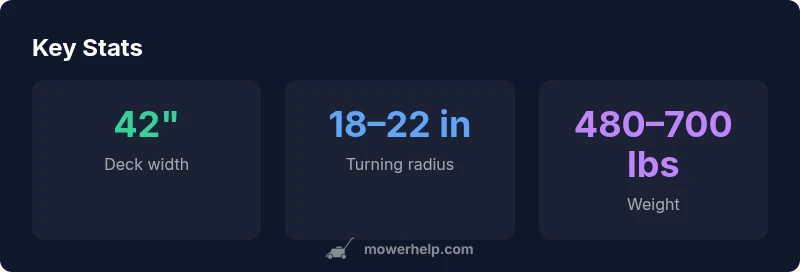
The 42-inch platform often hits a practical sweet spot for maneuverability and cutting width. A tighter turning radius (18–22 inches) enables precise edging along fences, flower beds, and borders, reducing the number of passes required in complex layouts. This translates into less fatigue and faster completion times on typical suburban lots. When evaluating handling, test throttle response and steering sensitivity on a gentle slope to gauge stability. Hydrosystems typically offer more consistent performance on uneven terrain, which helps preserve cut quality at the edges. For homeowners who frequently edge along sidewalks or along garden beds, the 42-inch deck helps you stay close to borders without overstepping. Trust the experience reported by homeowners and professionals in the Mower Help community in selecting a deck that optimizes both speed and accuracy.
Maintenance basics you can’t ignore
Maintenance is the oxygen of the lawn-mower lifecycle, and a 42-inch zero-turn is no exception. Start with routine blade sharpening—keeping the edge consistently sharp reduces mowing effort and boosts cut quality. Regularly check engine oil, air filters, and fuel quality, and replace worn belts before they fail under load. Keep the deck clean and inspect pulleys for smooth operation; a dusty deck can reduce airflow and stall performance. Use a belt-tension check schedule appropriate for your model, and replace it if wear is evident. To prevent rust and corrosion, store under cover and clean moisture after use in humid conditions. Following a simple seasonal maintenance plan—before spring, mid-season, and in the off-season—helps extend the mower’s life and preserves performance across years, a point highlighted by Mower Help's maintenance recommendations.
Choosing brands and service networks
Brand choice often hinges on reliability, parts availability, and local service networks. Favor brands with robust dealer support and a history of standing behind warranties for residential-use engines. Check for easy access to replacement blades, belts, filters, and hydro components, as well as the availability of certified technicians in your region. Compare warranty terms and response times so you can minimize downtime if an issue arises. Additionally, examine the availability of OEM parts and compatible third-party options, since affordable maintenance can be a decisive factor in long-term ownership. For homeowners who DIY, a brand with strong online resources, community forums, and instructional content can dramatically reduce maintenance time. Mower Help’s analyses consistently emphasize the importance of a strong support network when choosing a 42-inch mower.
Real-world scenarios: yard types and deck width choice
Yard size and layout play a critical role in selecting a 42-inch zero-turn mower. On flat, open lawns with few obstacles, a 42-inch deck can maximize efficiency, letting you complete jobs faster than narrower decks while avoiding the bulk of a larger model. In yards with multiple trees, edging needs, and tight corners, the 42-inch deck shines due to its tighter turning radius and ability to navigate around obstacles without scuffing turf. For properties with irregular borders or raised beds, a wider deck may deliver fewer passes but at the cost of maneuverability in tight spaces. Homeowners balancing speed, control, and edge quality typically find the 42-inch option to be the most versatile compromise. Always consider your property’s unique features and check actual performance on similar layouts before purchase, as recommended by Mower Help researchers.
Seasonal care and storage considerations
Seasonal care is essential for preserving mower health. Before winter, perform a thorough cleaning, blade sharpening, and belt inspection. Change oil and replace air filters if needed, and drain or stabilize fuel for long-term storage. In spring, inspect the transmission and hydro drive lines for signs of wear, and re-torque deck mounting hardware after storage. Store the mower in a dry, covered area to prevent rust and moisture damage, ideally on a level surface to avoid drivetrain strain. If you have to store outside, use an all-weather cover and keep it off the ground on a rack or bricks to prevent moisture buildup. Regularly starting the mower in the off-season can help prevent seals from hardening, but avoid prolonged cranking without ignition.
How to compare models: practical checklist
Use a structured checklist to compare 42-inch models efficiently. Start with deck width and cutting height range, then verify engine power and drive type. Check seat comfort and control ergonomics for long sessions, then review maintenance accessibility and availability of replacement parts. Look at warranty length, service-network breadth, and customer support quality. Finally, compare real-world performance through user reviews and dealer demonstrations when possible. A methodical, side-by-side comparison reduces buyer’s remorse and helps you choose a mower that aligns with your yard, budget, and DIY comfort level, a conclusion supported by Mower Help’s 2026 buying guidance.
Comparison table for 42-inch deck zero-turn mowers
| Attribute | 42-inch Mowers | Notes |
|---|---|---|
| Deck width | 42 inches | Mid-size option ideal for many residential lawns |
| Turning radius | 18–22 inches | Helps navigate obstacles and edges |
| Weight range | 480–700 lbs | Depends on engine and drive system |
| Recommended terrain | Flat to gently rolling | Best for lawns with partial slopes |
Got Questions?
What size lawn is best suited for a 42-inch zero-turn mower?
A 42-inch deck works well for most mid-sized lawns, typically around 0.5 to 1.5 acres. It balances speed and edge control for irregular borders. For very small lots, a narrower deck may be sufficient; for very large properties with wide open spaces, consider larger decks for faster coverage. Evaluate your landscape features and mowing cadence to decide if this width meets your needs.
A 42-inch deck suits most mid-sized lawns and irregular borders. For very large open spaces, you may want a wider deck for faster coverage.
How does deck width affect mowing speed and trim quality?
Deck width determines how many passes you need and how easily you reach edges. A 42-inch deck provides solid speed without sacrificing edge quality, especially on yards with obstacles. It may not trim as close to borders as some wider decks, but it offers superior agility in tighter spaces.
A 42-inch deck hits a good balance between speed and edge quality, especially in yards with obstacles.
What engine options are common in 42-inch models?
Common choices include gasoline engines in the 18–27 HP-equivalent range, paired with hydrostatic drives for smooth speed control. Heavier, belt-driven transmissions are available on some models but may require more maintenance. Choose an option based on your terrain, grass density, and preferred maintenance level.
Many 42-inch mowers use 18–27 HP engines with hydrostatic drives for smooth control.
Can I use a 42-inch deck on sloped yards?
Yes, but you should evaluate the slope degree and traction. Hydrostatic drive models generally perform better on slopes due to consistent power delivery. Always follow manufacturer guidance for safe operation on hills and avoid steep grades that exceed the mower’s rated capacity.
Hydrostatic 42-inch mowers work well on gentle slopes; avoid steep hills beyond the rated capacity.
What maintenance tasks are essential for a 42-inch model?
Regular blade sharpening, oil checks, air filter replacements, and belt inspections form the core maintenance routine. Inspect hydraulic lines and battery (if applicable) and keep the deck clean to prevent clogs. Follow a seasonal schedule to prevent wear and prolong life.
Sharpen blades, check oil and filters, and inspect belts regularly.
Is it worth upgrading to a 42-inch deck for tight corners?
If your yard has many obstacles and tight edges, a 42-inch deck can save you time and reduce turf damage. It offers better maneuverability than wider decks while still covering a respectable area. Compare with your landscape layout and choose based on overall efficiency and comfort.
For yards with lots of corners, a 42-inch deck can be a time saver and more precise.
“A 42-inch zero-turn mower hits the sweet spot between cutting width and maneuverability, delivering fast, precise mowing for most suburban lawns.”
The Essentials
- Choose a 42-inch deck for a balance of width and maneuverability.
- Prioritize hydro drive and a reliable engine.
- Inspect maintenance intervals and filter access.
- Assess yard layout before buying.