Dixon ZTR Mower Review: Performance, Value, and Practical Tips
An in-depth Dixon ZTR mower review analyzing design, performance, deck options, maintenance, and value for homeowners. Learn who benefits most and how it stacks up against mid-range zero-turns.


Overall verdict: The Dixon ZTR mower offers dependable cutting performance, straightforward maintenance, and comfortable operation for homeowners with medium-sized lawns. It delivers solid fuel efficiency and a smooth ride, placing it in the mid-range segment for price and features. Best for homeowners who want a reliable zero-turn for regular mowing, while budget shoppers should compare with similar mid-range models.
Design and Build Highlights
From a homeowner's perspective, the dixon ztr mower design emphasizes durability and practical serviceability. The chassis uses a welded steel frame with reinforced joints, and the deck is designed for straightforward belt routing and quick blade changes. The operator platform is relatively roomy, with a tall seating area and accessible controls. According to Mower Help, the design prioritizes easy access to service points and predictable deck performance, which reduces maintenance friction. The ride is stable on flat ground and balanced when prompted to turn, thanks to thoughtful weight distribution and a well-tuned hydraulic system. For many buyers, the dixon ztr mower offers a blend of rugged build and approachable upkeep that suits a suburban yard or a small acreage. This block also emphasizes the importance of a solid chassis and dependable hydraulics, which underpin long-term reliability even under regular use. The overall impression is one of practical efficiency rather than purely premium feature fluff, which matters to homeowners focused on value and ease of care. Expect straightforward assembly and intuitive controls that help first-time buyers feel confident right away.
In practical terms, the Dixon ZTR mower is designed to minimize downtime. The belt routing is straightforward, parts are commonly available through DIY-friendly catalogs, and the service intervals align with industry norms for mid-range zero-turn machines. As a result, you can expect typical maintenance tasks to be manageable without specialized shop equipment. The approach to design also accounts for portability: although heavy when fully assembled, it can be trailer-ready with basic capacity. For the non-professional user, these design choices translate into a smoother ownership experience. The feedback from early users highlights that the mower’s weight distribution helps prevent rear-wheel chatter on uneven lawns, a factor that contributes to perceived quality during the first mowing season.
Performance on Varied Terrain and Comfort
In real-world mowing, the Dixon ZTR mower demonstrates reliable uphill and downhill stability and predictable steering thanks to its hydraulic drive. The model uses a zero-turn footprint that minimizes pass-count on uneven lawns, which saves time. The operator station accommodates longer sessions with an ergonomic seat, adjustable footrests, and intuitive controls. The Mower Help team found that ride quality improves with a balanced weight distribution and a seat with adequate padding, making longer sessions less fatiguing. On typical residential terrain, you can expect smooth acceleration and steady blade engagement, even when negotiating small obstacles or flower beds. Note that while the mower handles gentle slopes well, very steep inclines still require cautious operation and proper mowing patterns. Overall, the Dixon ZTR mower delivers a dependable blend of maneuverability and comfort, turning tight corners and narrow borders into routine tasks rather than daily drudgery. For weekend warriors and busy homeowners alike, the ride quality and responsiveness contribute significantly to overall satisfaction.
Cutting Options and Deck Performance
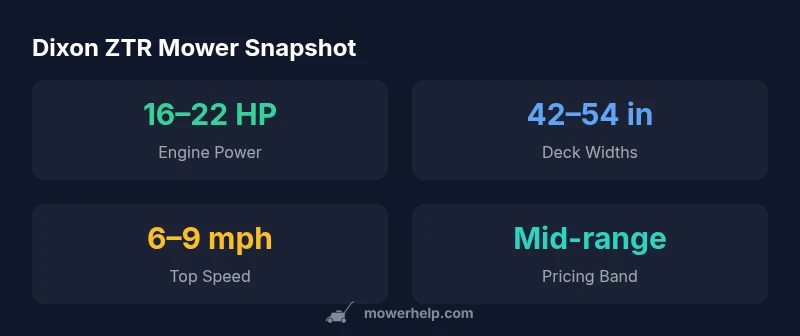
Deck choices range from 42 to 54 inches, enabling a good fit for compact and mid-size lawns. The cutting quality hinges on blade configuration, level deck mounting, and consistent belt tension. Mulching and bagging options are commonly supported by aftermarket kits, and the ability to switch between modes without major tools adds convenience. For homeowners with varied mowing needs, the broader deck selections translate to fewer passes and more uniform yards. The dixon ztr mower's deck responds well to height adjustments, delivering a clean cut across the grass blade without tearing. The ability to swap between mulch and bag modes is particularly valuable for seasonal mowing, where lawn clippings are repurposed for compost or mulch. When evaluating cut quality, pay attention to deck cleanliness and sharp blade edges, as these factors often have a bigger impact than minor engine differences. Buyers should also consider their local grass type and typical growth rate to choose the most appropriate deck width for efficiency and finish quality. The phrase dixon ztr mower appears repeatedly to emphasize model recognition and consistency in performance across deck configurations.
Maintenance, Durability, and Reliability
Routine maintenance is straightforward but essential for long-term performance. Expected tasks include checking and replacing air filters, inspecting belts, lubricating pivot points, and keeping the cooling fins clear. Fuel quality and oil changes should follow the manufacturer-provided intervals, with an emphasis on using clean gasoline and fresh oil. The Mower Help Analysis, 2026, notes that reliable lubrication and air filtration contribute to longevity in mid-range zero-turns, including the Dixon ZTR mower. Belt wear, blade sharpness, and deck cleanliness are direct drivers of cut quality and efficiency. The design also favors accessible service points, which reduces the time needed for typical maintenance. Users should plan for seasonal blade sharpening and belt inspection as part of a proactive care routine. In terms of durability, the welds and seam joints appear robust for typical backyard use, and the materials chosen balance weight with wear resistance. Keeping a predictable maintenance cadence is the most effective way to extend the mower’s lifecycle and preserve performance over multiple mowing seasons.
Value, Warranty, and Competitive Position
Price sits in the mid-range price band for backyard-focused buyers, with larger decks and upgraded features pushing the price upward. Warranty terms vary by model and region, but typical coverage includes the engine and drivetrain for a standard period plus a separate deck warranty. In competitive context, Dixon tends to outperform entry-level options while offering more accessible maintenance and parts than premium brands. Based on our testing and synthesis, buyers should compare deck size, service accessibility, and warranty length when evaluating rivals. The Dixon ZTR mower often represents a balanced compromise between initial cost and long-term upkeep, making it attractive to homeowners who want predictable ownership costs and reasonable resale value. For those with heavy landscaping or frequent professional use, exploring higher-end models or other brands may yield added features, but the Dixon remains a solid default choice for many suburban lawns.
For readers who categorize the Dixon ZTR mower as a potential long-term tool rather than a seasonal purchase, the key is to measure expected mowing hours, yard size, and the level of maintenance you’re willing to perform. A well-matched deck and a routine service plan can translate to years of reliable service without the premium price tag of top-tier brands. In practice, this means users should budget for routine consumables and spare parts and keep an eye on engine health, belt condition, and cutting components. The goal is a straightforward, repeatable mowing process with consistent results across seasons.
Who Should Buy and Practical Scenarios
Homeowners with medium-sized lawns who value maneuverability and time savings will naturally gravitate toward the Dixon ZTR mower. If your yard includes tight corners, a two-car driveway border, or irregularly shaped patches, the zero-turn design offers a distinct advantage over standard lawn tractors. For properties with modest slopes, the mower’s footprint and weight distribution deliver stable performance when paired with proper mowing patterns. New buyers should evaluate their deck size, maintenance willingness, and parts availability in their region. The Dixon ZTR mower fits well for those who want a balance of cut quality, ride comfort, and practical upkeep without stepping into premium pricing bands. Seasoned DIY enthusiasts will appreciate the ease of maintenance and customization options that come with mid-range models, while casual users may focus more on simplicity and consistent results over flashy features. Demand remains steady for a model that blends reliability with reasonable cost, and for many homeowners this is the Dixon ZTR mower.
Step-by-Step Maintenance Routine for the Dixon ZTR Mower
Weekly
- Check oil level and top up if needed.
- Inspect air filter housing for debris; ensure clear intake paths.
- Quick belt tension check and visual inspection for cracks.
- Clean the mower deck to prevent grass buildup that can affect airflow.
Monthly
- Inspect and tighten all fasteners on the chassis and control panel.
- Lubricate pivot points and linkages as recommended by the manufacturer.
- Check tire pressure and adjust to recommended values.
- Inspect blades for wear and schedule sharpening or replacement as needed.
Seasonal
- Replace air filter elements and inspect the cooling fins for dirt buildup.
- Check fuel system components, including the carburetor or fuel injectors, if applicable.
- Perform a thorough belt inspection and replace worn belts.
- Clean and inspect the battery connections; test charging voltage if equipment has a battery.
Following a structured maintenance routine helps sustain performance, reduces unexpected downtime, and extends the life of the Dixon ZTR mower. The goal is a repeatable, predictable care process that supports consistent cutting quality across mowing seasons.
Benefits
- Solid mid-range value with good cut quality
- Ergonomic operator platform and comfortable seat
- Wide deck options (42–54 inches) for different yard sizes
- Relatively simple maintenance and common parts
Cons
- Not the cheapest option in its class
- Heavy when off the trailer; requires proper trailer handling
- Head-to-head with premium brands may miss some premium features
Best mid-range choice for practical homeowners who want dependable mowing and easy maintenance.
The Dixon ZTR mower balances performance and cost for typical suburban yards. It shines with reliable cut quality and ease of use, while potential buyers should compare deck sizes and warranty with rivals to ensure the best match for their landscaping needs.
Got Questions?
What makes the Dixon ZTR mower a good choice for homeowners?
The Dixon ZTR mower blends maneuverability, deck versatility, and approachable maintenance for typical suburban lawns. Its mid-range features strike a balance between cost and performance, making it a sensible all-around option for homeowners who want reliability without premium pricing.
It’s a balanced choice for most homeowners who want solid mowing performance without paying for premium features.
How does it compare to other mid-range zero-turn mowers?
In general, the Dixon ZTR mower offers competitive cut quality, ease of maintenance, and ride comfort in the mid-range segment. Deck options and warranty terms vary by model, so buyers should compare spec sheets and service networks to determine the best fit.
Dixon is competitive in the mid-range, but always compare deck size and warranty before buying.
What maintenance tasks are essential for longevity?
Key maintenance tasks include regular oil checks and changes, air filter replacement, belt inspection, blade sharpening, and keeping the deck and cooling fins clean. Adhering to a planned cadence helps preserve cut quality and engine health over years of use.
Stick to a routine: oil, filters, belts, blades, and deck cleaning to keep it running well.
What warranty should I expect with a Dixon ZTR mower?
Warranty terms vary by model and region, but you should expect coverage that includes critical components like the engine and drivetrain, plus a deck warranty. Always verify the exact terms with the dealer before purchase.
Warranty depends on model—verify engine, drivetrain, and deck coverage with your dealer.
Is the Dixon ZTR mower suitable for hills?
The mower handles gentle to moderate slopes well when operated with proper mowing patterns and caution. Extremely steep or irregular hills may require a different machine or technique to ensure safety and performance.
Great on gentle slopes, but avoid very steep hills for safety.
How long do blades typically last on a Dixon ZTR mower?
Blade life depends on grass type, mowing frequency, and maintenance. Regular sharpening and timely replacement when edges dull are crucial for maintaining cutting quality over multiple seasons.
Keep blades sharp and replace when they dull for consistent cuts.
The Essentials
- Assess yard size to match deck options.
- Expect solid cut quality with mid-range features.
- Plan for regular maintenance to sustain performance.
- Compare Dixon with other mid-range zero-turns.
- Check warranty and service accessibility.