Home Depot Zero Turn Mowers: Buying Guide and Maintenance
Explore Home Depot zero turn mowers with a data-driven buying guide from Mower Help. Compare deck sizes, power types, warranties, and maintenance to pick the right mower for your lawn.


When evaluating home depot zero turn mowers, homeowners will find a broad spectrum of gas and electric options designed for efficient turf cutting on medium to large lawns. This guide compares brands, deck sizes, torque, maintenance needs, and warranty coverage to help you pick the right model. Expect practical buying criteria and maintenance tips straight from Mower Help's 2026 analysis.
Overview for home depot zero turn mowers
According to Mower Help, home depot zero turn mowers have become a practical solution for homeowners who want fast, precise lawn trimming without the back-and-forth of traditional riding mowers. These machines cut down mowing time on medium to large parcels and handle varied turf more efficiently thanks to zero-turn steering. In this section, we explore what qualifies as a true zero-turn mower, the kinds of fuel and power options you’ll see at Home Depot, and how these models typically compare on price, warranty, and maintenance requirements. Whether you own a flat backyard or a hilly lot, understanding the core capabilities helps you avoid common buying mistakes. Importantly, the shopping experience at Home Depot combines online detail with in-store guidance, allowing you to verify deck sizes, power ratings, and availability before you buy.
As you assess options, ask about parts availability and local service centers. A common misstep is selecting a mower with a great specs sheet but limited support locally. The Mower Help team highlights that service accessibility often drives long-term value more than the sticker price. The goal is a mower that stays productive with predictable maintenance intervals and readily sourced components.
Home depot zero turn mowers: Key buying considerations
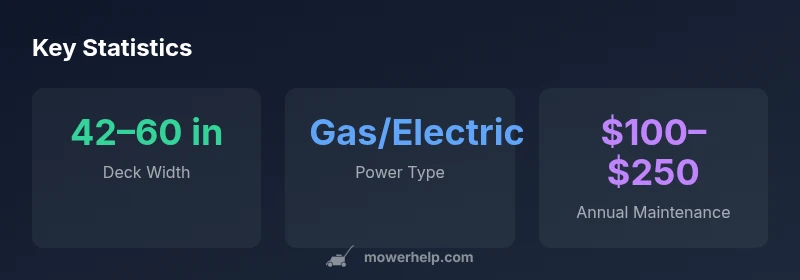
For many homeowners, the decision comes down to yard size, terrain, and personal preference for fuel type. If you routinely cut across a medium to large lawn, a wider deck (42–60 inches) typically reduces mowing time and improves edge-to-edge efficiency. Turning radius matters too: tight spaces around beds and fences benefit from the zero-turn advantage, but offset-tight turning may require more careful handling on slopes. Power delivery, whether gas or electric, affects how quickly you recover after a cut, noise levels, and ongoing maintenance costs. The Home Depot ecosystem often provides a mix of brands and price points, so buyers should map their priorities—speed vs. fuel economy vs. noise—and cross-check warranty terms and service availability.
To select wisely, create a yard profile: average mowing height, typical lawn density, slope presence, and anticipated frequency of mowing. Use these inputs to filter options by deck size, horsepower, and drive system. It’s also wise to consider aftermarket parts availability and potential upgrade paths, since some brands offer widely compatible accessories.
Brand options at Home Depot and what they mean
Home Depot carries several well-known brands, each with a distinct emphasis. A few key players often featured include manufacturers that emphasize robust cutting performance, easy maintenance, and broad dealer support. When you compare brands, consider how their service networks align with your location, as well as the ease of finding replacement blades, belts, and filters. The right brand should have a reputation for reliability, straightforward repair procedures, and a clear warranty framework. In practice, many homeowners find value in brands that balance cutting power, comfort, and cost, rather than chasing the single highest spec. This balanced approach tends to yield the best long-term satisfaction.
From a shopper’s perspective, it’s helpful to read customer reviews about real-world performance and to verify if your local Home Depot carries the model you want in stock. If stock is limited, you may want to reserve online and pick up in-store to avoid backorders. The Mower Help team notes that availability varies by season and region, but the core buying criteria remain consistent: deck size, power type, weight, and serviceability.
Deck size, horsepower, and field usability
Deck width is a primary driver of mowing time. A wider deck can cut more grass per pass but may require more power and a stable platform on uneven terrain. Horsepower and torque influence acceleration and hill-climbing capability, especially on sloped properties. When evaluating Power Type options, gas mowers generally deliver longer runtime and proven torque on heavy grass, while electric models offer quieter operation and lower maintenance costs—though run-time can be a critical constraint on very large lawns. In either case, verify the blade engagement system, mulch capability, and bagging options, since these features affect finishing quality and cleanup time. The goal is to match deck width and power to your yard’s demands so you don’t sacrifice maneuverability for cut-time or vice versa.
Safety and operation best practices for zero-turns
Operating a zero-turn mower requires attention to balance and body positioning. Always wear eye and hearing protection, and review the owner's manual for slope limits. Zero-turn mowers can be more responsive, so practice in a safe, open area before tackling tight corners near trees or flower beds. For slope mowing, avoid mowing across slopes at a steep angle; instead, go up and down slopes where the mower’s weight distribution is more favorable. Regular checks of tire pressure, belt tension, and steering linkage contribute to predictable performance and reduced downtime. The Mower Help guidance emphasizes training before lengthy sessions to minimize operator fatigue and injuries.
Maintenance routines that protect value and performance
Routine maintenance is the backbone of long-term performance for Home Depot zero turn mowers. Key tasks include air filter inspection, spark plug replacement (for gas models), oil changes at recommended intervals, belt inspection, and blade sharpening on a schedule that aligns with mowing frequency. A simple maintenance calendar helps; mark off the main tasks every 25–50 hours of operation or at the start of each mowing season. Keep a log of service intervals and parts replacements. Staying ahead of wear reduces the odds of unexpected downtime and can preserve resale value. The brand you choose should have widely available replacement parts and a network of service centers to simplify ongoing upkeep.
Warranty, service, and parts availability considerations
Warranty coverage is a critical long-term consideration. Most entry-to-mid-range zero-turn mowers from major retailers come with multi-year warranties on the deck and engine, plus coverage on parts for a defined period. Extended warranties may be available, sometimes bundled with delivery and setup services. Check for service center proximity and the ease of ordering belts, blades, filters, and spindles. Availability of in-store service slots and mobile assistance options can significantly shorten downtime if a repair is needed. Align your purchase with a retailer that supports you with rapid access to parts and knowledgeable service technicians.
Buying tips for the Home Depot experience and final steps
Before purchasing, compare in-store demonstrations with online specs. Use in-store demos to evaluate ride quality, control responsiveness, and operator comfort. Confirm the exact deck width, blade type, and mulching capability. Review return policies and test ride opportunities, especially if there are multiple models you’re considering. If you’re torn between two configurations, one practical approach is to select the model with the best combination of service support and parts availability. Finally, consider a bundled package that includes extended warranty and scheduled maintenance, which can save time and money in the long run.
Putting it all together: a practical buying workflow
- Define your yard profile (size, terrain, vegetation density). 2) Shortlist 2–3 models that fit the profile and sit within your budget. 3) Inspect in-store stock or reserve online, ensuring that you can pick up quickly if needed. 4) Review warranty terms, service coverage, and parts availability near your location. 5) Schedule a first maintenance routine and keep a log. By following these steps, you’ll reduce decision fatigue and secure a mower that serves you well over several mowing seasons.
Comparison of Home Depot zero turn mower options
| Model Type | Deck Width | Fuel Type | Approx. Price Range |
|---|---|---|---|
| Entry-level gas | 42-48 inches | Gas | $1,500-$2,500 |
| Mid-range gas | 50-54 inches | Gas | $2,000-$3,500 |
| Premium electric | 60 inches | Electric | $3,000-$4,000 |
Got Questions?
What is a zero-turn mower and how does it differ from a lawn tractor?
A zero-turn mower uses independent rear-wheel drives to pivot on the spot, enabling faster mowing around obstacles. Unlike many lawn tractors, it minimizes the need to back up and reduces overall mowing time, especially on irregular lawns. Consider turning radius, deck width, and maintenance when comparing options.
A zero-turn mower pivots on its own axis for tight turns, cutting mowing time, especially around obstacles. Check deck width and maintenance needs before buying.
Are Home Depot zero-turn mowers suitable for hills or slopes?
Yes, many models handle moderate slopes, but performance depends on deck width, weight distribution, and engine torque. Always check the manufacturer’s slope rating and inspect traction features. If you have steep or uneven terrain, prioritize models with robust weight balance and reliable drive systems.
They work on hills if you choose the right model with good traction and slope rating. Check the specs before buying.
What maintenance schedule should I follow for zero-turn mowers?
Follow a seasonal maintenance plan: check air filters and blades before each season, perform oil changes per the engine manual, inspect belts, and sharpen blades annually or as needed. Keep a service log and replace worn parts promptly to prevent downtime.
Keep a seasonal maintenance log and do basic checks before you mow each season.
Do Home Depot zero-turn mowers come with financing options?
Many Home Depot purchases, including zero-turn mowers, offer financing or promotional plans. Check current offers online or in-store, and compare interest rates, repayment terms, and any maintenance packages included.
Financing is often available—check online or in-store for terms and promos.
Should I buy a used zero-turn mower from Home Depot’s rental program?
Used models from rental programs can be a budget option, but they may carry higher wear. Have the unit inspected, request maintenance records, and verify remaining warranty status before purchasing.
Used rentals can save money, but inspect and verify maintenance records and warranty.
“Zero-turn mowers deliver unmatched maneuverability for tight spaces, but choosing the right model depends on yard size, terrain, and maintenance commitment.”
The Essentials
- Define yard size to choose deck width.
- Evaluate fuel type for runtime and maintenance.
- Verify parts availability and local service options.
- Compare warranties across brands for long-term value.