Lawn Mower Tires at Tractor Supply: How to Choose and Maintain
Learn how to choose, buy, and maintain lawn mower tires at Tractor Supply. This data-driven guide covers tire sizing, tread types, installation, and maintenance for homeowners and DIY enthusiasts.


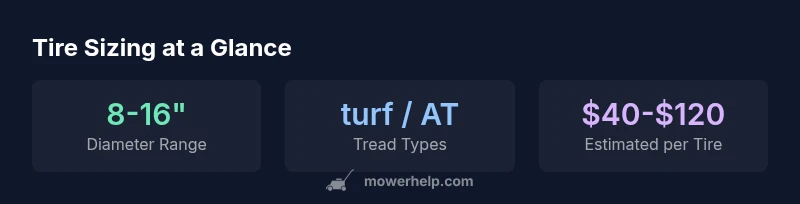
The fastest way to pick the right lawn mower tires from Tractor Supply is to match size, tread, and load rating to your mower model. Most home mowers use tires in the 8–16 inch diameter range with turf or all-terrain tread. Always confirm the sidewall size and rim diameter before purchasing, and consider replacement in pairs for balanced performance.
Why Tire Choice Impacts Performance
Your mower's tires are the only link between the ground and the cutting deck. The right tires influence traction, flotation, ride comfort, and even fuel efficiency. When shopping for lawn mower tires at Tractor Supply, size, tread, and load rating matter as much as the blade or engine. According to Mower Help Team, choosing a balanced set on the same axle improves steering and traction, reduces soil compaction, and minimizes vibration during mowing. In this section, we’ll unpack how diameter, tread style, and inflation interact to determine performance, and how to use Tractor Supply inventory to locate compatible options. We’ll also discuss when replacing tires in pairs is warranted and how to verify you’re buying the correct product for your wheel hubs.
Understanding Tire Sizing on Lawn Mowers
Tire sizing can be confusing because manufacturers use a mix of inch-based and sometimes metric labels. The most important numbers denote overall diameter, tire width, and rim diameter. A common residential label is 18x9.5-8 or 15x6-6. The first number usually reflects diameter, the middle number shows width, and the last number indicates rim size. When you shop at Tractor Supply, check the sidewall on your existing tire to confirm these numbers before ordering. If you’re unsure, bring a photo or note the model of your axle and hub so staff can confirm fit. Keeping size in line with OEM specs preserves handling, weight distribution, and turf health.
Tire Tread Options and Terrain
Tread choice strongly influences traction and turf impact. Turf tires with a smooth or lightly grooved pattern minimize lawn damage and offer good flotation on soft soil—ideal for manicured yards. All-terrain tires bite better on damp or uneven ground but may leave longer traces on delicate turf. For heavier tractors or frequent wet mowing, an aggressive tread provides traction but can increase soil disturbance. When evaluating Tractor Supply options, reflect on your mowing frequency, soil type (clay, loam, sand), and whether you navigate slopes or obstacles. In general, seek a tread that balances grip with mowing quality, rather than sheer aggressiveness. This guidance aligns with ongoing analyses of tire performance in home-use scenarios.
Tractor Supply vs. Other Retailers: Pros and Cons
Choosing where to buy tires matters for price, availability, and returns. Tractor Supply typically offers a broad in-store selection, staff with product knowledge, and straightforward return policies, which helps DIYers avoid misfits. Online marketplaces expand options but complicate alignment checks and fit verification. Look for bundles or promotions that encourage purchasing in pairs, a strategy that supports even traction and handling. A practical approach is to bring your mower model, OEM tire size, and hub type to whichever retailer you visit so staff can confirm compatibility and reduce the chance of ordering the wrong product. Retailers differ in stock and warranty terms, so compare both price and policy.
How to Read the Sidewall and Match to Your Tractor
The sidewall contains critical data to guide your purchase. The basic markings indicate diameter, width, and rim size, while the load rating and speed rating define safe operation. Start by locating the tire code—patterns like 18x9.5-8 or 20x10-8 are common. Then verify the load rating and the maximum permissible speed; some mowers require higher load ratings for heavier decks or attachments. If you’re replacing a pair, ensure that both tires share the same size, tread, and load rating for consistent performance. If you encounter uncertain markings, consult your mower’s manual or ask Tractor Supply staff to confirm compatibility with your model.
Installation, Balancing, and Safety Tips
Installing new tires demands careful handling to avoid injury and damage. Begin by releasing air if needed, then unseat the bead using tire irons or protective blocks. Place the tire squarely on the rim, reseat the bead evenly, and inflate to the manufacturer’s recommended pressure. If your setup uses tubes, inspect beads and rims for nicks that could cause leaks. After mounting, verify wheel balance, belt alignment, and confirm there’s no contact with the fenders or deck. Work slowly, use gloves, and ensure the machine is fully secured before lifting. For added safety, disconnect the spark plug or battery when performing internal checks while the tire is removed.
Lifespan, Maintenance, and Inflation Practices
Regular maintenance extends tire life and preserves mowing performance. Keep tires inflated to the recommended pressure; underinflation increases wear and reduces fuel efficiency, while overinflation can reduce traction and heighten the risk of a blowout. Rotate tires during routine service or when you notice uneven wear, particularly if one side shows more wear than the other. Inspect for cracks, cuts, or embedded debris that can cause slow leaks. Store the mower in a cool, dry place to minimize rubber degradation. A weekly check of tire pressure during the mowing season, followed by a quick readjustment to OEM specs, can noticeably improve longevity. The Mower Help Team notes that proactive maintenance lowers long-term costs.
Cost, Value, and Long-Term Savings
Investing in quality mower tires at Tractor Supply yields tangible benefits in traction, fewer flats, and more consistent mowing, especially on variable turf. When evaluating value, consider the total lifecycle cost rather than just the upfront price: longer-lasting tires and easier installation reduce downtime and future replacements. Replacing tires in pairs often provides the best balance of stability and grip, and some retailers offer bundles or warranties that reduce overall cost. While exact prices vary by size and tread, budget for a mid-range tire that balances wear resistance and performance. By choosing durable tires and maintaining proper inflation, you protect lawn health and reduce maintenance over time.
Quick Troubleshooting Checklist Before You Buy
- Verify your mower model number and OEM tire size before shopping.
- Decide between turf, all-terrain, or aggressive tread based on soil and lawn conditions.
- Confirm wheel hub size, rim diameter, and whether tubes are required.
- Consider buying tires in pairs to maintain equal traction and handling.
- Review the retailer’s return policy and warranty on tires before purchasing.
Tire sizing and options for common lawn mowers
| Aspect | Typical Value | Notes |
|---|---|---|
| Tire diameter | 8-16 inches | Common range for residential mowers |
| Tread type | turf/all-terrain | Depends on ground conditions |
| Load rating | varies by model | Check sidewall for exact rating |
Got Questions?
Do I need to replace both mower tires at the same time?
In most cases, replacing tires in pairs ensures balanced traction and handling. If one tire is severely cracked or worn unevenly, plan to replace both on that axle.
Yes—replacing both tires on the same axle maintains balance and prevents uneven wear.
How do I read tire size markings on a lawn mower tire?
Look for a sequence like 18x9.5-8 or 20x10-8 on the sidewall. The first number indicates diameter, the second is width, and the last is the rim size.
Check the sidewall; the diameter comes first, then width, and finally rim size.
Are Tractor Supply tires compatible with all lawn tractors?
Most Tractor Supply tires fit common wheel assemblies, but you must confirm the axle width, hub size, and wheel mounting pattern for your model.
Always verify with your mower’s manual or the seller before buying.
Tubeless vs tubed tires for lawn mowers?
Tubeless tires are more common today and easier to maintain; tubed variants exist on older equipment. Choose based on wheel type and seal integrity.
Most modern mowers use tubeless tires; check your rims before buying.
What tread is best for wet or damp lawns?
A broader, shallower tread with higher flotation helps in damp conditions, reducing sinking and slippage. Avoid overly aggressive ruts on soft soil.
For wet lawns, turf or all-terrain tread with high flotation works well.
“Proper tire selection balances traction, ride comfort, and mower efficiency. Always verify compatibility with your model before purchase.”
The Essentials
- Replace tires in pairs when possible
- Know tire size from the sidewall
- Tractor Supply offers common sizes and tread options
- Maintain proper inflation to extend life
- Inspect tires for cracks and punctures regularly