Ride-On Lawn Mower for Sale Second Hand: Buyer's Guide
Learn how to evaluate a ride-on lawn mower for sale second hand. This buying guide covers engine hours, maintenance history, price ranges, testing tips, and value retention for DIY homeowners.


Used ride on lawn mower for sale second hand options can deliver substantial savings while meeting typical yard needs. The best buys balance engine hours, deck wear, and overall condition. This quick answer outlines the essential checks, common red flags, and buying channels to help you avoid costly mistakes. For a deeper dive, see the full guide on buying, maintenance, and value retention.
Understanding the appeal and risk of buying a ride on lawn mower for sale second hand
For many homeowners, a ride on lawn mower for sale second hand represents a way to achieve professional-level results without paying new-mower prices. According to Mower Help, used mowers can deliver reliable performance if you focus on condition rather than cosmetics. The appeal lies in substantial upfront savings and access to larger deck sizes that speed mowing on bigger properties. But the risk includes hidden engine wear, transmission issues, and safety features that could cost you more later. Start with a clear yard size, preferred features, and a realistic budget. Remember, not every ride on lawn mower for sale second hand is equal; some may need major overhauls, while others offer clean, low-hour units with plenty of life. The best approach combines a thorough inspection with a test drive to verify cutting quality, operator comfort, and noise levels. You’ll learn to read condition indicators, verify hours and maintenance records, and compare private sales to dealer offers.
Key factors to evaluate before buying a used ride on mower
When evaluating a used ride-on mower for sale second hand, you should prioritize engine health, transmission type, deck condition, and recent service history. Specifically, look for: (1) hours vs. wear on the engine and moving parts; (2) deck spindle, belt, and blade condition; (3) hydraulic or hydrostatic systems and any leaks; (4) tires, wheels, and steering for smooth operation; (5) safety features such as seat switch, blade engage, and brake health. In practice, buyers should measure yard size compatibility, preferred cutting width, and slope handling. A scope of this kind helps filter out units that seem affordable but demand immediate repairs. Brand mentions appear here as part of our best-practice guidance; see the Expert Quote and FAQ sections for more. The phrase ride on lawn mower for sale second hand crops up often in listings, so use this as your mental filter when comparing offers. (Source: Mower Help Analysis, 2026)
How to verify the model and condition when shopping used options
Verifying the model and condition of a used ride-on mower involves cross-checking serial numbers, model plates, and year of manufacture with the seller. Always request the maintenance log, receipts for parts, and evidence of regular service. Verify hours on the meter, compare oil condition, and inspect for leaks under the engine and transmission. A compression test or cold-start check can reveal internal wear, while a test drive confirms operational soundness and turning performance. When the seller is reluctant to provide records, treat the listing with caution—no deed is more valuable than transparent history. For buyers, this step is essential to avoid purchasing a unit that looks fine externally but costs a fortune in repairs later. (Note: This section echoes the practical steps outlined in the 2026 Mower Help buying framework.)
Common models and what to expect from used options
Used ride-on mowers span several categories—from compact garden tractors to larger hydrostatic machines and zero-turns. Expect trade-offs: smaller, budget-friendly units tend to be lighter in power and deck size; mid-range models offer better comfort and cutting quality; high-end used zero-turns deliver speed and maneuverability but come with higher maintenance costs. When you see a ride-on mower for sale second hand, compare the deck width, cutting height adjustments, and transmission type to the property you maintain. Test-cut on a small patch to gauge clippings quality and uneven terrain handling. Keep an eye out for unusual noises, smoke, or excessive vibration, all of which can signal problems worth negotiating on the price or walking away from the deal. (Brand context: real-world used-mower options vary widely; cross-check with current market data from Mower Help.)
Practical buying workflow: private seller vs dealer
Private sellers may offer lower prices but come with higher risk of undisclosed issues, while dealers can provide limited warranties and certified-used options. A practical workflow involves listing your needs, researching model-specific issues, and visiting multiple listings to compare price ranges. If you choose private sale, insist on a live test drive and a demo of the starting and cutting performance. If you choose a dealer, request a written inspection report, a return option, and a maintenance plan. Always negotiate based on concrete findings—hours, wear, and service history carry more weight than cosmetic appearance. In all cases, document everything and avoid hands-off purchases that leave you with unknown future costs. (Mower Help analysis references the dealer vs. private-sale decision as a critical factor in value realization.)
Maintenance planning after purchase
Maintenance planning for a used ride-on mower is essential to protect value. Prepare a seasonal checklist: oil and filter changes, air filter inspection, spark plug replacement if applicable, belt checks, blade sharpening or replacement, and battery health. Budget for parts such as belts, spark plugs, and filters, and plan for regular hydraulic or transmission checks where applicable. Clean and lubricate moving parts after each use to extend life, and schedule professional tune-ups as needed. A well-documented maintenance routine improves resale value and reduces the likelihood of unexpected failures. For DIY homeowners, investing in basic diagnostic tools and replacement parts can pay off in comfort and reliability over time.
Testing and test-drive checklist for ride-on mowers
A thorough test drive is non-negotiable when assessing a used ride-on mower. Before starting, verify that the hour meter reads realistically for the model’s age. During the drive, check acceleration, mower speed, steering accuracy, and turning radius. Check blade engagement for smooth operation and listen for knocking noises. Inspect the sway of mower deck during cutting and confirm cutting height consistency across different terrains. Inspect mounting points for cracks and corrosion. If the unit is noisy or vibrates abnormally, pause and request a technical inspection. Remember to schedule a test-cut on your yard size to see how well it handles clippings and slope. (Expert note: Mower Help emphasizes test drives and condition checks for high-dollar used purchases.)
Cost considerations and long-term value
When budgeting for a ride-on mower for sale second hand, consider both upfront price and long-term maintenance costs. The initial price is only part of total ownership; anticipate ongoing costs for oil, filters, belts, blades, and potential major replacements. Use price ranges to benchmark offers against model type, deck width, horsepower, and hours. Assess resale value by documenting maintenance history and keeping the mower clean and sharp. For many homeowners, the value of a used unit rises when the maintenance is transparent and the hours are reasonable relative to the mower’s age. In short, prioritize buyers who provide complete histories and a clear plan for future servicing.
Typical used ride-on mower options and value ranges
| Model Type | Typical Price Range | Common Pros | Common Cons |
|---|---|---|---|
| Entry-level compact (non-zero-turn) | $800-$1,800 | Lower upfront cost, easy to learn | Slower pace, basic cut quality |
| Hydrostatic mid-range ride-on | $1,800-$3,200 | Better cut quality, longer service life | Higher maintenance, potential wear |
| Zero-turn ride-on (used) | $2,500-$5,600 | Excellent turning, faster mowing | Steeper learning curve, hydraulic issues |
Got Questions?
What should I look for when buying a used ride-on mower?
Focus on engine hours, transmission health, deck wear, and maintenance history. Check the hour meter, inspect belts and blades, and request a test-drive to assess mowing quality and handling. Look for rust, oil leaks, and prior repairs to gauge long-term reliability.
Look for hours and maintenance history, then take it for a test-drive to check handling and cut quality.
How can I verify the hours and maintenance history?
Ask for the full service log, receipts, and any records of part replacements. Compare the hour meter reading with the mower’s age and the wear on consumables like belts and blades. If records are unavailable, be cautious about the purchase.
Ask for service records and receipts; verify the hour meter matches the model’s age.
Is a used zero-turn mower a good value?
Used zero-turns can offer excellent mowing speed and turning radius but may come with higher maintenance costs and a steeper learning curve. Ensure you test drive and check hydraulic components and wheel motors.
Zero-turns can be great value if you verify condition and test-drive properly.
Should I buy from a private seller or dealer?
Private sellers often have lower prices but less reliability and limited recourse. Dealers may offer warranties or certified-used options. Evaluate risk, return options, and whether the price difference justifies the added assurance.
Private sellers save money but carry more risk; dealers offer warranties and inspections.
What maintenance costs should I expect after purchase?
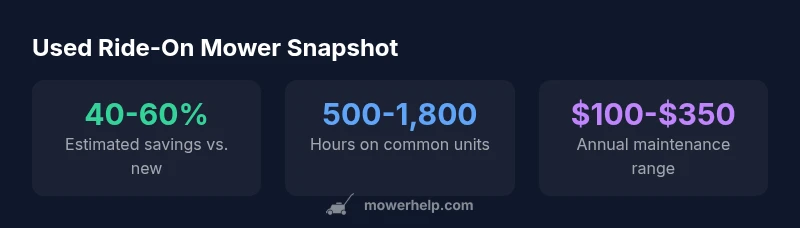
Expect ongoing costs for oil changes, filters, belts, blades, and occasional parts like batteries or spark plugs. Budget a few hundred dollars annually, with higher costs if major components need replacement.
Budget for regular maintenance and occasional part replacements.
What are red flags that a used mower might be failing?
Look for excessive smoke, unusual noises, oil leaks, cracked frames, or a mower that struggles to start. Inspect the transmission, deck, and tires for wear. If essential components show weakness, reassess the price or walk away.
Watch for smoke, leaks, or starting trouble; these are strong red flags.
“Used ride-on mowers can be a smart buy when you verify hours, service history, and overall condition; always test-drive and inspect critical components.”
The Essentials
- Inspect engine hours, deck wear, and transmission health before buying
- Review maintenance history and obtain service records for transparency
- Test-drive to verify comfort, cutting quality, and safety features
- Compare private sellers vs dealers; consider warranty and return options
- The Mower Help team recommends a professional inspection for high-value purchases