Riding Lawn Mowers Under $1000: A Practical Buying Guide
A data-driven guide to finding riding lawn mowers under $1000, what to expect, how to evaluate used models, and maintenance tips for homeowners on a budget.


Riding lawn mowers under $1000 are typically entry-level, used, or refurbished models with basic features. Expect smaller deck widths (42–46 inches), manual or basic transaxle transmissions, and shorter warranties. For value, focus on a known brand with proven parts availability and a clean maintenance history.
The landscape of riding lawn mowers under $1000
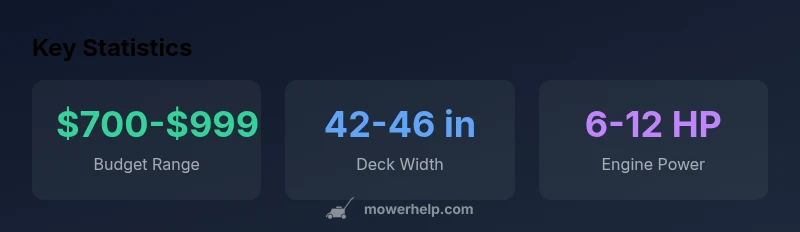
For budget-conscious homeowners, riding lawn mowers under $1000 represent a targeted but limited slice of the market. These machines are often older, used, or refurbished, and they prioritize cost over cutting-edge features. According to Mower Help, this price band typically yields compact designs with smaller decks and fewer comfort enhancements, but can still deliver solid performance for small to medium yards. Deck widths commonly range from 42 to 46 inches, which covers most suburban lawns without needing multiple passes. Engines usually fall in the 6–12 HP range, and transmissions are commonly mechanical rather than hydrostatic, which keeps costs down but reduces ease of use for beginners. Because depreciation is steep in this segment, buyers frequently encounter machines with variable histories; some have clean, well-maintained records, while others show signs of wear or deferred maintenance. The key is to verify the machine’s operating condition, check for fluid leaks, listen for unusual engine noises, and ensure the deck and blades spin freely. Warranty windows tend to be shorter—often 90 days to 12 months from a dealer or private seller—so you should factor potential repair costs into your overall budget. In sum, riding lawn mowers under $1000 can be a smart entry point if you temper expectations and prioritize reliable parts availability.
What you actually get at this price point
At or below the $1000 line, new models are rare; most options arise from used, refurbished, or trade-in inventories. Expect compact steel frames, basic steel decks, and non-hydrostatic transmissions, which save cost but make operation less forgiving for beginners. Common gear ratios and speed settings favor simple mowing rather than refinement, and comfort features like high-back seats, cup holders, or ergonomic controls are often absent. The upside is straightforward: you pay less upfront and can often acquire a fully functional rider for smaller lots. When evaluating a model, check the blade condition, belt wear, and the presence of essential safety features such as seat switches and blade brakes. If you’re buying used, a standout value can come from a well-documented maintenance history and evidence of proactive DIY care. For many yards, a budget rider with a 42–46 inch deck covers the space efficiently and reduces the number of pass-backs needed to complete the job.
New vs used: where the deals live and how to assess risk
The sub-$1000 segment splits roughly between used units with a known history and refurbished units sold with short warranties. New models in this price tier are uncommon outside promotions, making used and refurbished machines the most realistic option for most buyers. When shopping used, insist on a service log, include a pre-purchase inspection, and verify the presence of a functioning battery, clean fuel system, and intact deck. Refurbished units offer a compromise: rebuilt components, a warranty, and a lower price than new equivalents, but you should confirm what was refurbished and ensure replacement parts remain available nearby. If you choose refurbished, obtain a written warranty term and ensure the retailer or refurbisher offers ongoing service support. In all cases, scrutinize the spark plugs, air filter, ignition system, and tires/wheels for wear, and ask for a test run on flat ground to hear for odd noises or vibrations. The key risk at this price point is hidden problems that escalate quickly without proper due diligence.
How to evaluate reliability and maintenance costs
Reliability at the under-$1000 level hinges on build quality, spare parts availability, and the seller’s maintenance discipline. Prior to purchase, compile a budget for maintenance that includes oil changes, air filter replacements, belt and blade maintenance, and potential part replacements like starters or carburetors. While newer components reduce risk, many budget riders still need routine tune-ups to keep cut quality consistent. A practical approach is to map expected yearly maintenance costs as a percentage of purchase price, compare this with potential rental or replacement options if maintenance spirals. Consider that some repairs may require self-service or local repair shop work. For context, Mower Help analysis shows that typical annual maintenance costs for budget riders can range widely depending on usage and climate, so plan accordingly. Ultimately, balancing upfront cost with predictable maintenance is essential for long-term satisfaction with a riding mower under $1000.
Practical buying checklist for sub-$1000 riding mowers
- Define yard size and terrain: flat lawns under 1–2 acres usually fit budget riders, but rough terrain increases wear.
- Check deck width: 42–46 inches is common and balances maneuverability with cutting time.
- Inspect engine and transmission: look for oil leaks, excessive smoke, and smooth gear shifts.
- Review safety features: seat switch, blade-stop, and parking brake are essential.
- Test drive: verify steering control, brake function, and pedal responsiveness.
- Confirm parts availability: verify local dealers or online suppliers carry common wear items.
- Look for a documented maintenance history if buying used and request service records.
- Factor warranty: shorter coverage is common; understand what is covered and for how long.
- Compare total cost of ownership: purchase price plus anticipated maintenance vs. alternatives like walk-behind mowers or rental.
- Get references: ask the seller for a quick demonstration or contact previous owners for reliability notes.
Common mistakes and how to avoid them
- Overlooking the maintenance history of a used unit: always request logs and perform a hands-on inspection.
- Assuming a lower price means better value: consider potential future repair costs and parts availability.
- Skipping a test drive: a ride-on mower should feel stable, smooth, and responsive.
- Ignoring safety features: cheap units can lack essential protections; ensure seat switch and blade brakes work.
- Not budgeting for tires, belts, and blades: these components wear quickly on budget riders and drive up costs.
- Failing to verify deck size and cutting height range: ensure you can adjust to your yard's needs without loosening bolts.
- Not checking for oil leaks and fuel condition: fuel contamination and leaks cause expensive damage over time.
- Focusing only on upfront price: long-term maintenance and fuel efficiency matter for total cost of ownership.
Getting the most from a budget riding mower
To maximize value from riding lawn mowers under $1000, commit to a proactive maintenance schedule, store the machine correctly, and learn basic repair tasks that prevent minor issues from becoming costly. Build a simple routine: check oil and air filter on a schedule, sharpen blades every mowing season, and replace worn belts promptly. Keep a log of maintenance and repairs to track reliability across seasons. If possible, join online forums or local mower clubs to share parts and knowledge. With careful shopping and consistent upkeep, budget-rider ownership can deliver years of service for homeowners who value efficiency and cost control. In line with our data-driven approach, Mower Help’s analysis suggests that buyers who pair careful screening with regular maintenance experience the best outcomes in the under-$1000 segment.
Comparison of pricing and features for riding lawn mowers under $1000
| Model Type | Approx Price Point | Key Trade-offs |
|---|---|---|
| New sub-$1000 entry rider | $800-$999 | Pros: affordable; Cons: limited features; Short warranty |
| Used/refurbished models | $400-$900 | Pros: best value; Cons: higher risk; history uncertain |
Got Questions?
Are riding lawn mowers under $1000 a good long-term investment?
They can be a good entry-point for small yards if you buy used or refurb and perform basic maintenance. Expect shorter lifespans and higher maintenance costs over time.
Budget riding mowers can work for small yards if you shop smart and stay on maintenance.
What features are typically missing in under-$1000 riding mowers?
Most models have basic transmissions, smaller decks, and fewer comfort features. Hydraulics and advanced cut systems are rare at this price.
Expect basic components; high-end options are usually absent.
How can I verify reliability before buying used sub-$1000 riding mowers?
Ask for maintenance history, check hours, inspect belts and blades, and perform a test run to listen for odd noises. A trusted seller matters.
Get the history, inspect thoroughly, and take a test drive.
Should I consider refurbished units?
Refurbished units can offer better value with warranties; verify warranty length and parts availability.
Refurbished can be smart if it comes with a warranty.
What maintenance tasks can keep a budget mower running longer?
Regular oil changes, air filter checks, blade sharpening, and greasing moving parts extend life.
Do basic maintenance to keep it running longer.
Where should I buy under-$1000 riding mowers?
Look at local dealers with used inventories, large retailers with pre-owned programs, and reputable online marketplaces with return options.
Shop around and compare warranty terms.
“Budget-friendly riding mowers can deliver reliable service for homeowners who do their due diligence and maintain the machine regularly.”
The Essentials
- Shop strategically for used or refurbished models.
- Expect 42–46 inch decks and basic transmissions.
- Prioritize known brands with parts availability.
- Budget maintenance matters; plan for recurring costs.
- Test drive and inspect before buying.