Riding Mowers for Sale: A 2026 Buying Guide
Explore riding mowers for sale in 2026 with expert buying tips, feature comparisons, and maintenance guidance to help homeowners pick the right mower for their lawn size and terrain.


Riding mowers for sale are self-propelled lawn tractors built for medium-to-large lawns, offering larger cutting decks and comfortable operation. When shopping, compare deck width, horsepower, transmission type, and maintenance access; consider warranty and dealer support. Riding mowers are ideal for lawns around one acre and up, where push mowers struggle. They come in hydrostatic and geared transmissions; hydrostatic offers smoother operation, while gear drives can deliver lower maintenance costs.
Why riding mowers fit larger lawns
According to Mower Help, riding mowers for sale are a practical option for homes with medium-to-large lawns. They blend speed with comfort, enabling longer mowing sessions without fatigue. A key advantage is a wider cutting deck and a seated operator, which helps you cover more ground in less time. When evaluating options, start with your yard size and terrain: if you routinely mow 1 acre or more, a rider can save hours per season compared with a push mower. You’ll also want to consider terrain features such as slopes and wet areas; some models offer enhanced traction and stability to handle hills. In addition to size, think about the work you’ll perform beyond mowing: bagging, mulching, towing attachments, or snow plowing in winter. Modern riding mowers also vary in ride quality: hydrostatic transmissions deliver smooth, effortless control, while gear-drive options may be simpler and more economical to repair. Another factor is service and parts availability in your area; a strong dealer network reduces downtime when maintenance is required. In short, a riding mower is an efficient, comfortable solution for lawns that are not easily handled by smaller machines, and the right model can transform weekend maintenance into a quick, predictable task.
Key features to compare when shopping
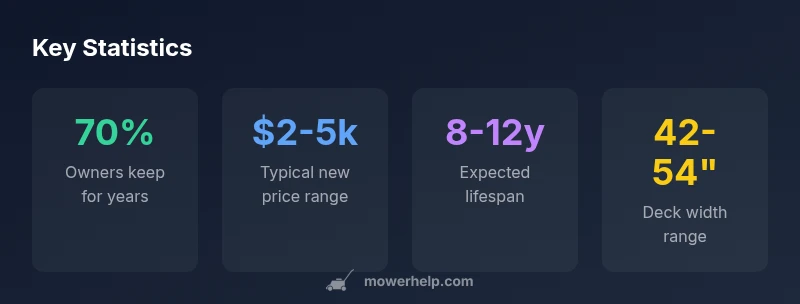
When you’re evaluating riding mowers for sale, focus on features that directly impact daily use and long-term costs. Deck width (inches) determines how many passes you make per lawn area; common ranges are 42–54 inches. A wider deck saves time on large parcels but may complicate storage in tight spaces. Engine horsepower should match lawn conditions; more power helps with tall grass and damp turf, while excess power can waste fuel. Transmission type matters for feel and maintenance: hydrostatic transmissions offer smooth, stepless speed control, ideal for uneven ground, whereas geared transmissions can be more economical and easier to repair. Drive system quality, including 2WD vs 4WD options, improves traction on slopes or soft soil. Consider cutting height adjustment range and ease of use, as most models offer 1–4 inches. Finally, assess attachment options (bagger, mulching kit, snow plow) and the availability of service, parts, and warranty from the dealer. A strong aftermarket and accessory ecosystem adds long-term value.
New versus used versus certified pre-owned
Buying riding mowers for sale requires weighing the tradeoffs between price, warranty, and condition. New mowers come with the latest features, full warranties, and zero wear, but carry a higher upfront cost. Used mowers are more affordable but may have hidden wear or past maintenance gaps; a pre-purchase inspection is essential. Certified pre-owned (CPO) models strike a balance: inspected, refurbished, and backed by limited warranties. When evaluating, request maintenance records, confirm belt and blade condition, and test-drive under typical loads to gauge performance. If budget is tight, negotiate on accessories or a bundled maintenance package to maximize value while preserving warranty protections. In all cases, ensure compatibility with your yard size, terrain, and storage constraints.
Maintenance and ownership costs
Riding mowers for sale require routine upkeep to reach their advertised lifespans. Expect to perform regular tasks such as oil changes, air filter checks, blade sharpening, belt inspection, and battery health checks. The frequency depends on usage and conditions; heavy, frequent mowing or rough terrain increases wear. Parts availability and service quality influence total ownership costs, so prioritize brands with accessible parts and local dealers. Budget for seasonal maintenance and unexpected repairs, especially for older used models. Proper storage, winterization, and routine inspections can extend life and reduce downtime, ultimately lowering the total cost of ownership over time.
Buying online vs in-store: tips for better deals
Online listings can offer competitive pricing, but in-store visits help verify mower condition and test-drive comfort. Always request a thorough demonstration or test run, especially for transmissions and cutting mechanisms. Compare warranties, return policies, and shipping costs; some dealers offer bundled delivery or on-site set-up. When financing, compare interest rates and total cost across lenders and the dealer, and beware extended terms that increase total interest. If buying used, insist on maintenance records and obtain a trusted third-party inspection. Finally, consider seasonal promotions or bundled accessories that add value without inflating the sticker price.
Common pitfalls and how to avoid them
Avoid overestimating the mower’s capabilities for your yard. Mismatches between deck width and gate width, or choosing a lighter-duty model for a hilly property, lead to poor performance and higher maintenance. Do not neglect storage space and transportation constraints; a unit that won’t fit through your shed door is a false economy. Skipping maintenance or delaying blade replacement reduces efficiency and increases fuel use. Finally, beware aggressive online listings with unclear warranties or hidden shipping fees. Always verify the dealer’s reputation and cross-check model numbers with manuals.
Real-world buying scenarios and case studies
Consider two typical scenarios. Scenario A: a homeowner with a 1.2 acre lot, gentle slopes, and a desire to mulch and bag leaves. A 48–54 inch deck with hydrostatic transmission offers efficient coverage and smooth operation, with a reasonable warranty and dealer support. Scenario B: a budget-conscious buyer with 0.75 acres who mainly mows flat terrain. A used riding mower with a current maintenance history and a modest warranty, possibly with a mulch kit upgrade, can deliver good value if inspected thoroughly. In both cases, the total cost of ownership, including maintenance, storage, and potential repairs, should guide the final choice.
Summary: how to start your search today
Begin by estimating your lawn size and terrain, then list must-have features. Use buying guides and dealer recommendations to narrow your options, and don’t rush the decision. Visit local dealers to compare models side-by-side, test drive, and review warranty terms. With a systematic approach, you’ll find riding mowers for sale that balance performance, longevity, and cost.
Riding mowers vs alternatives
| Category | Ideal Lawn Size | Typical Price Range | Pros/Cons |
|---|---|---|---|
| Riding mower (standard) | 1-2 acres | New: 2000-5000; Used: 1000-3000 | Pros: comfortable, consistent; Cons: storage, heavier |
| Compact tractor | 1-3+ acres | New: 5000-12000 | Pros: versatile attachments; Cons: higher cost |
| Zero-turn mower (for speed) | 0.5-3+ acres | New: 3000-6000 | Pros: fast; Cons: maneuverability on slopes |
Got Questions?
What should I consider when buying riding mowers for sale?
Key factors include deck width, horsepower, transmission type, drive system (hydrostatic vs gear), and warranty. Also assess your lawn size, terrain, and storage space.
Look at deck size, transmission, and warranty to fit your lawn and storage.
Are riding mowers worth it for small yards?
For yards under about half an acre, push mowers or a smaller rider can be more economical. Consider comfort and time saved.
For tiny yards, a smaller mower or push mower might be better.
What is the difference between new, used, and certified pre-owned riding mowers?
New mowers come with warranty and latest features; used models cost less but carry more risk; certified pre-owned balance price with inspected condition.
New has warranty; used saves money but more risk.
Can I finance riding mowers for sale?
Many dealers offer financing; compare interest rates, terms, and total cost; check for manufacturer promotions.
Yes, financing options are common with dealers.
How can I verify a used riding mower's condition before buying?
Inspect engine, transmission, blades, belts, and tires; request maintenance records and a test drive; check for leaks and smoke.
Get a test drive and look over the engine and belts.
“Riding mowers for sale should be chosen based on total ownership costs, not just sticker price. Prioritize warranty, service coverage, and parts availability.”
The Essentials
- Assess lawn size to choose deck width
- Prioritize transmission type based on terrain
- Factor total ownership costs, not just price
- Verify warranty and local dealer support