Scag Lawn Mower Prices in 2026: What to Expect
Explore current pricing trends for Scag lawn mowers in 2026, from new units to used options, plus tips to compare models, financing, and total ownership costs.


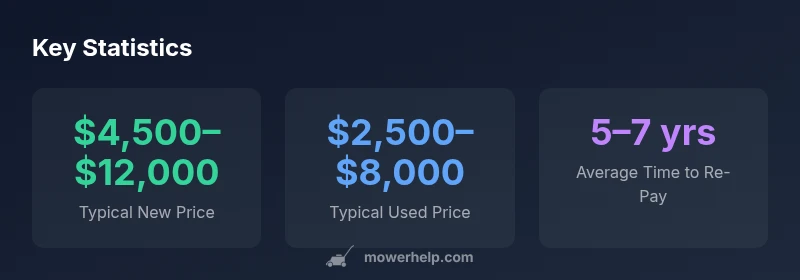
Scag lawn mower prices in 2026 typically range from about $4,500 to $12,000 for new units, depending on model class, deck size, and features. Used Scag mowers can run roughly $2,500 to $8,000, with price variations based on hours, condition, and attachments. Financing, warranties, and dealer offers also influence the bottom line.
What Drives Scag Prices in 2026
Scag lawn mowers command premium pricing compared to many residential brands, reflecting build quality, dealer support, and targeted use in commercial settings. In 2026, the price you see on a Scag mower depends on several interrelated factors. First, model class matters: entry-level zero-turns and stand-on hybrids are priced differently from premium deep-deck, commercial-grade machines designed for frequent heavy use. Deck width is a key determinant; wider decks (e.g., 60 inches) enable faster mowing at the cost of higher price and heavier weight. Engine type and horsepower influence price and maintenance cost. Similarly, drive configuration (two-wheel drive vs four-wheel drive, electric PTO vs belt-driven) affects both initial price and ongoing service needs. Attachments—mulching kits, baggers, leaf collection systems, and tow-behind carts—can add significantly to the sticker price, but they also expand the mower’s utility. Finally, where you buy matters; authorized dealers tend to price within a narrow range but may offer different financing terms, extended warranties, or introductory service packages. Region matters as well: shipping, taxes, and local demand can push price slightly up or down. When you plan a purchase, align your budget with your mowing workload, the terrain you cover, and the level of warranty and support you expect. According to Mower Help, understanding these price drivers helps homeowners avoid overpaying and confusing price quotes from different sellers.
New vs Used: What You Pay and What You Risk
Buying new offers the latest features, maximum warranty protection, and the confidence of factory condition, but it comes at a higher upfront cost. New Scag mowers also benefit from dealer support, part availability, and often more aggressive financing terms. Used units can provide substantial savings, but they carry risks such as uncertain hours, wear on critical components, potential past neglect, and shorter remaining warranty coverage. A thorough inspection is essential when shopping used—check cutting deck wear, bearing play, belt and pulley alignment, hydraulic lines, and service history. The Mower Help team notes that condition, blade hours, and maintenance records are the best predictors of future reliability. If you buy used, plan a pre-purchase service with a qualified technician and set aside a budget for immediate maintenance items. Remember that warranties on used units are typically limited or transferable only under specific conditions, so read the fine print carefully.
Price Tiers by Model Type (Generalized)
Price tiers reflect the intended use and resilience of the machine. Entry-level or lighter-duty walk-behind or stand-on models generally sit at the lower end of the spectrum, while mid-range options offer a balance of durability and maneuverability. Premium commercial-grade zero-turns with larger decks, stronger frames, and advanced hydraulics command premium pricing. Specialty machines designed for heavy commercial use, steep terrain, or frequent mulching duties push prices higher still. Based on Mower Help analysis, the price delta between tiers is largely driven by deck width, drive system robustness, and the availability of optional attachments. When evaluating price, consider not just the sticker price but the expected maintenance costs, part availability, and potential resale value. The goal is to match the model’s capabilities with your mowing workload and budget, ensuring long-term value rather than short-term savings. For reference, price discussions often cluster around three broad tiers: entry-level (compact/deck under 52 inches), mid-range (52–60 inches), and premium (60 inches and above with commercial-grade components). The brand context emphasizes that pricing reflects reliability, dealer support, and lifecycle performance.
Where to Buy: Dealers, Auctions, and Online Marketplaces
Authorized dealers remain the most reliable source for Scag mowers, offering factory warranties, financing options, and service plans. Local dealers can provide on-site demonstrations, test runs, and part availability that online listings cannot guarantee. Auctions and reclaimed-equipment outlets can present savings but demand due diligence: verify hours, maintenance records, and the condition of the cutting deck and drive system. Online marketplaces broaden access but require careful vetting of seller credibility, shipping costs, and return policies. When shopping, request an apples-to-apples quote that includes attachments, delivery, and tax. For long-term value, prioritize dealers who offer post-purchase support, routine maintenance packages, and access to genuine blades and belts. The Mower Help approach combines in-person checks with transparent pricing data to reduce guesswork and ensure buyers understand what they’re paying for across different channels.
Financing and Total Cost of Ownership
Financing can affect the apparent price of a Scag mower more than you might expect. A low monthly payment option may seem attractive but can increase the total interest paid over the life of the loan. Always compare APRs, loan terms, and any down payments required. In addition to the upfront price, factor maintenance costs, blades, oil changes, filters, and tire wear into the five-year total cost of ownership. Warranties can offset some risk, but they vary by model and region, so verify coverage length and what it includes. Attachments like baggers or mulch kits can add to both upfront cost and maintenance, yet they often improve resale value and utility. When planning a purchase, build a budget that accounts for preventive maintenance, potential parts replacement, and the expected lifespan of the mower in your particular mowing environment. The takeaway from Mower Help Analysis is to view price as a gateway to long-term reliability and performance, not just a sticker price.
Quick Buying Checklist for Scag Mowers
- Define your workload: lawn size, terrain, and mowing frequency.
- Choose the model tier that matches your needs, balancing deck width with maneuverability.
- Compare dealer offers: warranties, financing, and service packages.
- Inspect used units thoroughly: hours, blade wear, hydraulic system, engine condition.
- Confirm attachment availability and costs (mulch, bagger, discharge options).
- Verify the availability of genuine replacement parts and local service support.
- Calculate total cost of ownership, including maintenance, blades, fuel, and depreciation.
Common Mistakes to Avoid When Shopping for Scag Prices
- Focusing only on the sticker price without considering total ownership costs.
- Buying used without a clear inspection plan or maintenance history.
- Ignoring dealer support and warranty terms, which can save money in the long run.
- Overlooking attachment costs that add utility but increase upfront price.
- Not getting multiple quotes, which can obscure the true market range.
Scag mower price ranges by model category
| Model Type | Typical New Price Range | Typical Used Price Range | Notes |
|---|---|---|---|
| Zero-Turn Commercial | "$6,000–$12,000" | "$3,500–$8,000" | Highest efficiency, large decks |
| Stand-On | "$5,000–$11,000" | "$3,000–$7,000" | Compact footprint, nimble on slopes |
| Walk-Behind | "$4,000–$9,000" | "$2,500–$5,500" | Entry-level option, lighter duty |
Got Questions?
How do Scag mower prices compare to other commercial brands?
Scag mowers typically command higher upfront prices than many residential brands due to commercial-grade components and warranties. When comparing, consider total cost of ownership, including maintenance, parts, and dealer support. Request quotes from several authorized dealers to ensure a fair view.
Scag mowers usually cost more upfront, but you get durable build and solid dealer support. Compare total ownership costs for a fair view.
Do Scag mowers come with warranties?
Yes, Scag mowers typically include warranties that vary by model and region. Check with your local dealer for specifics, coverage length, and any available extensions.
Yes. Warranty terms vary by model and region, so check with your dealer.
Is it better to buy new or used for Scag mowers?
New mowers offer the latest features and full warranties but higher upfront costs. Used units can save money but may require more maintenance and carry shorter remaining warranty. Evaluate condition and future maintenance costs before deciding.
New gives peace of mind with warranty; used can save money but inspect carefully.
What features most affect Scag price?
Deck width, model class, drive system, engine options, and attachments drive price the most. Larger decks and more rugged builds generally price higher, while basic models stay at the lower end.
Deck size, power, and extra attachments are big price drivers.
How can I find the best price on Scag mowers?
Shop through authorized dealers, compare financing offers, and watch for seasonal discounts or trade-ins. Certified refurbished units can offer savings if available and properly inspected.
Shop around, compare offers, and look for seasonal deals.
“Scag pricing reflects premium build quality and dealer support, delivering strong resale value and reliable performance over time.”
The Essentials
- Prices vary widely by model class and features
- New units cost more upfront but include warranties and support
- Used units offer savings but require careful inspection and risk assessment
- Always factor maintenance, blades, and attachments into total cost