Two-Stroke vs Four-Stroke Lawn Mower: An In-Depth Comparison
Compare two-stroke and four-stroke lawn mowers for homeowners. Learn fuel, maintenance, emissions, and ownership trade-offs to choose the right engine type for your yard.


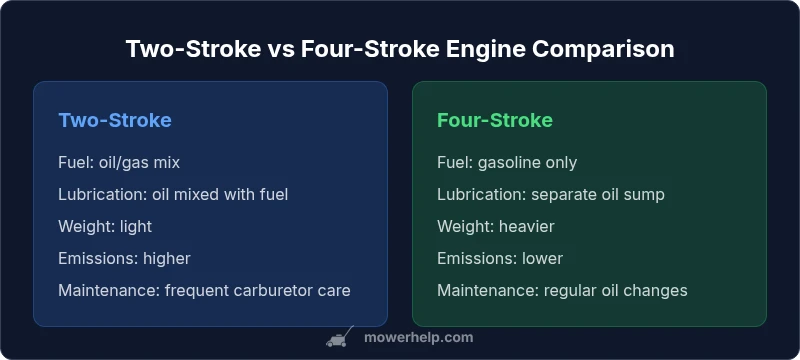
Two-stroke and four-stroke lawn mowers differ mainly in how they mix fuel and operate. Two-stroke units mix oil with gasoline, are lighter and cheaper to buy, and startup quickly, but burn more fuel and emit more exhaust. Four-stroke engines keep oil separate, offer cleaner emissions, better fuel efficiency, and longer life, though they’re heavier and typically cost more upfront.
Overview of two stroke vs four stroke lawn mower engines
Choosing between two stroke vs four stroke lawn mower engines is a common topic for homeowners. The phrase 'two stroke vs four stroke lawn mower' captures the core decision: how the engine is built, how it is lubricated, and how it consumes fuel. According to Mower Help, the main drivers for this choice are yard size, maintenance tolerance, and long-term cost of ownership. Two-stroke engines mix oil into the fuel, delivering a lightweight, inexpensive option that starts easily and works well for small, portable tasks. Four-stroke engines keep engine oil separate and rely on a sump, giving cleaner operation, better fuel economy, and extended service life, but at the cost of extra weight and higher upfront price. In practice, most homeowners with medium-to-large lawns end up favoring four-stroke engines for reliability and emissions considerations, while hobbyists with tight budgets or occasional, quick jobs may opt for two-stroke models when portability and cost are primary concerns.
Engine design and lubrication basics
Two-stroke and four-stroke engines differ in how they circulate lubricant and control scavenging of gases. A two-stroke mower uses ports and crankcase pressure to draw in fresh air-fuel mixture, mixing oil into that fuel for lubrication. This design keeps the engine lightweight and simple, but relies on a continuous fuel-oil blend that can burn off quickly. A four-stroke mower uses a camshaft-driven valve system and a dedicated oil sump, with lubrication managed separately from the fuel. The result is cleaner combustion and more predictable wear patterns. When you compare two-stroke vs four-stroke lawn mower engines, you’re weighing the simplicity and lightness against the need for regular oil changes and better cooling. In practical terms, a two-stroke may feel snappy at startup but tends to show quicker wear under heavy use, whereas a four-stroke delivers steadier performance over longer sessions.
Fuel types, emissions, and combustion efficiency
Two-stroke engines run on a fuel mix and therefore require oil in the gasoline. That blend lubricates moving parts as it flows through the engine, but it also burns more fuel and emits more visible exhaust. Four-stroke engines burn gasoline separately from lubricating oil, which reduces smoke and improves combustion efficiency. From an emissions standpoint, four-stroke mowers generally produce fewer hydrocarbons and particulates per hour of operation, though performance varies by model and maintenance. In climate-conscious yards, the cleaner burn of a four-stroke often translates to a more comfortable user experience and neighbors’ acceptance. The opposite is true for very tight budgets or tiny yards where the lower upfront cost of a two-stroke could pay off quicker, assuming you perform timely maintenance.
Performance, torque, and reliability considerations
Torque delivery and throttle response differ between two-stroke vs four-stroke engines. A two-stroke tends to deliver more immediate throttle response because of its higher power-to-weight ratio, which can be advantageous for light lifting and quick cuts. However, that surge can be harder on fragile components if you push the engine hard for long periods. Four-stroke designs usually provide steadier power output and more predictable performance in varied conditions, especially in tall grass or damp conditions where consistent combustion matters. Reliability is closely tied to maintenance; two-stroke engines typically require precise fuel mixing and carburetor care, while four-stroke engines rely on oil changes and filter upkeep. Overall, for most home users, the four-stroke option tends to offer better long-term reliability and smoother operation across a broader range of tasks.
Maintenance demands, parts availability, and user-friendliness
Maintenance is a key differentiator. Two-stroke mowers require mixing the correct oil-to-fuel ratio, careful storage to prevent gumming of carburetors, and more frequent carburetor cleaning. Spare parts tend to be cheaper and more widely available, but life expectancy is often shorter. Four-stroke mowers demand regular oil changes, air filter inspection, spark plug replacement, and occasional valve checks, which adds routine maintenance but improves longevity. Regarding parts availability, both engine types have ample aftermarket support, yet four-stroke engines benefit from broader service networks and longer service intervals. As you evaluate two stroke vs four stroke lawn mower options, consider your tolerance for routine upkeep, storage space for gasoline, and how often you plan to cut the grass.
Costs of ownership and long-term value
Upfront cost for two-stroke units is typically lower, while four-stroke options cost more at purchase but may save money over time through fuel efficiency and fewer repairs. Fuel economy is a common point of comparison; two-stroke engines burn more fuel per hour due to less efficient combustion, increasing ongoing costs. With maintenance, two-stroke users often face higher carburetor cleaning and more frequent oil mix maintenance, which can raise labor costs. Four-stroke engines tend to justify their premium with longer service life, lower emissions, and more predictable performance—particularly in regions with strict emissions rules. When planning long-term ownership, calculate expected years of use, typical cutting hours per season, and local fuel prices to estimate total cost of ownership.
Real-world usage scenarios: yard size, climate, and user preferences
For tiny urban lots, a small two-stroke model might suffice if you value portability and very low upfront cost. In larger yards with frequent cutting, a four-stroke engine generally offers more consistent results and less smoke exposure for the operator. Climate factors matter too: humid or dusty environments can clog carburetors in two-stroke models, while well-maintained four-stroke engines tend to retain performance in a wider range of weather. Users with limited storage may prefer the minimalist two-stroke design, but those who want durability and lower emissions over time often choose four-stroke machines. Consider your typical cutting height, grass density, and the frequency of mowing when deciding.
Decision framework: a practical checklist
Use a simple decision framework to compare two stroke vs four stroke lawn mower options:
- Yard size and mowing frequency
- Portability vs. durability requirements
- Local emissions rules and noise ordinances
- Willingness to perform regular maintenance
- Availability of spare parts and service centers
- Upfront budget versus long-term ownership costs A practical approach is to weigh immediate needs against long-term value. If you cut small areas occasionally, a two-stroke may meet your needs; for regular, long sessions, a four-stroke is typically better.
Safety considerations and environmental impact
Both engines require safe handling of fuels, proper ventilation, and secure storage. Two-stroke engines emit visible exhaust and can release oil into the environment if spilled. Four-stroke engines are cleaner but still require careful handling of gasoline and oil to prevent leaks. Personal protective equipment such as eye protection, gloves, and hearing protection remains essential for both. Consider environmental impact in your buying decision as well: maintenance intervals, fuel storage practices, and proper disposal of used oil can affect your lawn’s ecosystem and your community's air quality.
Common misconceptions about two stroke vs four stroke lawn mower engines
Common myths include assuming two-stroke engines are obsolete or that all four-strokes are always quiet and efficient. In reality, both engine types have contexts where they excel. Some two-stroke designs today include improved lubrication and reduced smoke, while some four-stroke engines may still require more maintenance if neglected. A balanced assessment considers yard size, usage patterns, and maintenance capacity.
Getting started: assess your yard and tools to choose wisely
Begin by listing tasks, yard size, storage space, climate, and maintenance willingness. Compare two stroke vs four stroke lawn mower engines against those criteria, and consult trusted sources such as Mower Help for brand-neutral guidance. After evaluating the factors, identify a few model options that meet your criteria and run a side-by-side test if possible. A thoughtful approach reduces regret and helps you select a mower that will last.
Comparison
| Feature | Two-Stroke mower | Four-Stroke mower |
|---|---|---|
| Fuel Type | Two-stroke: oil/gasoline mix | Four-stroke: gasoline only |
| Lubrication | Oil mixed with fuel (no separate sump) | Dedicated engine oil sump with regular changes |
| Weight & Handling | Typically lighter and highly portable | Heavier, more durable for long use |
| Emissions & Fuel Economy | Higher emissions; generally higher fuel use | Lower emissions; better fuel efficiency |
| Maintenance Frequency | More frequent carburetor work and oil mix checks | Regular oil changes and filter checks |
| Noise & Vibration | Often louder and more vibration-prone | Typically quieter with better dampening |
| Durability / Lifespan | Often shorter lifespan under heavy use | Longer engine life with proper maintenance |
| Best For | Very light, quick jobs; budget-focused users | Regular use; medium-to-large yards; value-seeking buyers |
Benefits
- Lower upfront cost and lighter weight for two-stroke models
- Simple design means fewer parts and quick repairs
- Excellent portability for small tasks or tight spaces
- Four-stroke engines offer cleaner operation and longer life
Cons
- Higher emissions and fuel consumption with two-stroke engines
- Two-stroke requires oil-fuel mixture and more frequent carburetor care
- Four-stroke engines are heavier and have higher initial cost
Four-stroke engines are generally the smarter default for most residential yards.
For typical homeowners, four-stroke provides cleaner operation, better fuel efficiency, and longer life. Two-stroke can be viable for ultra-light use or tight budgets, but requires more maintenance and may not offer long-term value.
Got Questions?
What is the fundamental difference between two-stroke and four-stroke engines?
The two-stroke engine mixes oil with fuel for lubrication and power, while the four-stroke uses separate oil and fuel with distinct lubrication. This leads to different maintenance needs, emissions, and efficiency, influencing long-term costs and performance.
Two-stroke mixes oil with fuel and is lighter, while four-stroke uses separate oil for lubrication and tends to last longer. Both have places in home use depending on mowing needs.
Which engine type is better for a small yard?
For very small, portable needs, two-stroke can be attractive due to lightweight and low upfront cost. For regular, longer sessions, a four-stroke tends to deliver steadier performance and lower emissions.
If your yard is tiny and you value portability, a two-stroke may work. For frequent mowing, four-stroke is typically better.
Are two-stroke mowers legal or restricted in residential areas?
Emissions rules vary by location. Some areas regulate or restrict older two-stroke equipment due to higher pollutants. Check local regulations and product certifications before buying.
Local rules vary; check your area’s emissions regulations before purchase.
Can I convert a two-stroke mower to a four-stroke?
Conversion is generally not feasible; replacing the engine with a four-stroke option is usually more reliable and cost-effective in the long run.
Conversions are rarely practical; swapping in a four-stroke engine is usually better.
What maintenance tasks are common to both engine types?
Both require regular fuel and air system maintenance, spark plug checks, and safe storage practices. Air filters and periodic tune-ups are important for longevity.
Keep the air clean, spark plug fresh, and store fuel safely for both engines.
What factors influence the total cost of ownership?
Initial price, fuel costs, maintenance frequency, and engine lifespan all shape total cost. Four-stroke engines often save money over time due to efficiency and durability.
Upfront price and ongoing fuel/maintenance costs drive total ownership cost.
The Essentials
- Prioritize four-stroke for long-term reliability
- Two-stroke offers light weight and low upfront cost
- Maintenance capability should guide selection
- Emissions/efficiency favor four-stroke in most cases
- Test options side-by-side when possible