Walk-Behind vs Self-Propelled Lawn Mower: A Practical Comparison
A rigorous, data-driven comparison of walk-behind and self-propelled lawn mowers. Learn how drive systems, yard size, terrain, and maintenance shape performance, cost, and comfort for homeowners and DIY enthusiasts.


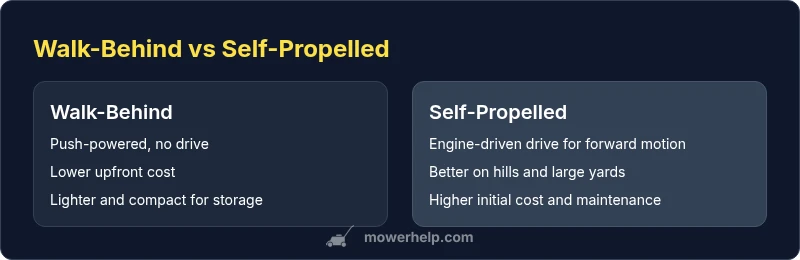
Compared side-by-side, walk-behind mowers require manual pushing and are typically the cheapest and lightest option, making them ideal for small, flat yards. Self-propelled models add an engine-driven drive that reduces physical effort and increases traction on slopes, at the cost of higher price and maintenance. Use this guide to decide based on yard size, terrain, and budget.
Understanding the core difference between walk-behind and self-propelled mowers
Walk-behind and self-propelled mowers share a common goal: cut grass cleanly and efficiently. The key distinction is how the mower moves. In walk-behind models, you power every forward motion by pushing the deck and wheels. Self-propelled models include a drive system that pushes the mower forward with an engine or electric motor. For homeowners researching the topic walk behind vs self propelled lawn mower, this difference drives most other decisions, from price and weight to comfort and terrain handling. Beyond propulsion, note that both types use the same cutting mechanics: same blade height options, same bagging or mulch options, and similar deck materials. The choice comes down to how much you want to physically push versus how much you want the mower to carry you through portions of the yard. Throughout this guide, we will compare the two on yard size, terrain, and maintenance needs. This framing helps set expectations for how each type performs under common conditions and how to evaluate models in real-world shopping.
How drive systems work in practice
In walk-behind mowers, propulsion is manual. The operator exerts effort to move the mower forward, steer with the handlebars or handles, and typically engages a blade via a simple pull lever. Self-propelled models mount a drive system—usually a belt-driven chain to wheels or a tracked drive—that provides forward motion as you throttle, allowing you to concentrate on steering and blade control. This difference matters most on uneven terrain or long stretches. Note that the drive can be front-wheel, rear-wheel, or all-wheel depending on model; some allow variable speed to match your walking pace. When evaluating options, consider how much assist you want in day-to-day mowing and whether you expect to tackle hills, thick grass, or damp conditions differently with each drive type. In all cases, blade quality, deck condition, and maintenance discipline remain primary determinants of cut quality.
Yard size and terrain: which suits which
For tiny urban plots, a compact walk-behind mower may be the perfect fit. It delivers reliable performance with lower weight and simpler maintenance, especially if you rarely mow more than 1/4 acre. In contrast, larger lawns—especially on sloped terrain—often benefit from self-propelled models that reduce fatigue and maintain a steady pace. If you face frequent hills, variable-speed self-propelled mowers help you conserve energy across the slope. However, if you have tight storage space or a tight budget, walk-behind models still deliver solid results when used with proper technique and a sharp blade. The choice hinges on the amount of physical effort you’re willing to invest and the terrain you routinely encounter.
Cutting width, weight, and ergonomics
Cutting width and weight influence how quickly you complete a mow and how easy it is to maneuver around obstacles. Walk-behind models tend to be lighter with narrower cutting decks, making them easier to carry and store in small sheds. Self-propelled models often carry heavier drives and larger decks to maximize coverage and performance on uneven ground, which can improve productivity on bigger properties. Ergonomics matter: comfortable handles, vibration isolation, and balanced weight distribution make a big difference over a 30- to 60-minute mowing session. In practice, test models to see which feels steadier and less tiring, especially when navigating tight corners, slopes, and mulched borders.
Cost of ownership: purchase price and long-term costs
Initial price is a common decision point. Walk-behind mowers typically cost less upfront, with more basic features and fewer moving parts. Self-propelled mowers cost more initially due to the drive system, engine options, and added components. Over time, repair costs, fuel consumption, and maintenance can shift the balance. If you mow weekly, the reduced fatigue of a self-propelled mower may justify the higher price. Compare brands and models across a range, and factor in blade life, filter replacements, oil changes, and possible warranty coverage. Shopping across multiple retailers and considering certified pre-owned options can also affect total cost of ownership for both types.
Maintenance considerations for longer life
Maintenance for both types includes blade sharpening, deck cleaning, and seasonal tune-ups. For gas-powered walk-behind and self-propelled mowers, changing the oil and replacing air filters on a schedule keeps engines healthy. Self-propelled units may require belt and drive component inspection more frequently due to the propulsion system. Regular inspection of wheels, linkages, and the cable controls reduces downtime. Store in a dry location and protect from moisture; a light coat of oil on metal parts helps prevent rust. Yearly service or a mid-season check can catch wear before it becomes a problem.
Performance on hills and slopes
On hills, self-propelled mowers offer superior traction and reduced risk of stalling. A well-tuned drive system can maintain a consistent speed even on grades, but weight distribution matters—prefer models with a well-balanced chassis and adjustable drive speed. Walk-behind mowers can handle slopes with careful technique, selecting proper wheel height and maintaining steady pace, but you’ll expend more energy. For hills, a compact, well-balanced self-propelled unit tends to beat a heavier walk-behind when you need sustained performance. If your property includes frequent inclines, prioritize models with strong drive components, reliable tires, and intuitive speed controls.
Fuel, noise, and environmental impact
Gas-powered models fall into similar noise ranges, with self-propelled units often using larger engines. Fuel efficiency and emission controls vary by brand; look for modern engines with four-stroke designs and proper maintenance. Electric or battery-powered walk-behind or self-propelled options exist, offering quieter operation and zero direct emissions. If environmental impact and noise are concerns, compare decibel ratings and available eco modes across the models you consider. For urban settings, consider compost-friendly bagging options and the ease of disposal for clippings. These choices also affect maintenance schedules and fuel costs over time.
Features to compare: bagging, mulching, and height adjustments
Pay attention to the blade and deck features that influence cut quality: bagging versus mulching options, side discharge where allowed, and the range of height adjustments. Self-propelled models often offer more premium options in terms of adjustable handles, better bagging systems, and wider selection of deck widths. Walk-behind options may be simpler but still offer reliable cut quality with a sharp blade and clean deck. Decide which features matter most for your yard and climate, and ensure the model you choose supports accessory compatibility, such as mulch kits or bagging attachments.
Practical buying guide: how to choose step-by-step
Use a simple framework to select the right mower: define yard size, slope, and grass type; list must-have features; compare price ranges and warranties; read user reviews and test-drive if possible. Start by setting a maximum upfront budget and allow room for fuel, blades, and maintenance. Then factor in the labor you expect to invest in mowing sessions. This process helps you weigh walk-behind vs self-propelled more objectively. Create a side-by-side checklist that weights drive type, cutting width, weight, ergonomics, and service availability in your region. Document your findings and revisit them after a hands-on test drive.
Common myths and mistakes buyers make
Common myths about walk-behind vs self-propelled mowers include the belief that all self-propelled units handle every terrain with no effort, or that heavier models always offer better durability. In reality, performance depends on drive type, blade quality, and maintenance. A frequent mistake is ignoring blade sharpness and tire wear when evaluating value. Finally, buyers often overestimate yard size; a mid-sized yard may be ideal for a simpler walk-behind model if storage and budget are constraints. Be cautious of marketing terms that promise “no effort mowing” without considering actual yard conditions.
Comparison
| Feature | Walk-behind mower | Self-propelled mower |
|---|---|---|
| Drive system | Manual push (no drive) | Engine-powered drive with variable speed |
| Power source | Gasoline-powered or electric (model dependent) | Gasoline-powered or electric (model dependent) |
| Weight | Lighter, simpler chassis | Heavier due to propulsion components |
| Price range | $300-$600 | $400-$900 |
| Best for | Small to mid-sized, budget-conscious yards | Large yards, hills, and longer mowing sessions |
| Maintenance | Fewer moving parts; straightforward upkeep | More parts may require attention (belts, drives, seals) |
Benefits
- Lower upfront cost and simpler maintenance
- Lighter weight for easy storage and transport
- Great for small, flat yards and tight spaces
- Fewer moving parts; fewer potential failure points
- Quieter operation in many models
Cons
- Requires more physical effort on larger or uneven lawns
- Less consistent pace on slopes without user input
- Limited assist on chopping dense grass or thick weeds
Walk-behind suits small, flat yards on a budget; self-propelled wins for larger properties, hills, and reduced fatigue.
If you have minimal storage and a compact lawn, walk-behind offers reliability at a lower cost. For larger lawns or frequent hills, the push-free propulsion justifies the higher upfront price and maintenance.
Got Questions?
What is the main difference between walk-behind and self-propelled mowers?
The main difference is propulsion. Walk-behind mowers require you to push, while self-propelled mowers use an engine-driven drive to move forward. This distinction affects effort, speed, and suitability for hills or long cuts. Blade quality, height range, and bagging options are similar across both types, allowing you to compare features without confusing propulsion alone.
The key difference is propulsion: push versus engine-assisted drive. This changes effort and suitability for hills, while cutting options remain similar.
Are self-propelled mowers better for hills?
Yes, in most cases, self-propelled mowers provide better traction and require less physical effort on slopes. Look for models with adjustable drive speed and reliable tires. However, not all hills are the same—steep or loose terrain can still challenge any mower, so balance the choice with overall yard conditions.
Generally yes—self-propelled helps on hills, especially with adjustable speed and solid tires.
Can walk-behind mowers handle large lawns?
Walk-behind mowers can handle large lawns, but you’ll do more walking and pushing, which can be tiring and time-consuming. For very large properties or extended mowing sessions, a self-propelled model usually reduces fatigue and speeds up the work. Consider your physical stamina and time budget when deciding.
They can, but expect more effort and time. Self-propelled is often better for large lawns.
Do walk-behind mowers require more physical effort?
Yes. Walk-behind mowers rely entirely on user push force, whereas self-propelled units supplement your effort with engine-driven propulsion. The difference matters most on longer cuts, inclines, or dense grass. Good technique and a sharp blade can help, but propulsion generally adds comfort and consistency.
Yes, they require more physical effort, especially on longer or sloped lawns.
What maintenance is common to both types?
Blade sharpening, deck cleaning, and regular tune-ups are common to both. For gas models, oil changes, air-filter replacements, and spark plug checks are important. Keep fuel fresh and store mowers in dry spaces. Routine maintenance prolongs life and maintains cutting quality.
Sharpen blades, clean the deck, and perform regular tune-ups for both types.
Which mower is cheaper over time?
Walk-behind mowers typically cost less upfront, but operating costs—fuel, maintenance, and potential repairs—vary by model. Self-propelled units cost more initially but can reduce labor costs and increase efficiency on larger or hilly yards. An objective total-cost-of-ownership comparison is essential.
Walk-behind is cheaper upfront; self-propelled can save labor time on larger or hilly yards, affecting long-term costs.
The Essentials
- Choose Walk-behind for small, flat yards and tight storage.
- Choose Self-propelled for large lawns or hilly terrain.
- Factor maintenance needs and fuel type when weighing total cost.
- Test models to gauge comfort and control before buying.