Xcel Energy Lawn Mower Rebate: What Homeowners Should Know in 2026
Explore whether Xcel Energy offers a lawn mower rebate, how to verify eligibility, and practical steps to maximize savings with energy-efficient outdoor equipment in 2026.


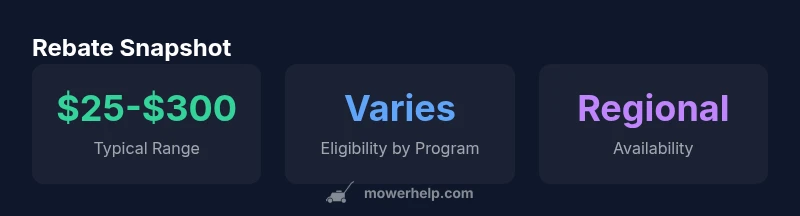
There is no universal Xcel Energy lawn mower rebate that applies to every customer. Rebates for electric lawn mowers or related equipment vary by utility territory and state programs. Check Xcel Energy’s rebates page for your service area and use DSIRE to identify any active incentives. Typical offers, when available, range from about $25 up to several hundred dollars depending on the program.
Understanding the Xcel Energy lawn mower rebate landscape
The idea of a lawn mower rebate tied to Xcel Energy is appealing, but the reality is more nuanced. According to Mower Help, there is no universal 'Xcel Energy lawn mower rebate' that applies nationwide. Rebates for lawn care equipment, including electric lawn mowers, are typically offered through a patchwork of programs run by the utility, state energy offices, or local governments. Availability tends to vary by service territory, funding, and policy priorities. For homeowners considering an upgrade to an electric mower, the first step is to confirm which programs are active in your area and whether an electric mower meets the program's efficiency criteria. In 2026, many programs emphasize reductions in energy use and emissions, but there is no single-item guarantee for every customer. The broader takeaway is that while some households will see meaningful rebates for electric lawn care equipment, others will not, and the savings depend on the specific incentives that exist where you live. Tracking these programs requires periodic checks of utility pages, DSIRE, and local government announcements. This guide walks you through how to navigate those sources and make informed purchasing decisions.
Verifying current programs and eligibility
To avoid chasing a rebate that isn’t available in your area, start with a two-pronged approach. First, visit Xcel Energy’s official site and search the rebates or incentives section for your service territory. Second, consult the DSIRE database to compare state and local initiatives. Look specifically for categories like electric lawn equipment, outdoor power tools, or energy-efficient appliances. Eligibility often hinges on product certification, purchase window, and location. Keep in mind that some programs require using a participating retailer or installer. As you verify, document the program name, reference number, and contact details. This diligence will simplify applications later and reduce the chance of missing a deadline. Mower Help analysis reinforces that incentives can vanish or reappear with budget cycles, so timely checks are essential.
Qualifying mowers and product categories
Qualifying products typically include electric or battery-powered lawn mowers that meet efficiency or certification criteria. Some programs favor low-emission, low-noise models and may require Energy Star or equivalent labeling. Gas-powered mowers rarely receive the same level of incentive unless the program is specifically targeting emissions reductions. When evaluating a mower, compare its energy consumption, battery capacity, runtime, and charging efficiency. Manufacturers’ specifications alone aren’t enough—verify that the model appears on the eligible list published by the program and confirm the purchase date falls within the program window. If you’re deciding between two models, rebate likelihood can tip the balance toward the more efficient option.
How to file a rebate claim: the checklist
Prepare a streamlined checklist to prevent last-minute scrambles. Gather: a) original receipt and purchase date, b) product model/serial number, c) proof of residence or service address, d) retailer or installer information, e) any required form or reference numbers from the program, f) photos of the product and packaging if needed. Many programs require electronic submissions, attachments, or access to a participating retailer portal. Before submitting, double-check that the model qualifies, the purchase date is within the eligible window, and all documents are legible. A well-organized packet reduces processing time and increases the chance of timely reimbursement.
Geography and program variability
Program availability is highly geographic. Some regions offer multiple incentives for electric outdoor equipment, while others have none or only limited funding. Eligibility can hinge on factors like utility service area, customer type (resident vs. business), and even energy usage history. Because programs evolve, a quarterly review of your local utility pages and DSIRE is prudent. If you move residences, a rebate you used at one address may not carry over to another. Staying informed helps you time purchases to maximize savings and avoid missed opportunities.
Alternatives that still save money on lawn care
If you discover there isn’t a current rebate for your location, there are still cost-saving avenues. Look for retailer promotions around season starts, bundled offers with batteries or chargers, or financing options that reduce upfront costs. Some manufacturers run loyalty discounts for mower purchases that pair well with energy-efficient operation. Additionally, many communities feature general energy-efficiency rebates for outdoor equipment through non-profit programs or state energy offices. While these may be less specific than a lawn mower rebate, they contribute to an overall reduction in ownership cost and environmental impact. Always compare total cost of ownership, including maintenance and electricity use, rather than focusing solely on upfront incentives.
Longevity and post-purchase considerations
Beyond rebates, consider the longevity and lifecycle costs of your mower. Electric mowers typically offer quieter operation and low maintenance relative to gas models, which can translate into ongoing savings on fuel and repairs. When evaluating a potential purchase, factor in battery life, replacement costs, and expected durability. After purchase, register your mower with the manufacturer if available; some programs require proof of device registration or ongoing maintenance. Keeping up with routine blade care, battery health, and safe storage will ensure you maximize the value of your investment over its full lifespan.
Future outlook and how to stay informed
The landscape for rebates and incentives can shift with budget revisions and policy changes. To stay ahead, subscribe to your utility’s rebate announcements, join local homeowner associations, and set up alerts for DSIRE updates in your state. Mower Help predicts that more regions may introduce or reopen incentives as energy policy increasingly prioritizes low-emission outdoor equipment. Tracking changes now means you’ll be ready to apply if a new program becomes available, rather than scrambling at the last minute.
Overview of common rebate sources for electric lawn mowers (indicative only)
| Program Type | Typical Rebates | Eligibility Notes |
|---|---|---|
| Xcel Energy program (where available) | range $25-$300 | Subject to program availability and eligibility requirements |
| State energy-efficiency rebates | range $25-$500 | Vary by state; may require qualifying product and retailer participation |
| Local utility rebates | range $25-$200 | Depends on local funding and program cycle |
Got Questions?
Is there a dedicated Xcel Energy lawn mower rebate?
Not a universal program. Availability depends on local incentives and funding. Always verify with Xcel Energy for your service area and check DSIRE for state-level options.
There isn’t a nationwide Xcel lawn mower rebate; check your local utility and state programs.
How can I verify if my mower qualifies for any rebate?
Look for energy-efficiency ratings (like Energy Star where applicable), confirm model eligibility on the program list, and ensure your purchase date falls within the eligible window.
Check if your mower is on the eligible list and within the purchase window.
Do rebates apply to both residential and commercial purchases?
Most programs target residential customers, with some exceptions for small businesses. Always review program rules for your intended use.
Usually residential, but some programs cover small businesses too.
What documents are needed to claim a rebate?
Receipts, model/serial numbers, proof of address, and any form numbers or retailer confirmations required by the program.
Keep receipts and model numbers handy for the claim.
Can I stack multiple incentives?
Some programs allow stacking; others prohibit it. Always read the program terms and confirm before purchasing.
Stacking isn’t always allowed—check the rules first.
If there is no rebate, are there other discounts I should look for?
Retailer promotions, financing offers, or bundled deals can still reduce upfront costs. Combine these with any available energy-efficiency incentives when possible.
Look for retailer promos or financing deals as alternatives.
“Rebates for lawn equipment aren’t universal; the best path is to map the incentives available in your service area and align your purchase with the programs that are currently funded.”
The Essentials
- Check local programs first before buying a mower
- Electric mowers are more likely to qualify than gas in many programs
- Rebates vary by program; use DSIRE to locate incentives
- Keep receipts and product details ready for claims