Can You Put a Lawn Mower in a Skip? A DIY Disposal Guide
Learn whether you can put a lawn mower in a skip, how to prep it safely, and alternative disposal options for homeowners. Clear steps, tips, and safety guidance.


You can generally dispose of a lawn mower in a skip, provided you prep the unit properly and comply with local rules. Remove fuel, drain oil, disconnect the battery or power source, and check with the skip operator about metal content and hazardous components. This article walks you through safe, compliant disposal.
Why this matters: disposing a lawn mower safely and legally
If you’re clearing space in the shed or upgrading your yard tools, you might ask: can you put a lawn mower in skip? The answer depends on your local rules and the skip company’s policies, but with proper preparation it is often a workable option. The Mower Help team found that many councils allow household metal items in standard skips, while heavy or hazardous components may require special handling. This guide will explain why safe disposal matters, how to think about different mower types, and what you should verify before loading anything into a skip. You’ll learn how to minimize spills, protect the environment, and avoid delays on disposal day. By understanding the process, homeowners can move efficiently from cluttered garage to organized curb, while staying compliant and safe. We’ll cover fuel, oil, batteries, blades, and the role of licensed recyclers, so you can decide the best route for your mower.
What you can and can't put in a skip (with lawn mower components)
Disposal rules vary, but the general principle is that not every mower part belongs in a standard skip. A metal mower frame itself is often acceptable, but liquids such as gasoline and oil aren’t. If you have a cordless or gas-powered model, the battery or battery pack, fuel system, and lubricants require special handling. Before you decide 'can you put lawn mower in skip' you should talk to the skip operator about what is allowed and whether your location requires a hazardous waste pickup. Expect that modern skips can accept metal parts, but residual fluids must be removed and contained. Batteries can sometimes be recycled separately; never place them in a general skip if the operator flags them as hazardous. By recognizing the differences between parts, you can avoid contaminating the waste stream and ensure safe transport.
Prep steps before loading the mower into a skip
Start with a quick inventory: note if you have a gas-powered mower, an electric model, or a cordless mower. Confirm you can access the fuel cap, drain plug, and battery compartment. Then gather safety gear and tools from your toolbox. The goal is to minimize risk during draining, disconnecting, and lifting. If possible, perform draining and disassembly in a well-ventilated area away from heat. Ensure you have a plan for transporting the mower upright to prevent leaks. Finally, contact the skip provider to confirm acceptance of the prepared unit and any special packaging requirements, such as removing the blade guard. Following these prep steps makes it easier to comply with local rules.
Alternatives to using a skip: recycling, take-back programs
If your goal is responsible disposal rather than simply clearing space, consider metal recycling facilities or manufacturer take-back programs. Many municipalities offer dedicated collection days for bulky metal items, which can be more efficient and environmentally sound than a standard skip. For electric or cordless mowers, check with the manufacturer for authorized recycling channels or community drop-off events. Even if you can’t fit the mower into a skip, you can often route parts like blades or batteries to appropriate recycling streams, reducing waste and ensuring compliance with local environmental guidelines.
How to work with a skip company for lawn mower disposal
When you call a skip company, disclose the mower type, presence of fuel or batteries, and any fluids currently in the unit. Ask about restrictions, fees, and whether they require decontamination or disassembly outside their facility. Some providers offer a dedicated metal haul or hazardous waste service and will advise on packaging and labeling. Keeping communication clear helps prevent delays and ensures the skip load remains within accepted guidelines. Always confirm that the skip is suitable for metal items and whether you need to remove fluids prior to loading.
Quick checklist for disposal day
- Verify local rules and skip operator requirements.
- Drain fuel and oil safely; collect with absorbent material.
- Disconnect batteries and power sources; store separately if needed.
- Remove the blade and any sharp components; cover exposed edges.
- Transfer fluids to approved containers and seal securely.
- Load the mower slowly and steadily, avoiding leaks.
- Obtain a receipt or unloading confirmation from the operator.
Common pitfalls and best practices
Common mistakes include leaving fuel in the tank, ignoring local regulations, or loading a mower with sharp blades into a skip. Always drain and seal, verify acceptance with the operator, and use protective gear. If you’re unsure about any step, ask for guidance from the skip provider or a local recycling center. Proactively documenting the preparation helps you avoid fines or delays and aligns with safe disposal practices. Remember that safety comes first: spills, poor lifting, and exposed blades can cause injuries or environmental damage.
Tools & Materials
- Fuel siphon(Used to drain gasoline safely without spills)
- Drain pan(Catch fluids to prevent leaks during draining)
- Gloves(Protect hands from fuels and sharp edges)
- Safety goggles(Eye protection against splashes or debris)
- Screwdriver or socket set(Remove blades, guards, and hardware safely)
- Blade removal tool(Detach the mower blade securely before transport)
- Cordless mower battery (if present)(Remove and isolate battery per manufacturer guidance)
- Absorbent rags(Used for minor spills and cleanup)
Steps
Estimated time: 45-90 minutes
- 1
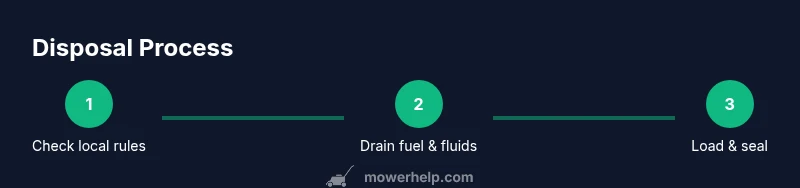
Check local rules and skip provider requirements
Before you touch the mower, confirm with your local council and the skip operator what is allowed. Different regions have different rules about bulky metal items and hazardous components. This step prevents surprises on disposal day and ensures you stay compliant.
Tip: Call ahead or check online to avoid last‑minute refusals. - 2
Drain fuel safely
If your mower has fuel, remove the fuel source using a siphon or fuel pump and transfer it to an approved container. Do this in a well-ventilated area away from heat, and keep the container upright to prevent spills. Clean up any small drips with absorbent material.
Tip: Never pour fuel down drains or onto the ground. - 3
Disconnect the power source
For gas mowers, ensure the spark plug is disconnected and the fuel line is capped. For cordless mowers, remove the battery and store it in a non-conductive, safe location away from metal edges.
Tip: Handle batteries with care and avoid short circuits. - 4
Remove the blade and safety covers
Detach the blade using a blade removal tool or appropriate wrench. Cap or cover the exposed edge to prevent cuts during handling. Keep track of hardware for reassembly or disposal.
Tip: Place removed blades in a sturdy container to prevent injuries. - 5
Drain other fluids and tidy the unit
If there’s oil or coolant, drain according to local guidance and collect in sealed containers. Wipe down the mower and around the fuel/oil areas to minimize residue and reduce slipping hazards.
Tip: Do not mix fluids; keep each fluid in its own labeled container. - 6
Prepare for loading and contact the skip staff
Position the mower upright and secure any loose parts. Inform the operator of your prep work and ask about any additional packaging requirements or labeling.
Tip: Ask for loading guidance if you’re unsure how to lift safely. - 7
Load, seal, and obtain unloading confirmation
Place the prepared mower into the skip steadily, ensuring no leaks. Close the skip and obtain unloading confirmation or a receipt from the driver.
Tip: Take photos of the load for your records in case of later questions.
Got Questions?
Is it legal to put a lawn mower in a skip?
Disposal legality depends on local regulations and the skip operator. Always check with your council and the hire company before loading. If in doubt, use a dedicated recycling or take-back program.
It depends on local rules and the skip company, but you should confirm with both before placing a mower in a skip.
Should I drain fuel before disposal?
Yes. Draining fuel reduces fire risk and environmental hazards. Transfer gasoline to an approved container and dispose of it through proper channels.
Yes, drain the fuel into an approved container before disposal.
What about cordless electric mowers?
Cordless mowers require battery removal. Store the battery separately and follow the manufacturer’s disposal guidelines or local recycling options.
If you have a cordless mower, remove the battery and follow local recycling options.
Can I leave oil in the mower?
Oil should be drained and contained for safe disposal. Skips and recycling centers typically prefer fluids separated from solid waste.
It’s best to drain the oil and keep it in a separate container for proper disposal.
Are there safer alternatives to a skip?
Yes. Consider metal recycling facilities, bulky item take-back programs, or a manufacturer take-back scheme for responsible disposal.
There are safer options like metal recycling or manufacturer take-back programs.
Watch Video
The Essentials
- Load safely with proper prep and local rules
- Drain fuels and remove power sources before loading
- Coordinate with the skip provider to avoid delays
- Handle blades and sharp parts with care
- Keep fluids contained and labeled for recycling