Electric Lawn Mower Pros and Cons: A Practical Guide
Explore the pros and cons of electric lawn mowers, compare corded and cordless options, and learn how to choose the right model for your yard. A balanced buying guide for homeowners and DIY enthusiasts.


Electric lawn mower pros and cons come down to clean operation, low maintenance, and quiet performance versus limited power, range constraints, and charging or cord management. For small to medium yards with reliable power access, electric mowers deliver dependable, cost-conscious performance. For large, uneven, or long sessions, gas may still be the better option.
What is an electric lawn mower and why they matter
Electric lawn mowers use electric motors powered by a cord or a rechargeable battery to drive the cutting blade. They differ from gas mowers in energy source, emissions, and maintenance. The phrase electric lawn mower pros and cons captures the essence of what buyers weigh before purchasing. For many homeowners, the benefits are clear: simple starting, quiet operation, and lower ongoing maintenance. Modern models also offer mulching or bagging capabilities and adjustable deck heights to handle different grass conditions. On the other hand, the downsides include dependence on a power outlet or a charged battery, potential range limitations for large yards, and sometimes less raw cutting power on thick or tall grass. The decision often hinges on yard size, storage space, and how you mow: how often, how fast, and under what weather. The Mower Help team notes that even with rapid improvements in battery technology, the core trade-off remains convenience versus uninterrupted power during longer sessions. If you own a small city plot, an electric mower is typically a great fit.
Corded vs cordless: how power, run time, and reliability shape use
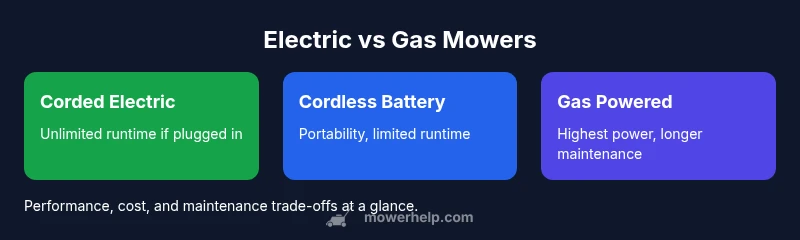
Corded electric mowers rely on a continuous power supply from an extension cord plugged into a wall outlet. They deliver consistent power, unlimited run time (subject to cord length), and generally lighter weight due to not carrying heavy batteries. Cordless mowers rely on lithium-ion batteries; they offer portability and ease of mowing without a cord but are limited by battery capacity and charge times. Real-world performance depends on grass density, mower deck size, and battery chemistry. For flat, small to medium lawns, cordless models can be a joy; for larger properties, corded mowers or spare batteries can mitigate interruptions. Charging cycles, storage conditions, and battery longevity should factor into cost-of-ownership calculations. Owners should plan for a backup charger or spare battery in busy seasons. The key is to match the mower type to yard layout: short, consistent sessions with access to an outlet; or flexible sessions with enough storage and charging options.
Performance and cutting quality: expectations across grass types
Electric lawn mowers deliver consistent clean cuts on most common turf varieties when properly matched to deck size and blade quality. In short-term tests you’ll notice a difference between premium blades and cheaper imports, especially on thicker, high-density grasses. Bermuda and zoysia can present a tougher cut, particularly for lighter-weight electric models; you’ll benefit from a wider deck and sharper blades to maintain an even chop. Mulching capabilities recover clippings and return nutrients to the soil, while bagging helps reduce lawn debris and makes cleanup easier. For damp or tall grass, pre-mowing maintenance and blade care matter more with electric mowers, as power delivery can slow and performance may dip. Overall, the electric mower pros and cons clearly show that with the right model and regular blade upkeep, cutting quality remains competitive for urban and suburban lawns.
Noise, emissions, and environmental impact
One of the strongest arguments in the electric lawn mower pros and cons debate is environmental and noise performance. Electric mowers emit zero exhaust and are much quieter than gas machines, which makes them friendlier for neighborhoods, early morning mowing, and shared spaces. For homeowners seeking to reduce their footprint, electricity-based operation paired with a renewable energy source dramatically lowers overall emissions compared to combustion engines. The production of batteries introduces a different set of considerations, including mining impacts and end-of-life recycling, but many users find that the overall environmental profile remains favorable, especially for smaller lots and routine maintenance.
Maintenance and operating costs over time
The maintenance burden for electric mowers tends to be lighter than for gas units. There are no spark plugs to replace, fewer oil changes, and less fuel handling to manage. Routine tasks include blade sharpening or replacement, cleaning the underside after mowing, checking the battery (for cordless models), and storing the unit in dry conditions. Running costs are generally predictable: electricity is often cheaper per hour of mowing than fuel, and there are fewer consumables to manage long-term. Battery life is a key variable for cordless models; performance tapers with repeated charge-discharge cycles, but good charging practices can extend life. Over several seasons, many owners report lower total ownership costs with electric models, particularly for small to mid-sized lawns.
Features that influence usability: mulching, bagging, height, and deck size
Modern electric mowers come with a range of features that improve usability. Mulching blades, bag attachments, and adjustable deck heights help tailor cuts to grass type and season. Deck width influences how quickly you cover space; wider decks reduce passes but can increase weight and maneuverability concerns on tight corners. Power modes and speed settings are common on higher-end cordless models, allowing you to balance battery life with cutting performance. A key usability factor for new buyers is whether the mower is corded or cordless, and what kind of storage space is available for batteries or extensions. Selecting a model with reliable safety features, weatherproof controls, and simple maintenance routines lowers the ongoing effort required to keep the mower performing well.
Suitability by yard size, terrain, and storage
For many homeowners, electric lawn mowers are ideal for small to medium yards, especially where storage is limited and noise matters. Flat, well-maintained lawns with abundant natural light suit cordless models well, while corded versions are attractive when a nearby outlet is readily accessible. For larger properties or hilly terrain, the weight distribution, motor torque, and battery capacity should be carefully evaluated; some users opt for hybrid approaches or plan charging cycles to cover longer sessions. If you store your mower in a garage or shed with proper temperature control, you’ll maximize battery life for cordless models. Essentially, the choice boils down to yard size, slope, and how often you mow, with electric mowers delivering strong value when those conditions align.
Safety considerations and charging habits
Safety remains a core concern for electric mowers. Always wear eye and ear protection, keep hands away from the blade, and follow manufacturer guidelines for use on wet grass. Corded models require secure extension cords rated for outdoor use and kept clear of walkways to prevent trips. Cordless models demand proper charging routines: avoid deep discharges, use manufacturer-approved chargers, and store batteries at moderate temperatures. Regular blade checks reduce jams and cut risk, while cleaning and drying the underside after mowing prevents rust and varnish buildup. Taking these precautions helps minimize maintenance surprises and sustains cutting performance over time.
Common myths about electric mowers debunked
Myth: electric mowers can’t handle thick or tall grass. Reality: with the right deck size, blade quality, and power level, many electric models handle common suburban growth well. Myth: they are underpowered and slow. Reality: modern brushless motors and improved battery chemistry deliver solid torque and speed for typical lawn tasks, though large properties may require longer charging or spare batteries. Myth: they cannot mulch effectively. Reality: many electric mowers include mulching blades and efficient discharge options that return nutrients to the soil. Myth: they are fragile in wet conditions. Reality: while you should avoid mowing wet grass, many electric units are built to withstand outdoor use when kept dry and properly maintained. Myth: battery life makes them unusable for summer weeks. Reality: smart chore scheduling, spare batteries, and fast-charging options mitigate downtime for frequent mowing.
Buying tips: how to choose a model
Choosing an electric mower starts with yard size and terrain assessment. Consider deck width, power type (corded vs cordless), and battery voltage for cordless models. Look for high-quality blades, mulching capability, adjustable cutting height, and a solid warranty. Battery chemistry, charge time, and overall charging ecosystem are important for cordless models; assess whether you want one or two batteries to cover longer sessions. For storage, ensure a dry, ventilated space, and choose models with weatherproof switches and outlets. Finally, compare total cost of ownership, not just upfront price: add battery replacement, extension cords, and potential maintenance costs to the decision, and align with your mowing schedule and neighborhood regulations.
Real-world scenarios: who benefits most from electric mowers
Electric lawn mowers shine for homeowners with small to mid-sized yards, frequent mowing needs, and a preference for quiet, clean operation. They’re ideal for urban or suburban lots, where storage space and charging access are practical. Renters or condo owners often favor electric mowers for their light weight and easy storage. Landscapers with a fleet of mowers may prefer solid warranty coverage and low maintenance costs. If you have a large property, hilly terrain, or a lifestyle that requires long mowing sessions, gas-powered or hybrid approaches may better align with your needs. The key is to map your yard’s demands to the strengths of electric mowers and to plan charging and maintenance around your schedule.
Alternatives and hybrid approaches
If you’re unsure whether a full switch to electric is right, consider a hybrid approach: use a corded mower for main mowing days and a compact gas mower for tough spots, steep slopes, or when you need extended run time without swapping batteries. Another option is a cordless model with a spare battery or a fast charger, enabling longer sessions without extending your work time. You can also explore riding mowers for larger properties, comparing them against modular electric walk-behind units to determine where you gain the most efficiency. The goal is to balance power, convenience, and total cost of ownership while staying aligned with your mowing cadence.
Feature Comparison
| Feature | Corded electric lawn mower | Cordless battery-powered lawn mower | Gas-powered lawn mower |
|---|---|---|---|
| Power source | Plug-in electric cord | Rechargeable lithium battery | Internal combustion engine fuelled |
| Run time | Unlimited (cord dependent) | Limited by battery capacity | Unlimited with fuel and longer maintenance needs |
| Maintenance | Low oil/none, blade care | Battery care, occasional battery replacement | Oil changes, spark plugs, filters |
| Noise level | Very quiet | Quiet to moderate | Louder due to engine operation |
| Emissions | Zero tailpipe emissions | Zero tailpipe emissions (battery production impact) | Gas emissions in operation |
| Upfront cost | Moderate to high (corded models are cheaper) | Moderate to high for premium batteries | Typically comparable to mid-range electric models |
| Running costs | Low electricity costs | Low ongoing energy cost with battery replacement | Fuel and maintenance costs |
| Best for | Small to medium yards with outlet access | Medium yards with storage for batteries | Larger yards or hills with steady power needs |
Benefits
- Low maintenance and quiet operation
- Zero exhaust emissions and cleaner energy use
- Simple start-up and lightweight handling
- Lower ongoing fuel costs than gas models
- Compact design for easy storage
Cons
- Range and power constraints for very large yards
- Cord management or battery charging requirements
- Battery replacement costs over time
- Long hydro-streets or steep slopes can challenge performance
Electric mowers are best for small-to-mid-sized yards with easy charging; gas still wins for large, hilly properties or longer sessions.
Choose electric if you prioritize low maintenance, quiet operation, and simple storage. Opt for gas if you need maximum run time and peak power for challenging terrain.
Got Questions?
Are electric lawn mowers as powerful as gas models for typical residential yards?
For most suburban lawns, modern electric mowers deliver adequate torque and cutting performance. They may lag on very tall, thick growth or steep grades where gas engines have more raw power. The right model with the correct deck size often mitigates perceived power gaps.
In most homes, electric mowers cut just as well as gas on normal lawns, but very tall grass or steep hills may require a more powerful gas option.
Do cordless mowers provide enough run time for a typical lawn?
Cordless mowers run time depends on battery capacity and grass density. For standard urban lots, a single charge often suffices, especially with efficient blades and cutting height. Larger lawns may benefit from spare batteries or a corded alternative during longer sessions.
Most yards are fine with one charge, but bigger lawns may need extra batteries.
Are electric mowers good for hills or uneven terrain?
Electric mowers can handle gentle slopes but struggle on very steep hills due to traction limits and battery drain or cord length constraints. Look for a model with good torque, wide rear wheels, and a weight balance that minimizes effort on inclines.
They work on small hills, but very steep slopes are better handled by other options.
Do I need to perform blade maintenance on electric mowers?
Yes. Regular blade sharpening or replacement maintains cutting quality. Clean the underdeck after mowing to prevent rust and grass buildup; electric mowers share this care with gas models, though fuel-related maintenance isn’t needed.
Yes, keep the blade sharp and clean for best results.
How long do batteries last, and can they be replaced easily?
Battery life depends on usage and model, but most cordless mowers support battery replacement after several seasons of use. Consider models with swappable batteries and a reliable charger to minimize downtime during peak mowing periods.
Battery life varies, but many models allow easy battery swaps to extend use.
Are electric mowers cheaper to own in the long run than gas mowers?
Electric mowers typically have lower ongoing costs due to fewer moving parts and no fuel costs. Initial price differences exist between models, but long-term maintenance and energy costs are often lower, especially for smaller yards.
Long-term costs are often lower with electric mowers for small yards.
The Essentials
- Assess yard size and power access before choosing
- Prioritize deck width and blade quality for cutting performance
- Plan for charging time or cord management in mowing schedule
- Consider total cost of ownership, not just upfront price
- Match mower type to terrain, slope, and storage capability