12-Volt Riding Lawn Mower Battery: Buying, Caring, and Troubleshooting
Explore the essentials of the 12-volt riding lawn mower battery—from compatibility and selection to charging, maintenance, and storage—written by the Mower Help Team to help homeowners troubleshoot and maintain their mowers.


Definition: A 12-volt riding lawn mower battery is a compact 12V sealed lead-acid (or AGM) power source that starts the engine and runs accessories. It delivers enough cold-cranking amps (CCA) for reliable starts and powers the mower’s electrical system between charges. Compatibility with your mower’s model and charging system is essential for performance and longevity.
What is a 12-volt riding lawn mower battery?
The 12-volt riding lawn mower battery is the power source that starts your mower and supplies electricity to lights, sensors, and electric PTO if equipped. In most riding mowers, this is a sealed lead-acid (SLA) unit, often of AGM variety, designed to handle outdoor conditions and vibrations. While the device is small compared to car batteries, it must deliver adequate cold-cranking amps (CCA) to ensure a reliable start, even in cold mornings. The 12-volt designation refers to its nominal voltage; capacity and CCA determine how long the engine will start reliably and how well accessories run between charges. For homeowners, understanding these basics helps you avoid choosing the wrong battery and reduces field service trips.
According to Mower Help, the right 12-volt riding lawn mower battery is a carefully matched component that fits both the mower and your climate. It should be able to deliver consistent starts under typical seasonal temperatures while supporting any electronic features your mower uses.
Compatibility matters: how to verify the fit
To ensure compatibility, start with your mower’s model number and the OEM part number for the battery. Check the physical size and terminal layout so that the battery tray, cables, and clamps align without forcing parts. Pay attention to the battery group size (the physical dimensions), the positive/negative terminal orientation, and the connector type. If you’re unsure, consult the user manual or contact the manufacturer’s support line. A wrong fit can cause poor starting performance or rapid terminal corrosion, even if the battery tested well.
Remember to consider the climate you operate in. In cold conditions, a battery with higher CCA is beneficial, especially for large riding mowers that crank longer or operate in shaded, cool lawns.
Battery types you’ll encounter on the market
Most riding lawn mowers use SLA sealed lead-acid batteries, with AGM variants becoming more common due to better vibration resistance and low self-discharge. Gel cells exist but are less common in mowers due to cost and compatibility considerations. For many homeowners, aftermarket AGM or high-quality SLA options offer the best balance of price, durability, and performance. When evaluating options, compare the CCA, reserve capacity (RC), and the warranty period.
As always, ensure the chosen type is compatible with your mower’s charging system and the local climate. The Mower Help team notes that AGM batteries typically perform well in a wide range of temperatures and provide reliable starts over several seasons.
How to choose the right battery for your mower
Start by confirming the correct voltage (12V) and the required CCA range for your model. A higher CCA improves starting reliability in cold weather but may come at a higher cost and weight. Consider the capacity in amp-hours (Ah): higher Ah means more reserve energy for accessories and longer intervals between starts, but heavier batteries can affect handling during installation. Look for a reputable brand with a solid warranty, and verify that the battery’s size fits your tray and clamps. Finally, ensure the charging system on your mower can safely recharge the battery without overcharging.
Charging basics and safety
Always disconnect electrical connections before removing or installing a battery. Use a charger designed for 12V SLA/AGM batteries and follow the manufacturer’s recommended charging voltage and rate. Avoid fast charging or high-current bursts that could heat the battery and shorten its life. Regularly inspect terminals for corrosion and clean them with a non-abrasive brush. When not in use, keep the battery charged to prevent deep discharge, which can reduce cycle life.
Safety first: wear eye protection and gloves, keep flames or sparks away from the battery, and never tilt the battery beyond its safe angle.
Extending battery life through maintenance
Maintain clean, tight terminals and periodic water checks for flooded lead-acid batteries (if applicable). Apply a light petroleum-jelly-based terminal protector to reduce corrosion. Keep the battery securely mounted to minimize vibration, which accelerates wear. Use a trickle charger during off-season storage, and schedule regular load-testing or professional checks to catch degradation early.
A well-maintained battery can extend starts and performance across multiple mowing seasons, reducing downtime and service calls.
Installation steps and common pitfalls
Turn off the mower and remove the key before starting; disconnect the battery negative terminal first, then the positive. When installing, ensure the tray seats the battery fully and the clamps are tightened to manufacturer torque specs. Reconnect positive first, then negative, and test the system with the mower in a safe, open area. Common pitfalls include cross-threaded clamps, loose connections, and mixing terminals with incompatible cables. Always double-check polarity and container fit.
Troubleshooting common issues
If the mower cranks slowly or won’t start, test the battery with a multimeter or in a professional shop. Look for corroded terminals, cracked casings, or swollen battery walls. A battery that fails a charge test should be replaced. If electrical accessories dim during operation, the charging system or wiring may be at fault, not the battery itself. In such cases, inspect the alternator/charging circuit and wiring harness for faults.
Storage, winterizing, and long-term care
Store the battery in a cool, dry place away from direct sunlight and moisture. Remove it from the mower if winter storage is long, and keep it fully charged with a smart charger. Inspect the electrolyte level if your battery is flooded; add distilled water only as needed, following the manufacturer guidelines. Before the first spring start, inspect terminals again, clean them if needed, and reconnect following the correct order.
Replacement timing and buying options
Most riding mower batteries are replaced every 2–5 years depending on use, climate, and maintenance. When replacing, aim for the same voltage and a compatible CCA range, and consider a higher Ah rating for longer run-time if your mower supports it. Buy from reputable retailers with clear warranties, and keep the receipt and model number handy for future service.
Typical specifications for 12-volt riding mower batteries
| Aspect | Typical Range | Notes |
|---|---|---|
| Voltage | 12V | Nominal operating voltage for riding mowers |
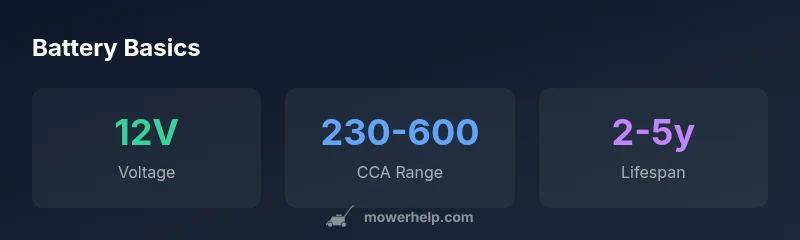
| CCA (cold-cranking amps) | 230-600 CCA | Depends on mower size and climate |
| Capacity (Ah) | 28-60 Ah | Model dependent |
| Weight | 8-20 lb | Varies by capacity |
| Lifespan | 2-5 years | Based on usage and maintenance |
| Charging voltage | 13.8-14.4V | Follow charger recommendations |
Got Questions?
What voltage is standard for riding mower batteries?
Most riding mowers use a 12-volt battery. Some older models may use 6-volt configurations, but 12V is the standard for today’s machines. Verify with your manual or OEM part number before replacing.
The standard is 12 volts, but always check your manual.
How do I know my battery needs replacement?
If the mower barely turns over, struggles to start in warm weather, or fails a simple voltage test after charging, the battery may be at end of life. Test with a multimeter and consult the manual.
Look for slow starts and voltage below the recommended level.
Can I jump-start a riding mower battery with a car?
Jump-starting from a car is not recommended because car systems deliver much higher current. Use a 12V mower charger or a jump starter designed for 12V batteries, following safety guidelines.
Avoid jumping from a car; use a 12V mower charger.
What maintenance helps the battery last longer?
Keep terminals clean and tight, check water levels on flooded lead-acid types, and store with a full charge. Regular charging after use extends life.
Keep terminals clean, charged, and stored properly.
How should I store a riding mower battery in winter?
Store in a cool, dry place away from extreme heat or cold. Use a smart charger to maintain a full charge and reconnect terminals before use.
Store in a cool, dry place and keep it charged.
Are there advantages to lithium options for riding mowers?
Lithium batteries exist but are less common in riding mowers due to cost and weight. Ensure compatibility with your mower’s charging system and warranties.
Lithium is possible but less common; check compatibility.
“A well-matched 12-volt riding lawn mower battery delivers reliable starts and steady electrical performance, but longevity hinges on correct charging, proper storage, and regular maintenance.”
The Essentials
- Verify compatibility with model and tray before buying
- Charge regularly and avoid deep discharges
- Keep terminals clean and connections tight
- Choose appropriate CCA and Ah for climate
- Store properly and use a maintenance charger in off-season