Can You Go Over Leaves with a Lawn Mower: Mulching Guide
Learn how to safely mulch leaves with a lawn mower, including blade choices, settings, and best practices for lawn health and composting. Practical tips for homeowners and DIY enthusiasts.


Yes. You can safely go over leaves with a lawn mower by mulching them into fine particles that decompose in place. Use a mower with a sharp blade or a dedicated mulching blade, set the deck height moderately high, and avoid wet, dense piles. Mulching leaves offers nutrients to your soil and reduces yard waste, but it works best when leaves are shredded and spread evenly.
Can a mower mulch leaves effectively?
According to Mower Help, many homeowners successfully mulch leaves with a standard lawn mower, provided they use the right blade and technique. Leaves aren’t automatically unwelcome debris; when shredded into fine particles, they return nutrients to the soil, improve soil structure, and reduce the volume of yard waste headed to the curb. The Mower Help team found that properly shredded leaf mulch encourages microbial activity and helps soil moisture retention, especially when layered sparingly. Mulching leaves is most effective when you avoid huge or wet leaf piles and instead spread evenly in light passes. The key is to convert a seasonal byproduct into a soil-friendly mulch that nourishes grass roots, suppresses weeds, and minimizes cleanup time. Keep in mind that leaf type matters: broadleaf leaves mulch differently from pine needles, and a dense mat of wet leaves can smother turf or clog the mower. With the right setup and technique, mulching leaves can be a simple, low-effort part of lawn care rather than a chore.
Mulching vs bagging: pros and cons
Mulching leaves reduces the time spent on yard cleanup and lowers disposal costs, while returning organic matter to the soil. It also minimizes soil surface disruption and helps retain moisture during dry periods. Bagging, on the other hand, can be preferable when leaves are thick, wet, or concentrated in low areas where mulch might smother turf. A mixed approach often works best: mulch lighter leaf layers regularly, and bag thick or problematic piles when necessary. For many homes, mulching is a sustainable practice that supports lawn health, reduces waste hauling, and simplifies seasonal maintenance. Always tailor your approach to leaf type, weather, and mower capabilities. The goal is to keep the lawn breathing and avoid piling leaves into a dense mat.
Leaf characteristics: what makes leaves easy or hard to mulch
Leaf texture and size strongly influence mulching results. Small, dry, and finely textured leaves shred into micro-pieces quickly, while large, thick, or wet leaves require more passes and may clump if left in a single thick layer. Pine needles behave differently than broadleaf leaves and may require more passes or a slightly different blade setup. In general, aim for light, airy mulch that distributes evenly rather than a soggy, compact mat. If you have a mix of leaf types, run multiple passes and adjust speed to maintain a consistent flow. Monitoring turf response after mulching will help you dial in the right balance over time. The best outcomes come from gradual, repeated passes rather than trying to process everything in one go.
Tools and mower settings: blades, deck height, and speed
For effective leaf mulching, choose a mower with a dedicated mulching blade or a sharp blade paired with a mulch plug if available. A higher deck height helps leaves break down more thoroughly and prevents turf from being smothered. When possible, mow at a moderate pace to ensure even shredding without overloading the mower. If leaves are particularly thick, perform several lighter passes rather than one heavy pass. Regularly check the blade for sharpness and inspect the deck for clogs after mowing. A clean, well-maintained mower contributes to finer mulch and less turf damage.
Safe mowing practices for leaf piles
Safety should come first when mowing leaves. Wear sturdy gloves and eye protection, and remove any rocks, sticks, or debris from the leaf layer before mowing. Keep kids and pets away from the mowing area and never reach into a running mower deck. If you experience sudden clogging or a burning smell, stop the mower, disconnect the spark plug, and clear the deck. Never cut leaves in a way that causes them to accumulate into a dense, slippery mat. If leaves are extremely wet, wait for a dry day to proceed. Proper maintenance of your mower blades and spark plug also reduces risk and improves shredding quality.
Step-by-step overview: how to mulch leaves in practice
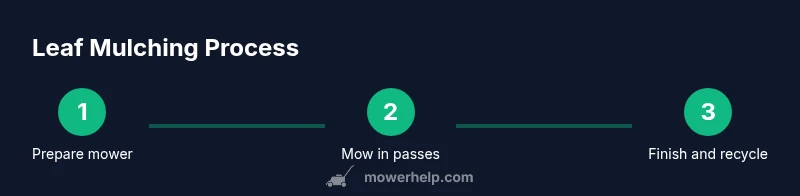
Mulching leaves effectively involves a few clear stages: first, prepare your mower and leaf area; second, adjust the blade and depth for optimum shredding; third, mow in light passes with slight overlaps; fourth, assess mulch depth and repeat as needed; finally, clean the deck and store tools properly. While this section provides a high-level overview, the attached STEP-BY-STEP block below gives concrete actions you can perform in sequence. The aim is to create a uniform, crumbly mulch that blends into the lawn rather than visible leaf piles.
Aftercare: composting shredded leaves and nutrients return
Shredded leaf mulch can be composted or left to decompose on the lawn. When added to a compost pile, shredded leaves accelerate the formation of nutrient-rich compost that benefits future plantings. If mulch is left on the lawn, monitor turf health—a light layer typically improves soil structure and moisture retention. Avoid over-mulching, which can create a dense layer that blocks air and water. Periodic light grazing of mulch to maintain a thin, even spread helps your lawn breathe and thrive.
Troubleshooting common issues and missteps
Common issues include clumping of damp leaves, mower overheating, and uneven mulch distribution. To prevent clumps, dry leaves first when possible and use multiple light passes rather than one heavy pass. If you notice reduced airflow or deck clogging, stop and clean the deck and blades before resuming. Uneven mulch can indicate blade wear or incorrect blade type. Regular blade replacement and a review of mower settings can resolve most issues. Finally, remember that mulching leaves is a long-term practice—results improve as you refine your technique over time.
Environmental and yard health considerations
Leaf mulch contributes organic matter that feeds soil biology and supports moisture retention, which can reduce irrigation needs. It also promotes a healthier root zone by improving soil structure and reducing compaction. If your soil quality is poor or you have heavy thatch buildup, shredding leaves to a finer consistency and combining with compost can maximize benefits. For leaf-rich seasons, consistent mulching can minimize waste while boosting nutrient cycling in the lawn ecosystem.
Tools & Materials
- Mower with mulching blade(Ensure the blade is sharp and mower supports mulching mode)
- Mulching plug or bagger (optional)(Useful if your mower supports a plug and you want to minimize leaf piles)
- Leaf rake(Gather leaves into an even layer before mowing)
- Gloves(Protect hands from sharp debris)
- Safety glasses(Shield eyes from flying debris)
- Tarp or yard waste bags (optional)(For collecting clippings if you choose to bag rather than mulch)
- Compost bin or area (optional)(Ideal for storing shredded leaves for composting)
Steps
Estimated time: 60-75 minutes
- 1
Inspect leaves and mower
Check that the blades are sharp and the deck is clear of debris. Inspect the leaf layer and remove any sticks, rocks, or heavy clumps that could clog the mower. This prep reduces clogs and improves shredding efficiency.
Tip: A sharp blade makes finer mulch and minimizes turf tearing. - 2
Attach mulching blade or enable mulch mode
Install a dedicated mulching blade if your mower supports it, or ensure the current blade is sharp and balanced. A proper blade helps produce consistent, fine leaf particles.
Tip: Check manufacturer guidance for blade compatibility before changing blades. - 3
Set deck height and feed rate
Raise the deck to allow leaves to flow under the blade without smothering the grass, and set a comfortable pace. Avoid long, dense passes that can overheat the engine or create thick mulch mats.
Tip: Start with shorter passes and adjust based on mulch quality. - 4
Mow in light passes with overlap
Make several light passes, overlapping slightly with each pass to ensure even shredding and to prevent untreated patches. Stop if you notice thick mats forming and take a rest pass.
Tip: Overlaps help avoid gaps and ensure uniform mulch. - 5
Cool-down and cleanup
After finishing, turn off the engine and disconnect spark plug if necessary. Inspect the blades again for buildup and clean the deck. Store tools properly for the next leaf season.
Tip: Cleaning blades after use extends blade life and performance.
Got Questions?
Can a standard mower mulch leaves without a special blade?
A mulching blade or a specialized blade improves shredding; some mowers can mulch with a standard blade, but results vary. If you notice long strips or poor shredding, switch to a mulching blade or adjust technique.
A mulching blade helps a lot, but some mowers can mulch with a sharp standard blade. If shredding is poor, switch blades.
Should leaves always be mulched or bagged?
Mulching is beneficial when the leaf layer is light or moderate. Bagging is a better choice for very thick, wet, or troublesome piles that could smother the turf.
Mulch light to moderate leaves, bag thick or wet piles as needed.
Is it safe to mulch damp leaves?
Damp leaves can clump and smother grass, so delay mowing until they dry, then mulch in light passes. If you must cut damp leaves, proceed with shorter passes and higher blade clearance.
Damp leaves? Wait for dry conditions, then mulch in light passes.
Will leaf mulch improve soil health?
Yes. Shredded leaf mulch adds organic matter that improves soil structure and moisture retention over time, especially when incorporated into a compost cycle.
Shredded leaves add organic matter and help soil health over time.
How many passes are needed for effective mulching?
Start with a few light passes and assess mulch quality, then continue with additional passes as needed. Avoid trying to process all leaves in a single thick pass.
Start light, then add passes as needed for finer mulch.
What should I do with leftover mulch?
Spread the mulch thinly across the lawn or add to a compost pile. Avoid creating thick layers that could smother new growth or grasses.
Spread it lightly or compost it.
Watch Video
The Essentials
- Mulch leaves to recycle nutrients back into the lawn
- Use a mulching blade for finer, more even shredding
- Avoid mowing thick, wet leaf piles in a single pass
- Perform multiple light passes for best results
- Regular mower maintenance improves mulch quality