How Many Hours Does a Lawn Mower Last? A 2026 Lifespan Guide
Explore how many hours a lawn mower lasts for gas and electric models, what affects lifespan, and practical maintenance to maximize runtime. Based on Mower Help Analysis, 2026, with actionable tips for homeowners and DIY enthusiasts.


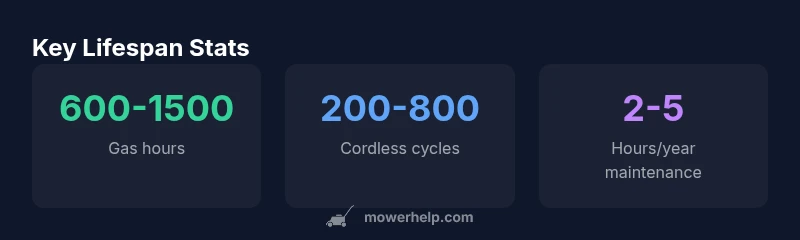
On average, a well-maintained gas mower runs for about 600–1500 hours of operation, while cordless electric mowers typically last 200–800 charging cycles. Real-world life depends on maintenance, usage, load, and storage. Regular oil changes, air filter checks, blade sharpening, and battery care can push hours toward the upper end. Single-stage walk-behinds and riders vary widely, so check the hour meter and follow the manufacturer maintenance schedule to keep the figure close to these ranges.
Understanding what the term "hours" means for a lawn mower
When homeowners ask, "how many hours does lawn mower last?" the answer hinges on how we count hours and which type of mower we own. There are two distinct lifespans to track: run-time hours (engine running) and calendar life (years, with wear from storage and exposure). An hour meter on many gas mowers records actual operation time, while cordless batteries track charge cycles rather than engine hours. The Mower Help team emphasizes that both figures can be misleading if you look at them in isolation. A mower may show 1,000 engine hours but still deliver acceptable performance if maintenance has been meticulous, or fail earlier if routine service was skipped. The goal is to balance usage with proper upkeep. For our purposes here, we’ll translate the question into practical ranges that reflect typical homeowner use and maintenance habits, while acknowledging the natural variability in every yard. The keyword here is how many hours does lawn mower last, which depends on model type and care level.
Gas-powered versus electric mowers: expected hours
Gas-powered engines generally offer longer run-time in hours, especially when cared for with regular oil changes, clean air filters, and spark plug replacements. A well-maintained gas mower can realistically reach about 600–1500 hours of operation, though most homeowners will see a tighter range depending on mowing frequency and terrain. Cordless electric mowers, by contrast, derive their lifespan more from battery health than engine hours. Typical cordless batteries last roughly 200–800 charging cycles before a noticeable drop in capacity becomes evident. This disparity means a homeowner might measure durability in engine hours for gas models and battery cycles for electric models. The exact numbers vary by brand, battery chemistry, and how aggressively you mow. According to Mower Help analysis, these ranges provide a practical benchmark for planning replacements or major overhauls.
How usage patterns affect total hours
Usage patterns play a decisive role in how many hours your mower delivers. Large, flat lawns with light grass will usually keep a mower within the higher end of its expected hours, while hilly terrain, frequent starts and stops, and dense, wet, or rocky grass can accelerate wear. If you cut every week during peak season and rarely service the mower, engine wear will accumulate faster than the clock on the calendar. Conversely, lighter use with proper maintenance often pushes hours toward the upper end of the typical range. Homeowners should track actual run-time and compare it with manufacturer guidance to estimate how many hours remain before a major component is due for replacement. This approach helps answer the central question with practical insight rather than guesswork.
Maintenance habits that extend hours
Maintenance is the single most effective lever for extending mower life. Follow a routine that includes checking and changing the oil (for gas models) on a recommended schedule, replacing air filters when dirty, inspecting and replacing the spark plug as needed, and sharpening or balancing blades to avoid overworking the engine. For electric mowers, prioritize battery care: avoid deep discharges, store charged, and limit exposure to extreme heat or cold. Clean off grass clippings and debris after each use to prevent corrosion and stuck components. Annual inspections by a qualified tech can catch worn bearings, loose belts, and weak fuel lines before they cause a dramatic drop in performance. In short, proactive maintenance can push a mower toward the upper end of its life expectancy and preserve its value for longer. The Mower Help team stresses consistency over intensity when it comes to care.
Battery care for cordless models and how it affects hours
Cordless mowers hinge on the health of their batteries. Battery degradation reduces usable run-time per charge, effectively shrinking the hours you can spend between charges. To maximize hours from a cordless mower, store the battery in a moderate temperature environment, avoid exposing it to extreme heat, and follow charging guidelines from the manufacturer. If the battery no longer holds a full charge, plan for a replacement in line with your budget and usage needs, rather than waiting for a dramatic failure. Regular calibration checks and safe charging practices can extend the usable life of the pack and help maintain a predictable schedule of operation. Remember that battery life is a cumulative effect of cycles, temperature, and charge management, so simple habits can yield meaningful gains in performance over time.
Signs your mower is nearing end-of-life
Certain symptoms act as early warning signs that a mower is approaching the end of its useful life. Loss of power under load, unusual engine noises, excessive smoking, engine knocking, oil leaks, or persistent starting issues are red flags. For electric mowers, noticeably reduced battery runtime, rapid voltage drop, or swollen batteries indicate a nearing end. If you notice any of these signs, consider a preventative overhaul or begin budgeting for replacement. Addressing issues early can prevent a total breakdown in the middle of a season and help you salvage value. The takeaway: monitor performance, not just hours, and perform targeted maintenance to extend usable life as long as feasible.
Estimating remaining hours and planning replacements
A practical approach to estimating remaining hours combines hour-meter data with maintenance history and usage patterns. If your gas mower routinely runs well below the lower bound of the published range after faithful maintenance, you may be closer to retirement than you think. If you approach or exceed the high end of the range, you should start planning for major service or replacement. For electric mowers, track battery health trends and anticipated cycles left to ensure you don’t find yourself stranded with a depleted pack. A structured replacement plan minimizes downtime and keeps your lawn care consistent. The goal is to transition smoothly from current performance to a new mower at the optimal moment, using data-driven judgments rather than guesswork.
Quick-start maintenance checklist for max hours
- Check oil level and change if due (gas models)
- Replace spark plug and clean the air filter as recommended
- Sharpen or balance blades; wipe down and lubricate moving parts
- Inspect belts and pulleys; replace worn components
- Clean grass clippings and debris from under the deck
- Verify battery health and storage conditions for cordless models
- Test starting, running, and cutting performance; note any drop in power
- Schedule a professional tune-up at least once per mowing season if possible
Following this checklist helps you maximize the hours a mower can deliver and slows the pace at which components wear down.
Practical replacement planning: when to consider buying new
If your mower consistently falls short of its expected hours range despite diligent maintenance, or if expensive repairs become frequent, it is prudent to compare replacement options. A newer model may deliver better efficiency, lower emissions, and longer warranty coverage, offsetting upfront costs over time. In practice, most homeowners benefit from budgeting for a replacement cycle based on hours used, rather than calendar years alone. Use the data from your hour meter and maintenance history to decide whether to repair or replace, then align the decision with your yard size, grass type, and local climate. This evidence-based approach reduces downtime and keeps your lawn care reliable. The Mower Help team recommends a structured, data-driven replacement plan to maximize long-term value.
Estimated lifespans by mower type and maintenance impact
| Mower Type | Estimated Lifespan (hours) | Key Maintenance Impact |
|---|---|---|
| Gas-powered lawn mower | 600-1500 | Routine oil changes, air filter, spark plug, blade maintenance |
| Electric cordless mower | 200-800 cycles | Battery health, proper charging, storage conditions |
| Riding mower | 750-2500 | Regular service, belt maintenance, engine oil/replacement |
Got Questions?
What counts as an hour of use for a lawn mower?
An hour of use typically means the engine is running and the mower is actively cutting grass. Many gas mowers record hours with an hour meter; cordless models use charging cycles as a proxy for usage. The key is to track actual run-time and not just calendar time.
An hour means the engine ran for a full hour, usually tracked by a meter. For cordless mowers, think in cycles rather than clock hours.
Do electric mowers last as long as gas mowers?
Electric cordless mowers often have shorter run-time in hours but comparable overall lifespans when considering battery cycles. Gas engines typically outlast batteries if properly maintained. The practical takeaway is to follow manufacturer guidelines and monitor battery health closely.
Gas engines generally last longer in operation hours, but batteries matter a lot for cordless mowers. Follow proper maintenance to maximize both.
Can I extend my mower’s life with cheap maintenance parts?
Using brand-approved parts and performing essential maintenance is more reliable than opting for generic components. Substandard air filters, spark plugs, or belts can cause more wear and shorten life. Invest in reliable parts and follow a clear maintenance schedule.
Stick to recommended parts and routine care to protect your mower’s life; cheap substitutes often fail sooner.
How can I tell if my mower needs replacement?
If performance declines despite maintenance, noise or smoke increases, or major components show wear, consider replacement. Use hour-meter data to assess whether you are approaching or exceeding the typical lifespan for your model.
If it runs poorly or keeps needing costly repairs, it’s time to consider replacement based on usage hours and maintenance history.
Should I replace a mower after a certain number of hours?
There isn’t a universal threshold; it depends on mower type, maintenance, and usage. Use the published ranges as guidelines, and plan for major service or replacement when the hour meter approaches those limits in combination with performance drops.
There isn’t a single age to replace; rely on hours used plus how it’s performing and maintained.
“Lifespan is driven by how you maintain it; neglecting routine care cuts hours quickly.”
The Essentials
- Track actual run-time with an hour meter to gauge remaining life
- Maintenance has the biggest impact on extending mower hours
- Gas engines and cordless batteries age differently and require different care
- Plan replacements using a data-driven approach rather than calendar years
- Battery care and storage conditions are critical for cordless models