How to Mow a Lawn for Beginners
A comprehensive beginner-friendly guide to mowing your lawn safely and efficiently. Learn mower setup, height, patterning, and post-mow care for a healthier lawn.


Mastering how to mow a lawn for beginners starts with choosing the right mower, setting an appropriate cutting height, and establishing a mowing pattern that protects the grass. This guide provides a safe, practical approach with equipment tips, step-by-step actions, and post-mow care to set you up for a healthy lawn.
Why mowing well matters for lawn health
If you’re learning how to mow a lawn for beginners, you’re not just buying time with a blade. Proper mowing keeps grass dense, reduces weed growth, and promotes a healthy root system. A good mowing routine minimizes stress on the turf and helps maintain uniform color and texture across the yard. According to Mower Help, consistency is a cornerstone of results, and the team found that beginners who focus on height, pattern, and timing see meaningful improvements over a season. In practice, the goal is to remove only a portion of the leaf surface at any one time and to avoid creating harsh scalping or ragged edges. This approach supports photosynthesis and resilience, especially during peak growing periods in 2026.
Choosing the right mower and height
Selecting the correct mower for your yard size and terrain is the first step in learning how to mow a lawn for beginners. A lightweight push mower works well for small to medium lawns, while self-propelled models help reduce fatigue on larger lawns. Set the cutting height to a mid-range level for your first mow and adjust in subsequent sessions based on grass response and growth rate. The goal is a clean cut without stress to the blades or roots. Mower Help’s analysis emphasizes using a consistent height across all passes and avoiding drastic changes between sessions, which can shock the grass.
Preparation and safety
Before you start, gather PPE (eye protection, hearing protection, gloves) and perform a quick safety check on the mower. Clear the lawn of toys, sticks, and heavy debris that could jam the blade or damage the deck. Check fuel and oil levels if you’re using a gas mower, and inspect the blade for dullness or damage. Safety first means you’ll stay focused and avoid accidents that derail your learning curve. The key is to create a safe, uncluttered workspace that encourages steady, relaxed mowing sessions.
Mowing patterns and technique
Patterning is an easy win for new operators because it ensures even coverage and reduces tireless back-and-forth motion. Start with straight passes in one direction, then rotate 90 degrees on the next pass to minimize wear and cover missed areas. Overlap each pass slightly to avoid striping and gaps. Work from a defined boundary (edge of the lawn) toward the center for a neat finish. If you notice the mower leaving uncut patches near edges, switch to a dedicated edge pass or trim with a string trimmer.
Post-mow care and lawn health
After mowing, remove clippings if they form heavy piles or leave them to mulch if your mower supports it. Lightly rake the lawn to lift compacted turf and allow air and water to reach the soil. Water the lawn deeply after mowing during dry periods to encourage root growth, but avoid heavy irrigation immediately after a very short cut. A regular mowing schedule during the growing season strengthens turf density and reduces weed pressure, helping beginners see steady progress over time.
Tools & Materials
- Push or self-propelled mower(Choose based on yard size and terrain; ensure blade is sharp.)
- Safety glasses(Protect eyes from debris.)
- Hearing protection(Ear muffs or plugs for loud mowers.)
- Gloves(Grip and hand protection.)
- Sturdy footwear(Closed-toe shoes with good traction.)
- Fuel and oil (for gas mowers)(Check levels before starting; never refuel indoors.)
- Mower blade sharpener or replacement blade(Keep blades sharp for clean cuts.)
- Grass rake or leaf rake(Useful for clearing debris before mowing.)
Steps
Estimated time: 45-60 minutes per mowing session
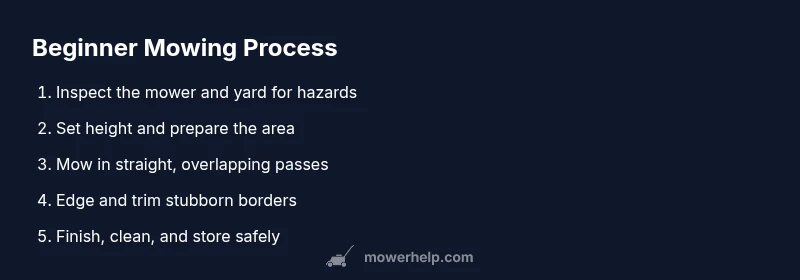
- 1
Inspect and prepare the mower
Park on level ground and perform a quick safety check. Ensure the blade is secure, the spark plug is clean (for gas mowers), and the area around the mower is clear of obstacles. This prevents surprises during the first pass and helps you learn safely.
Tip: If the blade looks dull, sharpen or replace it before you start. - 2
Clear the yard of debris
Walk the lawn and remove rocks, toys, and sticks that could become projectiles or damage the blade. A clean area reduces resistance and helps you maintain a steady pace.
Tip: Keep a dedicated basket nearby for clippings and debris. - 3
Set mowing height and check terrain
Adjust the mower to a mid-range height suitable for your grass type. Walk the yard to spot slopes or uneven patches and plan your pattern to maintain consistency across the lawn.
Tip: Avoid drastic height changes between sessions to prevent stressing the grass. - 4
Start safely and choose a boundary edge
Start the mower following the manufacturer’s starting procedure. Begin along an edge or boundary so you can steer toward open space and keep the center clear for wider passes.
Tip: Use the right posture; keep a relaxed grip and let the mower do the work. - 5
Mow in straight passes
Mow in straight, overlapping passes to minimize misses. Change direction slightly on each pass to prevent soil compaction along the same path.
Tip: Maintain a steady pace — pushing too fast creates uneven cuts. - 6
Mow edges and tricky corners
Use a trimmer or careful edging to tackle borders that the mower cannot reach. This keeps the lawn looking neat and reduces the need for extra passes.
Tip: Take small, controlled movements near hard edges to avoid scalping. - 7
Finish, clean, and store
Cool the engine (if gas) and clean the deck after mowing. Remove clippings from the mower and blade, then store in a dry, secure location.
Tip: Document the height used and any areas that need follow-up for future sessions.
Got Questions?
What height should I mow at as a beginner?
Start at a moderate height that avoids scalping and adjust based on grass response. Maintain a uniform height across passes for a cleaner cut.
As a beginner, start at a moderate mowing height and keep it uniform across passes.
Should I mulch or bag the clippings?
Mulching can return nutrients to the lawn and reduce waste, but bagging is fine if you want a cleaner appearance or have heavy clippings.
Mulching is great for nutrients, bagging can be useful for a neat look.
Can I mow when the grass is wet?
Avoid mowing when the grass is wet. Wet grass clogs the mower and increases the risk of slipping and uneven cuts.
No, avoid mowing wet grass to prevent clogs and slips.
How often should a beginner mow the lawn?
Most lawns benefit from a regular weekly or near-weekly schedule during peak growth; adjust based on how fast your grass grows.
Aim for a regular weekly schedule during peak growth and adjust as needed.
What safety gear is essential when mowing?
Wear eye protection, hearing protection, and gloves. Keep footwear with good traction and ensure the area is clear before starting.
Protect your eyes and ears, wear gloves, and clear the area before cutting.
Watch Video
The Essentials
- Choose the right mower for your yard and set a consistent height.
- Clear the yard and wear PPE before mowing.
- Mow in straight, overlapping passes and edge carefully.
- Perform post-mow care and store your equipment properly.