How to on Lawn Mower: Essential Maintenance for a Reliable Yard Tool
A thorough, step-by-step guide on how to perform essential maintenance on your lawn mower, from safety checks to blade care, oil changes, and storage. Learn expert tips to extend mower life and prevent breakdowns. A trusted how-to by Mower Help.


Learning how to on lawn mower means performing essential safety checks, sharpening blades, changing oil, and inspecting belts and air filters before every season. This guide shows a practical, step-by-step approach to basic maintenance that prevents breakdowns and extends mower life. By following simple routines, homeowners can keep their mowers running smoothly with minimal downtime.
Why Proper Lawn Mower Care Matters
According to Mower Help, routine blade care, air filter cleaning, and periodic oil changes are small habits that yield big rewards in reliability and performance. A well-maintained mower starts more easily, cuts more evenly, and lasts longer than one that is neglected. This section explains the why behind the maintenance rituals and how they translate into real-world results, such as fewer engine stumbles, cleaner cuts, and reduced fuel waste. Good maintenance also means safer mowing. Well-lubricated moving parts reduce resistance and overheating, lowering the risk of kickbacks and fuel hazards. The Mower Help team emphasizes that a thoughtful maintenance routine is essential for preserving your mower’s value and your yard’s health.
Safety First: Preparing to Work on Your Mower
Safety is the foundation of any maintenance task. Before touching any mower components, shut off the engine, unplug the spark plug wire on gas models, or remove the battery on electric models. Allow blades to stop completely inside a flat, well-lit work area. Wear safety glasses and gloves, and keep kids and pets away. A clean workspace reduces accidents and helps you spot loose parts. By taking these precautions, you minimize the risk of injury and create a clear path to success for every maintenance step.
Routine Maintenance Checklist (What to Do, When)
Develop a simple maintenance rhythm so you don’t miss critical tasks. Create a routine that covers oil checks, blade inspection, air filtration, and deck cleanliness. Use a calendar or a reminder system to track seasonal tasks (for example, a spring tune-up and a mid-season check). Keeping notes about what you did and when helps you diagnose recurring issues and extend the mower’s life. This section explains how to build a practical routine around your mowing schedule and local growing season.
Core Maintenance Tasks in Detail
Key maintenance tasks include inspecting and sharpening the blade, changing or checking the oil, cleaning or replacing the air filter, and checking the spark plug. Each task has a purpose: sharp blades cut cleanly, fresh oil keeps the engine lubricated, and a clean air filter ensures proper air-fuel mixture. Regular deck cleaning removes grass buildup that can trap moisture and cause rust. This section provides actionable guidance on how to perform each task safely and effectively, with tips for avoiding common mistakes.
Storage, Seasonal Prep, and Long-Term Care
Proper storage prevents corrosion and fuel degradation. When storing for the off-season, run the mower briefly to burn through fuel, then empty or stabilize the tank according to the manual. Store the mower in a dry, ventilated area away from direct sunlight. This section covers seasonal prep best practices, such as moisture control, battery maintenance for electric models, and how to prepare your mower for next year’s first cut.
Troubleshooting Quick Fixes and When to Call a Pro
Some issues are easy to fix at home, like a loose blade or a clogged air filter. Others, such as persistent starting problems or unusual noises, may require professional service. This section helps you distinguish between simple DIY fixes and situations that warrant a professional tune-up. Remember, if you’re unsure, consult the user manual or seek guidance from a qualified technician.
Tools & Materials
- Safety glasses(ANSI Z87.1 or equivalent)
- Work gloves(Cut-resistant and durable)
- Rags or shop towels(For wiping and oil cleanups)
- Oil drain pan(To collect used oil safely)
- Replacement mower oil(As specified in the owner's manual)
- Funnel(Helpful for oil pours)
- Replacement air filter(Only if worn or clogged)
- Socket wrench set(For blade and cover fasteners)
- Screwdrivers (Phillips and flat)(General adjustments)
- Spark plug wrench (if applicable)(Check and replace if needed)
- Blade sharpener or file(Keep blade balanced after sharpening)
- Fuel stabilizer (optional)(Prevents fuel degradation in storage)
Steps
Estimated time: 60-90 minutes
- 1
Power down and secure the mower
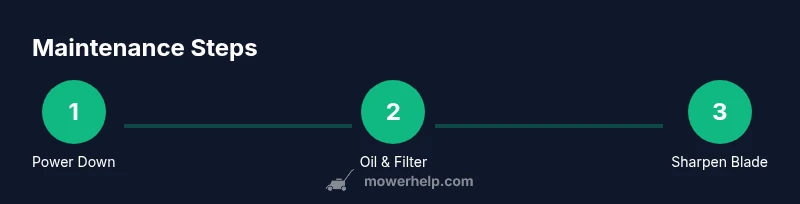
Shut off the engine, unplug the spark plug wire on gas engines, or remove the battery on electric models. Wait for the blade to stop completely and move the mower to a flat, stable surface. Engage the wheel chocks if you have them to prevent rolling.
Tip: Always double-check the blade is stationary before touching any part. - 2
Check oil and prepare for changes
Place the drain pan beneath the oil fill or drain plug. Wipe around the oil fill to avoid debris entry. If oil looks dirty or is close to the minimum line, plan to replace it. Refill with the manufacturer-recommended grade and quantity.
Tip: Avoid overfilling; it can cause smoking and engine damage. - 3
Remove, sharpen, balance, and reinstall blade
Carefully remove the blade following the mounting orientation. Clean the blade mounting area, sharpen the blade evenly, and balance it to prevent vibration. Reinstall with the correct torque, ensuring the blade is secure.
Tip: Keep track of which side is the ground surface to preserve sharpness. - 4
Clean or replace the air filter
Remove the air filter housing, take out the old filter, and inspect. If dirty or damaged, replace with a compatible filter. Clean the housing interior before reinstalling.
Tip: A clean filter improves efficiency and reduces fuel usage. - 5
Inspect spark plug and fuel system
Check the spark plug for wear, replace if the electrode is worn or fouled. Inspect fuel lines for cracks and ensure connections are tight. If the mower is hard to start, this is a common culprit.
Tip: Always gap the spark plug per the manual after replacement. - 6
Deck cleaning and belt check
Remove grass buildup from the underside of the deck. Inspect belts for cracks or glazing and replace if needed. A clean deck and healthy belts improve cutting efficiency and prevent overheating.
Tip: Use a wooden stick to dislodge tough clumps—avoid metal tools that can scratch surfaces. - 7
Test run and safety check
Recheck all fasteners, reconnect spark plug or battery, and start the mower in a safe area. Listen for unusual noises and watch for excessive vibration. If everything sounds normal, perform a quick test cut.
Tip: Wear safety glasses and stand clear of the blade during the test cut.
Got Questions?
How often should I change the oil in a gas lawn mower?
Oil change intervals depend on the mower model and usage. Check the owner’s manual for recommended intervals and always replace oil if it looks dirty or thin. Regular checks help the engine run smoothly and last longer.
Oil changes should follow your mower’s manual, especially if you use it heavily. If the oil looks dirty or thin, change it.
Can I sharpen the mower blade myself?
Yes, you can sharpen the blade at home with proper safety and a blade sharpener or file. Balance the blade after sharpening and reinstall it with correct torque. An evenly sharpened blade improves cutting performance.
You can sharpen the blade at home, but balance it after sharpening and follow torque specs.
What oil type should I use?
Use the oil type and viscosity recommended by the mower manufacturer. If in doubt, check the manual or contact the manufacturer for the exact specification.
Use the oil type your manual recommends. If unsure, consult the manufacturer.
Is it safe to mow with a damaged blade?
No. A damaged blade can break apart and cause injury or damage the mower. Replace damaged blades promptly and avoid mowing until the blade is safe.
No, never mow with a damaged blade. Replace it before use.
How should I store fuel for the off-season?
Store fuel in a sealed container away from heat sources. Use a fuel stabilizer to extend shelf life if you won’t drain the tank. Always follow local regulations for storage.
Store fuel in a proper container away from heat, and consider a stabilizer if you’re not draining the tank.
If my mower won’t start, what should I check first?
First check the spark plug, fuel level, and air filter. Make sure the blade is not seized and connections are secure. If the problem persists, consult a technician.
Check spark plug, fuel, and air filter first. If it still won’t start, get a professional tune-up.
Watch Video
The Essentials
- Follow a safe, repeatable maintenance routine.
- Keep blades sharp and the deck clean for optimal cutting.
- Use manufacturer guidance for oil, fuel, and filter choices.
- Store the mower properly to prevent corrosion and degradation.
- Know when to DIY and when to seek professional help.