Lawn Mower 22 Inch: A Comprehensive How-To Guide
Discover how to select, operate, and maintain a lawn mower with a 22-inch deck for mid-size yards. Safety, blade care, maintenance scheduling, and storage tips for reliable performance all season long.


A 22-inch lawn mower offers efficient mid-size yard coverage with balanced control. This guide walks you through selection, safe operation, and routine maintenance, including blade care, fuel or battery considerations, and storage for year-round reliability.
Why a 22-inch Deck Fits Your Yard
For homeowners with mid-size lawns, a 22-inch deck strikes a practical balance between cutting width and maneuverability. The wider deck means fewer passes, saving time, while still keeping the mower easy to steer along edges and around obstacles like trees and flower beds. According to Mower Help, the 22-inch design is particularly versatile for yards ranging from small suburban plots to compact lots with irregular borders. A typical 22-inch mower handles standard push mowing tasks without excessive weight, reducing fatigue for most users. The deck width also influences turning radius: narrower decks require more turns, while 22 inches provide a forgiving compromise for straightaways and edging. When you select a model, consider how often you’ll need to reach tight corners and how you’ll navigate slopes; a well-balanced tool reduces user effort and improves edge quality. If you plan to bag clippings often, confirm that the cupping of the bag or mulch plug aligns with your mower's discharge port. For mulching enthusiasts, the 22-inch deck usually supports mulching inserts that return clippings to the lawn, enhancing nutrient recycling. In short, the 22-inch deck is a versatile, reliable choice for many suburban lawns, offering generous cutting width without sacrificing control.
How to Choose a 22-Inch Lawn Mower
When shopping for a 22-inch lawn mower, start with three core questions: What is the mowing area, do you prefer gas or electric power, and is self-propulsion important for you? A 22-inch deck is a sweet spot for mid-size yards because it covers more ground than a smaller model while remaining nimble enough to trim around edges. Gas-powered mowers typically deliver longer runtime and higher torque, but require fuel storage and routine maintenance. Electric mowers, including battery models, offer quieter operation and less odor, but may need frequent recharges. Look for a reliable engine or motor with good serviceability and readily available replacement parts. Drive systems vary from push to self-propelled, with a rear-wheel drive offering better traction on uneven ground. Weight matters: a lighter unit reduces fatigue, but you want enough heft for stability on slopes. Battery or gas capacity, wheels size, and bagging versus mulch capability should align with your preferred mowing workflow. In addition, check safety features such as blade brake, automatic shutoff when you release the handle, and a sturdy grip. Based on Mower Help Analysis, 2026 shows buyers prioritize reliability and serviceability; choose models with accessible spark plugs, air filters, and clear owners manuals.
Tools & Materials
- 22-inch lawn mower (gas or electric)(Deck width must be 22 inches on the model you choose.)
- Owner's manual(Keep for maintenance schedules and torque specs.)
- Replacement blades (2)(Check compatibility with your mower model.)
- Blade balancer(Helps verify balanced blades after sharpening.)
- Screwdriver set(Flathead and Phillips for blade bolts.)
- Wrench set(Open-end or socket wrenches; ensure proper torque.)
- Engine oil (gas models)(Use manufacturer-specified grade (e.g., SAE 30).)
- Fuel stabilizer(Adds longevity for seasonal storage.)
- Safety gloves and glasses(Protect hands and eyes during maintenance.)
Steps
Estimated time: 60-90 minutes
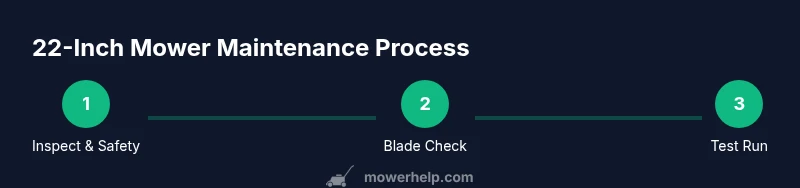
- 1
Inspect safety gear
Power off any power source and put on PPE. Clear the work area of debris and props, then verify the spark plug lead is disconnected on gas models or the battery is removed on electric models. The goal is to eliminate accidental starts and reduce slip hazards.
Tip: Always wear gloves and eye protection; a quick safety check saves time later. - 2
Check blade condition
Turn the mower on its side with the air intake facing upward and inspect the blade for nicks, cracks, or warping. A damaged blade can cause uneven cuts and unsafe vibration. If you see damage, replace rather than attempt to repair. Always remove the blade before handling it.
Tip: If the blade shows minor dullness, plan for sharpening rather than full replacement. - 3
Sharpen or replace blade
If sharpening, use a proper blade kit and balance the blade after grinding. Reinstall with the correct orientation and torque as specified by the manufacturer. If replacing, install a manufacturer-approved blade with the same balance and design.
Tip: Balance is critical to avoid engine stress and vibration. - 4
Change engine oil (gas models)
Drain old oil and replace with fresh oil according to the manual. Wipe spills and dispose of oil properly. Replace the oil filter if applicable. This maintains lubrication and reduces engine wear.
Tip: Do not overfill; check the dipstick for correct level. - 5
Refill fuel or charge battery
For gas mowers, use fresh fuel and add a stabilizer for storage. For electric mowers, ensure the battery is fully charged and in good condition. Avoid mixing old gas with fresh if you’re unsure of its stability.
Tip: Never store ethanol-containing gas long-term. - 6
Adjust cutting height and clean deck
Set the deck to the desired height for your grass, then clean the under-deck area to remove clippings and moisture. A clean deck improves airflow and cut quality.
Tip: Different zones may require different heights; use a consistent baseline. - 7
Test start and verify operation
Start the mower and run it briefly to listen for unusual noises or vibrations. Check that the blade spins freely and the drive system engages smoothly. Stop the engine and re-check fasteners if anything feels off.
Tip: If anything sounds wrong, stop and recheck bolts and cables. - 8
Begin mowing with proper technique
Mow in a planned pattern with even passes, overlapping slightly. Start along the edge and work inward in straight lines to create a uniform appearance. Regular maintenance afterward helps keep performance consistent.
Tip: Wide, even passes reduce fatigue and improve results.
Got Questions?
What size yards are best for a 22-inch mower?
A 22-inch mower works well for small to mid-size yards, typically where a wider deck helps cover more ground without sacrificing maneuverability. It’s a practical choice for typical suburban lots.
Best for small to mid-size yards where you want decent coverage without heavy equipment.
Can I use a 22-inch mower on a steep slope?
A 22-inch mower can handle gentle slopes if you maintain a slow, steady pace and avoid sharp turns. For very steep areas, consider a mower with better traction or consult the manual for slope guidelines.
Be cautious on slopes; move slowly and avoid sharp turns.
Gas or electric: which is better for a 22-inch deck?
Gas models usually offer longer runtime and more power for thick grass, while electric models are quieter and lower maintenance. Choose based on yard size, terrain, and how often you mow.
Gas offers more power; electric is quieter and easier to maintain.
How often should I sharpen the blade on a 22-inch mower?
Check blade sharpness every season or after 20–25 hours of use. Sharpen when edges become dull or nicked; balance after sharpening is essential.
Sharpen at the start of the mowing season or when you notice dullness.
Do I need a bagger with a 22-inch deck?
A bagger is optional and depends on your preferences for yard cleanliness and mulching. Mulching blades with a side-discharge option can provide flexibility.
Bagging is optional; mulching may be a better option for lawn health.
Watch Video
The Essentials
- Choose 22-inch for mid-size yards; good balance of width and maneuverability
- Prioritize reliability and serviceability when buying
- Follow a clear maintenance schedule to extend lifespan
- Use balanced blades and proper oil changes for best cuts
- Practice safe mowing techniques to prevent injuries