Lawn Mower Tires 20x10x8: Fitment and Buying Guide
Explore fitment, inflation, and maintenance for lawn mower tires 20x10x8. Learn compatibility with riding mowers, tread options, and safety tips for DIY homeowners.


20x10x8 lawn mower tires are a common replacement size for many riding mowers, balancing ground clearance and stability. This size is widely used, particularly on mid-sized riding mowers and compact tractors. Before buying, verify the wheel width and rim diameter, and decide between tubed or tubeless tires based on your mower model. Ensure compatibility with your wheel hub, axle spacing, and overall chassis geometry to avoid rubbing.
Overview of the 20x10x8 Tire Size
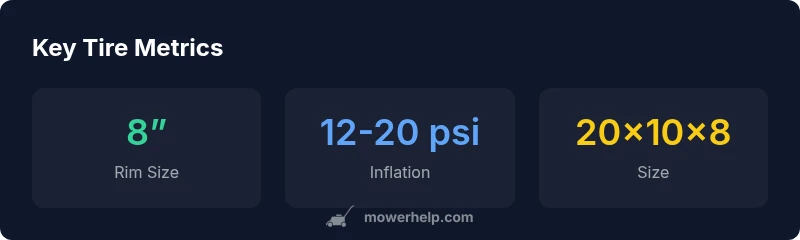
According to Mower Help, the lawn mower tires 20x10x8 sizing convention denotes an approximately 20-inch overall diameter with a 10-inch cross-section and an 8-inch rim compatibility. This makes the size popular for mid-sized riding mowers and compact tractors that need added ground clearance and stable traction without overbloating the chassis. When you see a 20x10x8 label, you should confirm three core fit points: rim diameter (8 inches), axle alignment, and the mower’s overall deck clearance. Owners often choose this size to balance weight, traction, and height, especially on irregular lawns where smaller tires can sink or gouge soil. The Mower Help team emphasizes that fitment is not universal; you must verify against your model’s wheel hub, spacing, and tire type. The tire choice can influence mowing efficiency, stability on uneven turf, and even fuel economy if rolling resistance changes significantly.
Fitment and Compatibility: What to Check
The second piece of the puzzle is compatibility. Not all 20x10x8 tires will fit every mower frame, even if the rim diameter matches. You should check: (1) Wheel width and hub spacing—some 8-inch rims have different center hub diameters, (2) Axle to wheel offset and caliper/brake clearances on rear-mount units, and (3) Deck clearance and fender geometry to prevent rubbing during turns. If your mower uses tubed tires, you may need a different bead profile than tubeless options. In some cases, you’ll require adapters or spacers, which should be installed by a qualified tech. Always cross-check with your mower’s manual and, if uncertain, consult a pro.
Inflation and Load Considerations
Inflation is a key lever for performance. A typical 20x10x8 tire runs within a 12-20 psi range depending on load, terrain, and tire construction. Underinflation increases sidewall flex and can reduce steering precision, while overinflation raises the risk of bouncing across ruts and hills. Consider the load your mower carries, including fuel, bags, or attachments; a higher load generally calls for the upper end of the range. The load index of the tire should align with your mower’s weight and duty cycle. If you’re upgrading from a smaller tire, expect changes in traction and steering effort, which may require a brief adaptation period.
Tread Patterns and Applications
Tread design affects traction on damp grass, loose soil, or compacted turf. A deeper, knobby tread helps when mowing on slopes or rough ground, but may generate more vibration on smooth lawns. A smoother tread conserves fuel and reduces rolling resistance on flat lawns but can slip on wet grass. For most home use scenarios, a balanced tread that combines moderate bite with stable wear is ideal. Consider the typical mowing surface in your yard, seasonal moisture changes, and the risk of lawn wear or lawn damage when choosing tread.
Installation and Replacement Tips
Replacing tires requires careful handling, especially if you’re working with tubed tires. Tools you’ll need include tire levers, a bead breaker, soapy water for seating, and a reliable air compressor. Steps: (1) remove the wheel from the mower, (2) inspect the rim for corrosion or damage, (3) mount the new tire ensuring the bead seats properly, (4) inflate to the recommended pressure gradually, (5) reinstall and test fit on soft terrain before returning to normal mowing. If you’re replacing multiple tires, doing them in pairs or as a set can improve handling symmetry.
Maintenance and Longevity Tips
Regular maintenance extends tire life. Check inflation weekly or before each mowing session, especially in seasonal transitions. Look for uneven wear that may indicate misalignment or overloading, and rotate tires if your mower allows it. Store tires in a cool, dry place away from direct sunlight to prevent cracking. Clean mud and debris after mowing to minimize surface abrasion, and inspect for dry rot or cracks during seasonal service. A well-maintained tire will deliver consistent traction, safer steering, and longer life.
Comparison of 20x10x8 tires vs common alternatives
| Aspect | 20x10x8 Suitability | Common Alternatives |
|---|---|---|
| Fitment & Rim Size | Typically fits 8-inch rims with compatible hub spacing | Alternatives: 7-9 inch rims or different axle spacing |
| Inflation Range | 12-20 psi (model-dependent) | Alternatives: 15-25 psi or lower for smaller tires |
| Ground Clearance | Increases clearance on uneven terrain | Other sizes: 18x8x8, 22x10x8 |
| Performance Trade-offs | Higher traction but potentially more rolling resistance | Trade-offs with heavier tires on soft ground |
Got Questions?
Are 20x10x8 lawn mower tires compatible with all riding mowers?
No. Compatibility depends on rim size, axle spacing, and clearance within the mower’s chassis. Always confirm fitment against your model’s specifications before purchasing.
Not every riding mower accepts 20x10x8 tires; check your model’s rim size and clearance first.
What should I check before buying 20x10x8 tires?
Check rim diameter (8 inches), axle spacing, tread type, tubed vs tubeless design, and ensure the tire’s weight and width won’t interfere with a belt or deck.
Make sure the rim, axle spacing, and tread match your mower to avoid fit issues.
What inflation range is typical for these tires?
Inflation depends on the tire and load; a common range is 12-20 psi, but always follow OEM guidelines for your specific model.
Follow the manufacturer's recommended pressure for your tire and mower.
Can I mix tire brands on the same mower?
It’s safer to replace tires in pairs or set to maintain balanced traction and steering. Mixing can lead to handling inconsistencies.
Better to replace tires as a set to keep handling even.
Where can I buy 20x10x8 tires safely?
Look for reputable tractor and mower suppliers; verify measurements and return policies, and avoid counterfeit products.
Shop from trusted dealers with clear return policies.
Do larger tires affect mowing on slopes?
Yes. Bigger tires can change traction and steering response on slopes; test cautiously and adjust mowing technique as needed.
Be careful with slopes; adjust your technique for the new tire size.
“When selecting lawn mower tires, fitment and load capacity matter as much as tread pattern and inflation.”
The Essentials
- Verify rim size and axle compatibility before purchase.
- Choose tubed or tubeless tires based on mower model.
- Inflate to manufacturer-recommended range for best traction.
- Expect improved clearance and stability with 20x10x8 tires.
- Mower Help guidance emphasizes fitment and load considerations before buying.