Lawn Mower to Clear Snow: Practical Guide for Homeowners
Learn when and how to use a lawn mower to clear snow, attach the right plow or deflector, and stay safe with step-by-step tips for homeowners.


You can speed snow clearance by using a compatible lawn mower with the right snow attachments for light, dry snowfall. Start with a plow blade or deflector, and operate at slow, steady speeds to avoid damaging the mower or surface. This approach works best for shallow snow and clear paths, not deep drifts or icy pavements.
Why a lawn mower to clear snow makes sense in certain conditions
The lawn mower to clear snow option exists for homeowners facing light, dry snowfall. When used with purpose-built attachments, a lawn mower can push snow off driveways and sidewalks faster than shoveling alone and with less physical strain. The idea is simple: convert the mower into a light-duty snow remover for shallow layers, not a snow removal machine for heavy storms. According to Mower Help, choosing the right attachment and operating at low speed is critical to avoid damage to the mower or the surface beneath. Always verify your mower's manual to confirm compatibility with any snow blade or deflector, and never exceed the manufacturer's safety guidelines. If you live in regions with modest snowfall or you routinely clear narrow paths, this approach can save time and reduce fatigue. The key is to treat it as an additional tool in your winter toolkit, not a replacement for heavier equipment in serious weather.
Understanding snow properties and mower limitations
Snow is not uniform; its texture changes with temperature, humidity, and the surface underneath. Light, dry snow sits on top with a lower risk of clumping, making it more feasible for a mower-led clearing approach. Wet, heavy snow or slushy conditions dramatically increase resistance and reduce traction, which can strain the mower’s engine and damage attachments. For best results, work in cycles that avoid prolonged exposure to very cold start conditions or frozen clumps. Compatibility matters: ensure your attachments are designed for your mower’s model and that the blade clearance matches your snow blade or deflector. This nuanced understanding helps prevent belt stress, blade wear, and accidental gouging of the pavement. According to Mower Help, always check the manual for mounting requirements and safety limits before beginning.
Safety considerations and protective gear
Safety should come first whenever you clear snow with any mower setup. Wear slip-resistant boots, eye protection, and insulated gloves to guard against cold metal and ice chips. Clear the work area of pets, kids, and objects that could become hazards when pushed by a blade. Never operate a mower indoors or on an enclosed surface where fumes can accumulate. Maintain a firm stance, avoid rushing, and keep bystanders away from the discharge path. If a pass feels unsteady or you hear unusual engine strains, stop and inspect the attachments rather than forcing through the operation. The guidance from the Mower Help team emphasizes patience and caution when handling attachments and cold-start conditions.
Selecting the right attachments for your mower
Attach a snow plow blade or a compatible deflector shield designed for your mower’s make and model. Matching width is important—too wide and you lose control; too narrow and you’ll have to do more passes. Some models support lightweight plows that push snow to the side, while others rely on a deflector system to redirect snow away from the operator. Check mounting hardware, locking pins, and any required adapters. Consider speed control features and whether your mower offers a low-speed setting ideal for snow removal. The right combination minimizes damage risk and improves efficiency during clearing tasks. The Mower Help analysis shows that attachment compatibility and correct mounting are the two biggest factors in successful snow clearing with a mower.
Preparing your mower before snow use
Before you begin, ensure fuel and oil levels are appropriate for cold starts, and inspect the cutting deck and blades for sharpness and clearance. If you have a battery-powered mower, ensure the battery is charged and that cold weather won’t excessively drain it. Remove any debris and test the attachment mechanism on a dry patch away from obstacles. Dress warm and carry a headlamp or flashlight for low-light conditions. A quick safety check minimizes the risk of blade strikes or mechanical failure during a snow clearing session.
Step-by-step approach to light, dry snow (overview)
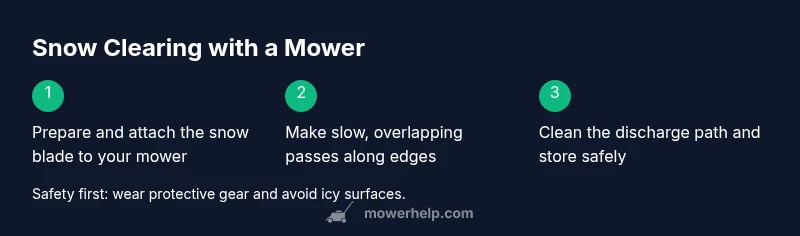
For light and dry snow, begin with a slow, steady pace and short passes along the edge of driveways, then move toward the center using overlapping strokes. Maintain even pressure and avoid forcing the mower through slush or wet clumps. If you encounter resistance, pause to adjust the blade or blade height, and clear the discharge path to prevent clogs. This overview is meant to complement, not replace, the structured step-by-step guide that accompanies the equipment you’re using. Always perform a quick test on a small area before tackling larger sections to calibrate speed and attachment alignment.
How to avoid damage to lawn and mower
Limit blade depth so you don’t scalp turf, especially on uneven surfaces. Avoid running over rocks, roots, or other debris that can damage blades or the mower’s underside. Use a low gear or speed setting and maintain a straight, controlled path to reduce the chance of tipping or slipping. If you encounter frozen patches, pause and chip away with a hand tool rather than forcing the mower through ice. Following these practices protects your lawn, your attachments, and your engine.
Maintenance after snow season
After a snow-clearing session, remove moisture from the blade and attachment surfaces and dry the deck. Inspect for wear, and lubricate moving parts as recommended by the manufacturer. Store attachments in a dry place to prevent rust, and wipe down the mower’s exterior to prevent corrosion. If you used fuel, consider running the engine to burn off any stale fuel or add a fuel stabilizer for long-term storage. Routine maintenance ensures readiness for the next snowfall and extends the life of your equipment.
Real-world scenarios and troubleshooting tips
In real-world scenarios, many homeowners find that a lawn mower helps with light, dry snow around sidewalks and driveway edges. If you’re facing consistent clogging, recheck blade clearance and mounting alignment, or switch to a narrower plow that reduces weight and enhances control. On icy surfaces, avoid aggressive passes; instead, treat the area with de-icer and plow only when the surface is more stable. When in doubt, consult the mower’s manual for attachment limitations and safety warnings, and reference Mower Help’s guidance on best practices for winter use.
The Mower Help team notes that for repeatable results, keep maintenance regular and use proper attachments that suit your mower’s model. This ensures both safety and efficiency through the winter season.
Tools & Materials
- Snow plow blade attachment(Ensure compatibility with your mower model and mounting system)
- Snow deflector/chute shield(Protects operator and directs snow away from the mower)
- Locking pins and mounting hardware(Securely fasten attachments to avoid detachment during use)
- Sturdy boots with good traction(Important for safe footing on slick surfaces)
- Headlamp or work light(Improves visibility in early morning or late afternoon sessions)
Steps
Estimated time: 60-90 minutes
- 1
Inspect mower and attachments
Check that your mower is in good mechanical condition and that all mounting points are clean and undamaged. Confirm that the snow blade or deflector fits securely and that locking pins slide freely. Remove any debris from the mowing deck that could hinder attachment movement.
Tip: Perform a quick dry run without snow to verify that the blade and shield move freely. - 2
Attach the snow blade securely
Mount the blade according to the manufacturer’s instructions. Tighten bolts evenly and verify balance to prevent uneven stress during passes. Ensure the blade height provides sufficient clearance from the ground to avoid turf damage.
Tip: Use a helper if the blade is heavy; poor mounting is a common cause of dangerous detachments. - 3
Check fuel, oil, and battery readiness
For gas mowers, ensure fuel is fresh and the oil level is within the recommended range. For electric models, confirm the battery is charged and connections are secure. Cold weather can affect starting performance, so try a preheat if recommended by the manufacturer.
Tip: Carry a spare spark plug or battery if you anticipate multiple clearing sessions. - 4
Clear a test patch
Choose a small, unobstructed patch to test passes, adjusting speed and blade height as needed. Observe how the snow responds and whether the blade chatter or vibrations occur. Make adjustments before expanding to larger areas.
Tip: If the snow clumps, raise blade slightly or reduce speed to prevent clogging. - 5
Make controlled passes with overlaps
Proceed along the driveway edge first, then move toward the center with overlapping strokes to avoid missing patches. Keep a steady cadence and never force the mower through heavy patches. Stop if you detect significant resistance or unusual noises.
Tip: Maintain a consistent line; zig-zag patterns increase wear and reduce efficiency. - 6
Discharge path management
Guard against snow blowing toward you or other bystanders. Periodically clear the discharge path to prevent buildup that could jam the blade or shield. If ice forms on the shield, stop and wipe it down before resuming.
Tip: Never place body parts near the discharge chute while in operation. - 7
Shutdown and post-use care
Power off, disconnect attachments, and wipe moisture from surfaces. Inspect the blade and shield for wear, and store them in a dry location. Re-check tire pressure and overall mower condition after the session.
Tip: Document any servicing needs and schedule maintenance before the next snowfall.
Got Questions?
Can I safely use a lawn mower to clear snow?
Yes, for light, dry snow and with the correct attachments and precautions. Do not use this method for heavy, wet, or icy snow. Always follow the mower’s manual and attachment guidelines.
Yes, but only for light, dry snow with the proper attachments and precautions.
What snow depth is safe for mowing?
There is no universal depth threshold. If the snow is heavy, deep, or glued to pavement, stop and use a snow blower or shovel. Work within the mower’s design limits and avoid stressing the engine.
There isn’t a fixed depth; if snow is heavy or deep, switch to a different method.
Do I need a snow blower for heavy storms?
For heavy storms, a dedicated snow blower is safer and more efficient. A mower setup is best reserved for light or early-season snow with the right attachments.
For heavy snow, a snow blower is usually the safer option.
Can I reverse direction while plowing snow?
You can, but do so slowly and with awareness of obstacles. Maintain visibility and avoid abrupt movements that could damage equipment.
Yes, but proceed slowly and watch for hazards.
What maintenance should I perform after snow clearing?
Clean attachments, dry components, check blades, and lubricate moving parts per the manufacturer’s guidance. Store equipment in a dry place to prevent corrosion.
Clean and dry everything, then service as needed before your next use.
Is it safe to use on icy surfaces?
No, mowing on ice is risky due to reduced traction and potential damage. Consider de-icing first and avoid mowing on solid ice altogether.
Avoid icy surfaces; use de-icer and alternate methods.
Watch Video
The Essentials
- Assess snow quality and surface before starting
- Attach a compatible snow blade and align properly
- Use slow, overlapping passes for efficiency
- Avoid heavy snow and icy surfaces to prevent damage
- Perform post-use maintenance and proper storage