Lawn Mowing After Rain: A Complete How-To Guide
Learn safe, effective practices for mowing after rain. This guide covers timing, blade care, heights, and aftercare to protect your lawn and mower.


After rain, postpone mowing until the lawn is dry enough to walk comfortably and the soil is firm. Ensure the mower blade is sharp and set to a higher cut height to minimize turf stress. Wear sturdy footwear and eye protection, and plan to mulch clippings or bag as needed. This approach reduces damage to the lawn and improves mower performance.
Why mowing after rain is tricky
Mowing a lawn soon after rain might seem convenient, but wet conditions create several real risks. Soft, waterlogged soil can compact under mower tires, leading to soil damage and visible ruts that take weeks to recover. The grass blade stays damp, which makes clippings clump and clog the mower deck, reducing cut quality and increasing wear. Fungi and diseases also thrive in moist turf, so it’s wise to limit mowing until the leaf tissue dries out. According to Mower Help, patience and proper timing are the best tools in this scenario. By understanding soil moisture, turf conditions, and mower capabilities, you can decide when mowing is appropriate on any given day.
Assessing moisture and safety before mowing
Before you grab the mower, evaluate both ground moisture and personal safety. In the early morning, a light dew can hide a wetter layer beneath the surface; wait until any residual dampness finishes evaporating. A quick soil test—pressing a finger or the toe of your boot into the soil—will show if the ground is firm enough to support the weight of a mower. If the soil leaves a lasting imprint or the grass blades bend easily underfoot, postpone mowing and consider other lawn tasks. Slippery conditions, especially on slopes, increase the risk of loss of control, falls, and damage to the turf. The Mower Help team emphasizes wearing sturdy footwear, gloves, and eye protection, and clearing the work area of toys, hoses, and garden debris before starting.
Mower setup and blade care for wet grass
Set the deck height higher than you would for dry conditions to prevent scalping and to reduce the load on the blade when grass is overly flexible. Make sure the blade is sharp and balanced; a dull blade tears grass rather than cuts, which can spread moisture-related fungal infections. Clear the under-deck area and remove any grass clumps after a light pass so the mower doesn't accumulate wet debris. If you use a mulch kit, ensure it is properly installed, or switch to bagging on very damp days to avoid clogging.
Mowing technique on a damp lawn
Limit your mowing to short, even passes that cross the slope rather than following its contour; this helps prevent wheel slip and reduces turf damage. Move at a steady, moderate pace to avoid scalping the lawn and to keep clumps from forming. If your lawn has high moisture pockets, navigate around them rather than trying to mow through them. Work from the outer edges toward the center with a consistent pattern to ensure an even appearance.
Post-mow care and turf health
After mowing, clean the mower deck and remove any grass clippings from the undercarriage to avoid corrosion and buildup. Inspect the blade tip and check for any nicks; a damaged blade can tear moist leaves and spread disease. Water the lawn only if needed after drying; otherwise, you may risk disease or soil compaction. A light, deep watering in the following days helps turf recover from rapid cutting stress.
Common mistakes to avoid
Avoid mowing when the ground is visibly saturated or puddling; the mower can sink, leaving ruts and compacted soil. Do not rush through passes—short, even strokes yield a cleaner cut and less strain on the mower. Skip mowing on sloped areas when the ground is slick, and never reach for a sharp blade while the deck is still exposed to moisture. Finally, neglecting deck cleaning after damp mowing invites rust and reduces cutting efficiency.
Tools & Materials
- Lawn mower with sharp blade(Inspect and sharpen before use; ensure deck is clean and free of obstructions)
- Gloves(Grip and protect hands during handling of wet grass)
- Eye protection(ANSI-rated safety glasses recommended)
- Sturdy footwear(Non-slip, closed-toe boots with good traction)
- Rake or brush(Clear debris and loose vegetation from the lawn before mowing)
- Deck brush or sponge(Clean under-deck after mowing to prevent corrosion)
- Moisture meter(Optional for precise soil moisture checks)
- Mulch plug or bagging system(Decide based on clumpiness and mowing height)
Steps
Estimated time: 90-120 minutes
- 1
Inspect the lawn and weather
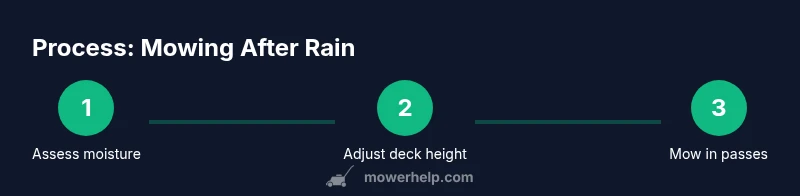
Assess recent rainfall and current soil moisture. Look for water pooling, footprints that linger, and any hazards like toys or hoses in the mowing path. Decide if drying time is needed based on ground softness.
Tip: If you can press a thumb into the soil and leave a clear imprint, wait longer before mowing. - 2
Test soil moisture
Perform a quick soil moisture check in multiple areas. If the soil compresses under light pressure, postpone mowing to protect turf and equipment. Consider doing other yard tasks while you wait.
Tip: Use a simple finger test in addition to a visual check for reliability. - 3
Prepare mower and blade
Sharpen and balance the blade, inspect for nicks, and ensure the deck is clear of debris. Increase cutting height to reduce stress on damp turf. If the soil is very soft, even a slight load can cause rutting.
Tip: A sharp blade reduces tearing and disease spread on damp leaves. - 4
Clear debris and adjust settings
Remove wet leaves, grass clumps, and hoses from the mowing area. Adjust the deck height to a higher setting and decide between bagging or mulching based on clump severity and mower type.
Tip: Bagging on damp days prevents clogging and ensures a cleaner cut. - 5
Mow with careful technique
Mow in short, straight passes across the lawn, not along the slope. Move at a steady pace to avoid scalping and reduce clumping. Avoid making frequent starts and stops on moist turf.
Tip: Cross-cut patterns help even out the blade exposure and minimize wheel slip. - 6
Post-mow cleanup and inspection
Clean the under-deck and remove clippings from the blades. Check for cut grass left behind and inspect the blade for nicks or dullness. Plan your next watering or mowing window around the forecast.
Tip: A quick deck clean prevents rust and keeps the mower ready for next use.
Got Questions?
Is it safe to mow the lawn after rain?
Yes, but only if the lawn is dry enough and the soil isn't soggy. If you can press into the soil and leave an imprint, wait. Prioritize safety and turf health over speed.
Yes, you can mow after rain when the ground is dry and safe, but avoid soggy soil and slopes.
How long should I wait after rain before mowing?
Wait until the surface is dry to the touch and the soil beneath is firm. In the morning dew, you may need several hours, especially if the forecast shows more rain.
Wait until the top is dry to the touch and the soil feels firm; if in doubt, skip mowing today.
Should I mow wet grass?
No. Wet grass clumps, causes mower clogs, and can spread disease. If you must cut, do so lightly with caution and plan for subsequent drying.
Avoid mowing wet grass because it clumps and can spread disease. If you must, take it slowly.
How should I adjust mower height after rain?
Raise the deck to a higher setting to avoid scalping damp turf and reduce blade load. Return toward your normal height after several days of dry weather.
Increase deck height after rain to protect the turf and mower, and adjust back when conditions improve.
What if the lawn is muddy or soggy?
Delay mowing and focus on other tasks like raking or aerating if soil conditions permit. Muddy lawns will recover better after the ground dries and drainage improves.
If the lawn is muddy, wait and choose other tasks until it dries.
Can mowing after rain harm the mower long-term?
Wet mowing can accelerate wear if mud reaches the belt and deck, so clean the under-deck after use and avoid operating on saturated ground.
Mowing on wet ground can wear the mower more quickly; clean and inspect after use.
Watch Video
The Essentials
- Wait for a firm, dry surface before mowing after rain.
- Raise the deck height to minimize turf stress on damp soil.
- Keep blades sharp and clean to protect turf health and mower performance.
- Post-mow cleanup helps prevent rust and disease spread.