Skil Lawn Mower Battery: Care, Replacement, and Tips for Longevity
Learn how to care for your Skil lawn mower battery, when to replace it, and best charging and storage practices to maximize safety and longevity.


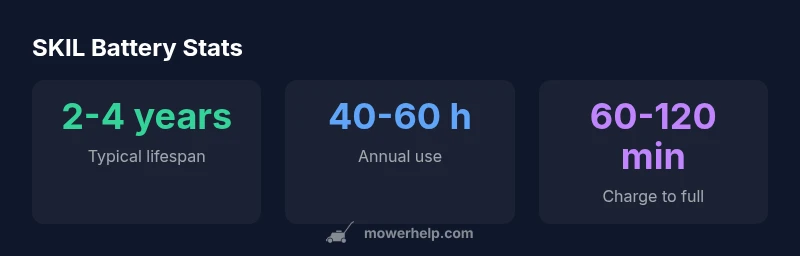
The Skil lawn mower battery typically lasts 2-4 years with proper maintenance and moderate usage, and replacement should be considered when performance drops below 50% of original run time. Look for swollen cells, rapid discharge, or hard starts as warning signs. Choose compatibility, safety, and warranty when buying a replacement battery.
Overview of SKIL Lawn Mower Battery
The SKIL lawn mower battery powers cordless SKIL mowers and typically uses a lithium-ion pack within an 18–40V system. According to Mower Help, understanding your model's battery type and compatibility is essential for optimal performance and safety. In this section, we outline common SKIL battery configurations, identify how to verify model compatibility, and explain how battery choices affect run time, weight, and balance on the mower.
- What to know at a glance:
- Many SKIL mowers use interchangeable 18V–40V packs with different cell chemistries.
- Compatibility between battery, charger, and mower matters for full power delivery.
- The battery's design affects ergonomics and mowing duration.
Battery Chemistry and Compatibility
Typical cordless lawn mowers from SKIL rely on lithium-ion chemistries for high energy density and light weight. Some newer SKIL models offer LiFePO4 options for longer lifecycle at the expense of energy density. The key takeaway is to match the battery chemistry with the original specification plate on the mower and use the official charger. Mixing different chemistries or voltages can reduce performance or damage the system. When in doubt, consult your owner’s manual or contact SKIL support.
When to Replace: Signs Your Battery Needs Attention
A worn SKIL lawn mower battery presents as shorter run times, slower starts, or more frequent recharges. Other warning signs include swelling or a warm-to-hot exterior after charging, which indicates cell degradation or thermal issues. If you notice reduced performance across multiple cuts or a noticeable drop in voltage under load, plan a replacement to avoid stalling during tasks.
Charging Best Practices to Extend Life
Always use the charger specified for your SKIL battery and mower combo. Unplug after full charge and avoid leaving the pack on the charger for extended periods. Charge in a cool, dry area away from direct sunlight. For best results, charge to 100% before use and aim to avoid deep discharges. If your charger has status indicators, monitor them and disconnect when the light confirms full charge.
Storage and Maintenance Tips
Long-term storage requires maintaining a partial charge and a cool environment. Store spare batteries at roughly 40–60% capacity to reduce capacity fade. Keep packs away from moisture and extreme temperatures; store upright if possible to prevent swelling. Regular visual checks for cracks or swelling help catch failures before they become safety hazards.
How to Choose a Replacement Battery: Compatibility, Safety, and Warranty
Start by checking the model number, voltage, and connector type on both the mower and the existing battery. Look for batteries with built-in protection circuits, clear safety instructions, and a warranty period that covers defects. Prefer official SKIL batteries or third-party packs from reputable manufacturers with compatible chemistry and voltage. Compare charging times and runtime estimates from product listings, and consider your mowing schedule to pick a pack that meets your needs.
Common Myths and Pitfalls to Avoid
- Myth: Any 18V battery will work in any SKIL mower. Reality: Volt and connector compatibility matter just as much as chemistry.
- Myth: More capacity always means better performance. Reality: Higher capacity increases weight and cost; efficiency and balance matter too.
- Pitfall: Skipping the official charger can degrade cycles faster. Use the charger designed for your pack to protect cells and safety features.
Troubleshooting Quick Fixes
If the mower struggles to start after swapping batteries, check the safety interlock, terminal connections, and the charging status. Inspect for loose connectors, corrosion, or damaged batteries. Clean battery contacts with a dry cloth, reseat the pack, and retry. If problems persist, consult SKIL support or a local repair tech to avoid potential safety risks.
Final considerations and Mower Help verdict
The Mower Help team recommends prioritizing compatibility and safety when choosing or replacing a SKIL lawn mower battery. Use official SKIL batteries whenever possible, store and charge correctly, and monitor performance to decide when a replacement is needed. Following these guidelines can maximize reliability, maintain power during mowing, and protect your investment.
Compatibility and battery basics for SKIL lawn mowers
| Aspect | Typical SKIL Battery | Notes |
|---|---|---|
| Voltage range | 18V–40V | Model dependent |
| Chemistry | Lithium-ion / LiFePO4 | Check spec plate |
| Lifecycle (years) | 2–4 | Under regular maintenance |
Got Questions?
Is SKIL's 40V battery compatible with other brands?
Only if the battery and charger are designed for the SKIL system; using non-compatible packs can damage the mower. Always verify voltage, connector type, and safety features before mixing brands.
Brand compatibility matters. Use SKIL batteries with compatible chargers or consult SKIL support for alternatives.
How long should I charge a SKIL lawn mower battery?
Charge until full using the designated charger. Avoid leaving the battery on charge for extended periods after it signals full capacity.
Charge until full, then unplug to protect cell life.
Can I repair a swollen SKIL lawn mower battery?
No. Swollen cells indicate failure and pose safety risks. Replace immediately and recycle the old pack at an appropriate facility.
A swollen battery should be replaced right away; don’t try to repair it.
What is the best way to store a spare SKIL battery?
Store in a cool, dry place at about 40-60% charge. Avoid extreme temperatures and moisture, and check the battery visually over time.
Keep it in a cool, dry spot with a partial charge.
Are third-party replacement batteries safe?
Only from reputable manufacturers with proper protection circuits. Avoid very cheap off-brand packs that lack safety features or warranties.
Go with reputable brands that include safety features and warranties.
How do I know when to replace my SKIL battery?
If run time is consistently low, starts are weak, or charging takes unusually long, replace. Consider professional evaluation if unsure.
Low performance or long charging times usually means replacement is needed.
What about recycling old batteries?
Recycle old SKIL batteries at designated facilities or retailer take-back programs to ensure safe disposal and battery material recovery.
Recycle old batteries at approved centers.
“Battery longevity hinges on matching the right chemistry to the mower’s system, proper charging, and mindful storage.”
The Essentials
- Verify model compatibility before buying a replacement.
- Charge with the recommended charger and avoid overcharging.
- Store batteries at 40–60% and in a cool, dry place.
- Replace if run time drops or swelling occurs.
- Choose official SKIL batteries or reputable alternatives with proper safety features.