Wet Lawn Mower Troubleshooting: Quick Guide
Learn fast, practical steps to diagnose and fix common issues when mowing a wet lawn mower. Safety tips, a diagnostic flow, and a proven fix path for wet grass mowing.


On a wet lawn, the most likely issue is belt slip and deck clogging caused by moisture and compacted grass. The quick fix is to stop mowing when the surface is wet, let the lawn dry, and then inspect under the deck, clean the blades, and check belt tension before resuming. Avoid mowing in wet conditions to prevent damage.
Why Wet Conditions Challenge Mowers
According to Mower Help, mowing a wet lawn introduces moisture that makes grass tackier and under-deck clogs more likely. Wet grass sticks to blades, increasing resistance and reducing traction, which can cause belt slip on power-driven mowers. The combination of slippery footing and damp blades also raises the risk of a slip accident for you while handling the machine. In this guide we cover a practical diagnostic flow and safe fixes, focusing on the most common, easily addressed causes. When the ground is visibly saturated or grass blades glisten with dew, postpone mowing if possible to protect the wet lawn mower and your safety. This article uses general best practices and practical steps that homeowners can apply without specialized tools.
- Quick checks begin with simple observations (grass condition, ground moisture, blade condition).
- Plan for dry weather windows to minimize compounding issues.
Safety First: Immediate Precautions
Safety is the top priority when dealing with wet mowing conditions. Always power down the mower and disconnect the spark plug (gas) or unplug the battery (electric) before touching moving parts. Wait for blades to stop completely, then remove any child or bystander from the area. Use sturdy gloves and eye protection when handling the deck or blades to avoid contact with sharp edges. Do not hose down a hot deck or engine; moisture and heat can cause damage or shorts. If you feel unsure at any point, step back and reassess—wet mowing can be hazardous.
- Wear protective gear: gloves and eye protection.
- Keep bystanders away and avoid water on hot components.
Common Symptoms When Grass Is Wet
Recognizing the signs helps narrow the cause quickly. Typical symptoms include: (1) belt slip or slower drive on damp turf, (2) under-deck buildup of wet grass and clippings, (3) reduced cutting efficiency with streaks or uneven height, (4) mower pulling or drifting instead of straight cuts, and (5) overheating or unusual engine noise after a short pass. These symptoms often share a common root cause—moisture-related resistance and debris adhesion. By cataloging exactly what you observe, you can apply the diagnostic flow more accurately.
- Slipping belt and sluggish drive on wet grass
- Wet debris clinging to the under-deck
- Uneven cuts or clumping in damp turf
Diagnostic Flow: Symptom → Diagnosis → Solutions
This section translates your observations into a practical action plan.
-
Symptom: Belt slip on wet grass
- Diagnosis: Moisture increases deck resistance and belt friction
- Solution: Pause mowing, dry the area, clean under-deck, inspect belt and replace if worn
-
Symptom: Under-deck clogs with wet clippings
- Diagnosis: Wet grass clogs airflow and cutting efficiency
- Solution: Stop, remove wet grass buildup, sharpen blades if needed, re-test on dry patch
-
Symptom: Mower pulls to one side on damp soil
- Diagnosis: Uneven traction and possible blade imbalance
- Solution: Check blade balance, adjust cutting height, reseat belt if applicable
-
Symptom: Engine or motor overheats after short passes
- Diagnosis: Moisture plus clogged cooling paths
- Solution: Clear airflow paths, don’t overheat; work in short bursts on dry ground
Always verify safety, and when in doubt, consult the manual or a professional.
- Quick check list: blade condition, deck cleanliness, belt tension, traction on dry grass.
Note: The diagnostic flow is iterative—if a fix doesn’t resolve a symptom, move to the next potential cause.
Step-by-Step Fixes for Wet-Mowing Issues
- Power Down and Safety Check
- Turn off the mower, remove the key or disconnect the battery, and wait for all moving parts to stop. Inspect the area around the blades and deck for loose debris before lifting the mower. Ensure you’re wearing protective gloves.
- Tip: Always disconnect power before inspecting; safety first.
- Clear the Under-Deck Debris
- Tilt the mower to access the under-deck and carefully remove wet grass clumps with a plastic scraper. A soaked buildup not only weighs the deck down but also restricts blade movement.
- Tip: Do not use metal tools that could scratch the deck.
- Inspect and Clean the Blades
- Remove the blade cautiously and inspect for nicks or damage. Clean the blade and the blade mounting area; re-install securely. A dull or damaged blade will struggle on damp grass.
- Tip: Replace blades if you see severe wear or cracks.
- Check the Drive Belt and Pulleys
- For belt-driven mowers, inspect the belt for fraying or glazing and ensure proper tension. Re-seat pulleys if they’re misaligned. A worn belt can slip more on wet surfaces.
- Tip: Do not over-tighten; belt tension should match the manual’s spec.
- Test on a Dry Patch
- Before returning to damp turf, try a short run on a dry area to confirm the belt grip and blade motion are normal. If the mower still feels off, re-check clearance and height settings.
- Tip: Avoid full passes in wet conditions until the grass dries.
- Dry, Store, and Revisit Weather Conditions
- After mowing, dry all components and store in a dry space. If rain is ongoing, postpone mowing until conditions improve. Consistent wet mowing can shorten mower life and compromise safety.
- Tip: Regularly inspect air intakes and cooling vents for moisture accumulation.
Prevention and Best Practices for Wet Weather Mowing
- Plan for sun or dry windows: Check the forecast; schedule mowing on dry days when possible. Even if grass looks short, wet roots can still be heavy and contribute to under-deck clogs.
- Use proper mowing height: Slightly higher cuts on wet lawns reduce stress on the mower and prevent excessive clumping.
- Maintain the deck: Regularly clean the under-deck and ensure the deck’s anti-vent path is clear. A clean deck improves airflow and cut quality in damp conditions.
- Traction and safety: Avoid hills when wet and stay aware of slick surfaces. Use both hands on the handles and wear non-slip footwear.
- Post-mow maintenance: Inspect blades, tighten any loose components, and wipe down moisture-prone parts to prevent rust.
- When in doubt, seek professional guidance from a local mower service to avoid causing damage or safety risks.
Notes on Materials and User Safety
Wet mowing increases slip risk for the operator, and damp surfaces can transfer moisture to electrical components on electric mowers or ignition systems on gas units. Always prioritize safety; if you feel unsure about any step, pause and seek help. This approach protects your mower’s longevity and your personal safety while working around sharp blades and moving parts.
Steps
Estimated time: 45-60 minutes
- 1
Power Down and Safety Check
Turn off the mower, remove the ignition key or disconnect the battery, and wait for the blades to stop. Inspect for loose debris near the blades and deck edges before handling.
Tip: Always disconnect power before inspection to prevent accidents. - 2
Clear the Under-Deck Debris
Tilt the mower and use a plastic scraper to remove wet grass from the under-deck and around the blade spindle. Do not use metal tools that could scratch the surface.
Tip: Work slowly and dispose of debris away from your shoes. - 3
Inspect and Clean the Blade
Carefully remove the blade, inspect for nicks or cracks, and clean the blade mounting surface. Reinstall securely with the correct torque.
Tip: Replace blades if there is any significant wear or damage. - 4
Check the Drive Belt and Pulleys
For belt-driven mowers, inspect for fraying and check belt tension. Re-seat pulleys if misaligned or replace belt if worn.
Tip: Use the manual's belt tension spec; avoid over-tightening. - 5
Test on a Dry Patch
Run a short test pass on dry ground to confirm proper belt grip and blade movement before tackling wet areas again.
Tip: If performance is odd, stop and re-check component alignment. - 6
Dry and Store
Wipe down moisture-prone parts and store the mower in a dry area. Plan mowing around weather to prevent recurring moisture issues.
Tip: Regular maintenance prevents most wet-weather problems.
Diagnosis: Mower struggles on damp grass with potential belt slip or deck clog
Possible Causes
- highWet grass increases resistance causing belt slip
- mediumUnder-deck buildup of wet clippings and grass
- mediumWorn or loose drive belt or pulley misalignment
Fixes
- easyPause mowing, wait for dry conditions, then clean under-deck and inspect belt/pulleys
- mediumRemove wet grass buildup, sharpen/replace blade if needed, re-tighten belt
- easyAfter cleaning, test on a dry patch; adjust cutting height if traction is uneven
Got Questions?
What should I do first if my mower struggles on a wet lawn?
First, power down the mower and remove the spark plug or disconnect the battery. Allow the surface to dry, then inspect the under-deck for clogs and check the blade for damage before resuming.
First, shut it off and unplug or remove the battery. Let it dry, then clear clogs under the deck and inspect the blade.
Is it safe to mow wet grass?
Mowing wet grass increases slip risk and can damage the mower. If you must mow, go slowly and avoid steep slopes, then dry the area as soon as possible.
It's safest to avoid mowing wet grass, but if you must, take it slow and dry the area quickly after.
Why does my belt slip on wet grass?
Moisture adds resistance and can cause the belt to slip if it isn't properly tensioned or if the belt is worn. Inspect tension and condition, and replace if worn.
Moisture makes the belt grip poorly; check tension and wear and replace if needed.
How do I clean the under-deck after mowing wet lawns?
Cool the mower, remove the spark plug wire or battery, tilt safely, and use a plastic scraper to lift wet grass from the under-deck. Wipe dry before storage.
Cool it, unplug power, tilt safely, and scrape the wet grass away; dry before storing.
Will moisture damage my engine or battery?
Moisture can cause corrosion and electrical issues if components are exposed or not dried properly. Keep connectors dry and dry after use.
Moisture can cause corrosion if not dried; keep connectors dry and clean.
Watch Video
The Essentials
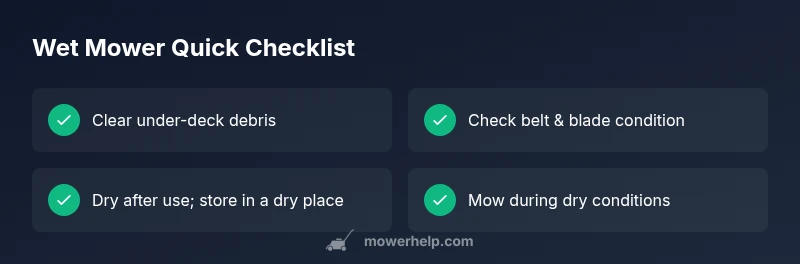
- Mow only on dry grass to prevent belt slip and deck clogs
- Regularly clean the under-deck after wet mowing
- Inspect and replace worn blades and belts promptly
- Prioritize safety: disconnect power before inspection
- Plan mowing around weather to extend mower life