What Type of Oil Do Lowe's Lawn Mowers Use? A Practical Guide for DIYers
Discover the exact oil type Lowe's lawn mowers use, how to choose viscosity by temperature, and when to change oil. Practical steps for DIYers to keep gas-powered mowers running smoothly.


For most gas-powered Lowe's lawn mowers, use a 4-stroke engine oil in the SAE viscosity recommended by the model’s manual. In warm weather, SAE 30 is common; in cold weather, 5W-30 or 10W-30 is typically better. Always verify the exact specification on the engine label or in the owner’s manual before changing oil. Do not use two-stroke oil in a four-stroke engine.
What type of oil do Lowe's lawn mowers use?
When you buy or own a Lowe's lawn mower, the oil question boils down to the engine type. Most Lowe's gas-powered models use a 4-stroke engine that requires oil just like a car or motorcycle—no fuel oil mix involved. The oil grade and capacity depend on the specific engine on your mower, but common guidance is to use a conventional or synthetic 4-stroke oil with an SAE viscosity suitable for your climate. In hot summer climates, many engines perform well with SAE 30, while in colder temperatures a multi-viscosity oil such as 5W-30 or 10W-30 is often recommended. Always confirm the exact specification on the engine label or the owner’s manual. Remember, Lowe's sells a wide range of models, and some may have different maintenance requirements, so there is no one-size-fits-all answer beyond the 4-stroke oil principle.
Gasoline engines vs. electric mowers: does oil apply?
A quick distinction helps prevent oil-related mistakes. Electric and battery-powered Lowe’s mowers do not require engine oil because they run on electricity. Some smaller gas-powered units at Lowe’s may still use oil in the engine, but a few specialty or garden tools may have different lubrication needs (for example, gear oil in some small transmissions). If you’re unsure whether your model requires oil, check the user manual or the label on the engine. The distinction matters because adding oil to an electric mower can create safety hazards and mechanical issues. This section reinforces the idea that oil is relevant for gas engines, not electric ones.
Oil viscosity explained: cold vs hot climates
Viscosity is the measure of an oil’s resistance to flow, and it matters with temperature. In cold climates, an oil with a lower pour point such as 5W-30 or 0W-30 helps the engine turn over more easily in the morning. In warmer climates, a higher-viscosity oil like SAE 30 can maintain adequate lubrication when temperatures rise. If your manual allows, synthetic or synthetic-blend oils often provide more consistent protection across temperature ranges. Always pick an oil type that aligns with the climate where you operate your Lowe’s mower. If you live where temperatures swing drastically, a multi-viscosity oil like 10W-30 often covers a broad range of conditions.
How to pick the right oil for your model
To choose the correct oil, start with the owner’s manual. If the manual lists two options, select the one that matches your climate and your engine’s design. Distinguish between conventional, synthetic-blend, and full-synthetic oils, and weigh the cost-benefit based on usage. Synthetic oils often perform better in extreme temperatures and provide superior wear protection, which can be valuable for high-hour seasons or mowers used in demanding yard work. If you plan to keep the mower for several years, investing in a higher-quality oil can extend engine life. Finally, ensure you use fresh oil from a reputable brand and avoid mixing different viscosities in the same fill unless the manual explicitly allows it.
How to check and avoid overfilling oil
Overfilling oil can create pressure that leads to leaks and potential engine damage. Start by parking the mower on a level surface, cleaning the dipstick, and drawing oil to the correct level. Insert the dipstick, remove, and read. If it’s above the 'full' mark, drain some oil until it reaches the recommended level. Always dispose of any excess oil responsibly and store the remaining oil in a sealed container to prevent contamination.
Oil capacity and drainage tips
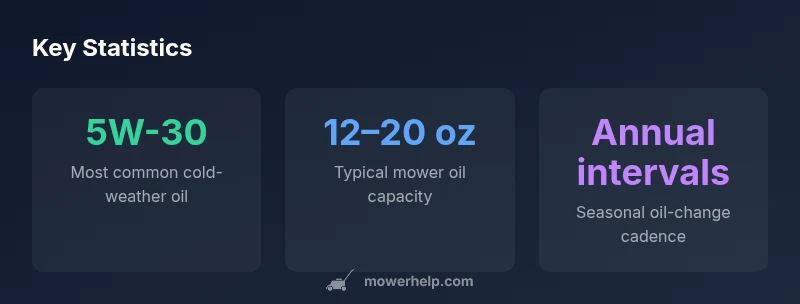
Oil capacity varies by engine size, but most 4-stroke Lowe’s lawn mower engines hold roughly 12–20 ounces of oil. When you drain oil, place the mower on a level surface, tilt slightly toward the oil fill to capture the old oil, and use a clean pan. Refill slowly and recheck with the dipstick to avoid overfilling. If you’re unsure about the exact capacity for your model, consult the owner’s manual or the engine label on the mower deck. Proper draining and refilling preserve engine health and prevent leaks.
Seasonal maintenance and oil-change cadence
Oil-change frequency depends on usage and climate. In heavy seasonal usage, many homeowners perform an oil change every mowing season or after the mower has accumulated a significant amount of run-time hours. In lighter usage, a single annual oil change plus a mid-season check may suffice. The key is consistency: establish a routine and follow the manual’s guidelines for oil grade, capacity, and change intervals. If you’re unsure, err on the side of slightly more frequent checks rather than risking engine wear.
Common mistakes and troubleshooting
Common mistakes include using the wrong viscosity for the climate, mixing two-stroke oil in a four-stroke engine, and neglecting to check the oil level. Another mistake is failing to replace the air filter or spark plug, which can simulate poor lubrication symptoms. When in doubt, perform a quick check of the dipstick, engine label, and manual before starting. If you notice smoke, unusual smells, or clearly low oil, stop the engine and address the issue before continuing use.
When to consult Lowe's support or a professional
If you own a Lowe’s mower and are uncertain about the proper oil specification, contacting Lowe’s customer support or an authorized service provider is wise. They can help locate the exact oil type for your model and advise on the best oil grade, synthetic blend vs. full synthetic, and recommended service intervals. This is especially important if you’re using a high-hour machine or a mower with a nonstandard engine. When in doubt, use the manual as the primary source of truth and reach out for professional help if needed.
Quick reference table for common oil options in lawn mower engines
| Oil Type | Viscosity (SAE) | Best For/Climate | Notes |
|---|---|---|---|
| SAE 30 | SAE 30 | Hot climates | Common for many older engines |
| 5W-30 | 5W-30 | Cold to cool climates | Good all-season option |
| 10W-30 | 10W-30 | Moderate climates | Balanced protection |
| Synthetic blend (5W-30) | 5W-30 | Extreme temps | Better wear protection |
Got Questions?
What type of oil should I use in a Lowe's lawn mower?
Most Lowe's gas mowers use 4-stroke engine oil. The common viscosities are 5W-30 or 10W-30 for temperate or cool climates and SAE 30 for hot climates. Always verify the exact specification in the engine label or owner’s manual before purchasing and changing oil.
Use the mower’s manual to confirm the oil you need. It will tell you the exact viscosity and whether synthetic or conventional oil is preferred.
Can I use two-stroke oil in my Lowe's lawn mower?
No. Four-stroke engines require separate gasoline and oil. Do not mix or use two-stroke oil in a four-stroke Lowe's mower unless the manual explicitly states otherwise.
Two-stroke oil is not designed for four-stroke engines and can damage the engine.
Do Lowe's mowers require synthetic oil?
Synthetic or synthetic-blend oils are optional but offer better protection in extreme temperatures and longer intervals between changes. Check your manual for the recommended grade and whether a synthetic oil is preferred for your model.
Synthetic oils can be a good option, but always follow the manual.
How often should I change the mower oil?
Intervals vary by model and use. A typical approach is at the start or end of a mowing season, or after a certain number of hours of operation as specified in the manual. Keep a routine maintenance schedule and adjust for heavy use.
Check the manual for exact intervals; don’t skip oil changes if you’re putting in a lot of mower hours.
What if I spill oil during an oil change?
Contain the spill, wipe with absorbent material, and dispose of used oil at an authorized recycling facility. Clean the area and check for leaks before starting the engine again.
Clean up any spill right away and recycle the oil properly.
“Oil performance directly impacts engine longevity. Always match the oil to the manufacturer’s spec, not the latest trend.”
The Essentials
- Follow the mower’s manual for the exact oil specification
- Choose viscosity based on climate: 5W-30/10W-30 for cold; SAE 30 for hot
- Do not use two-stroke oil in four-stroke engines
- Check oil level with dipstick before each use; avoid overfill
- Dispose of used oil responsibly and recycle where possible