Average Lawn Mower Repair Cost in 2026: What Homeowners Should Know
Explore typical price ranges for the average lawn mower repair cost, key cost drivers, and practical tips to estimate, compare options, and save on maintenance. This data-driven guide from Mower Help helps homeowners budget for repairs and decide when to repair or replace.


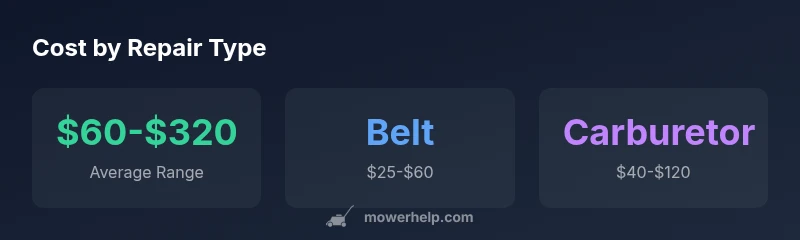
Average lawn mower repair cost typically ranges from about $60 to $320, depending on the repair type, parts, and labor. Most homeowners pay around $100 to $180 for common fixes like belt replacements, carburetor cleaning, or blade sharpening. More extensive work, such as motor or ignition repairs, can push costs toward the upper end.
Understanding the average lawn mower repair cost
Prices for lawn mower repairs vary widely because of the tasks involved, the mower type, and the service location. The notion of an 'average' is helpful for budgeting, but it hides the realities of different repair jobs—from a quick blade sharpening to a full carburetor rebuild. According to Mower Help, evaluating the cost requires separating diagnosis from actual repair and considering parts, labor, and overhead. The so-called average is a composite of many common services across gas and electric mowers, and it tends to drift with fuel prices, parts availability, and technician demand. In 2026, Mower Help analysis shows that most homeowners see repair bills in the lower to mid range for routine fixes, with outliers in the upper range when motors or electronics are involved. For homeowners, understanding where your repair sits on this spectrum helps avoid overpaying and helps decide when a replacement would be more cost-effective.
What determines repair costs
Repair costs are driven by several factors that interact in complex ways. First, diagnostic fees can add to the bill even before any parts are replaced. Labor rates vary by region and shop, typically reflecting local wages and demand. The mower type matters too: gas-powered units with carburetors or older engines often require different parts and expertise than modern electric models. Parts availability and brand-specific components can influence both price and turnaround time. Finally, the age and condition of the mower affect labor intensity—older machines may need more labor for worn components and more frequent tune-ups. In practice, you’ll see a wide distribution: a small tune-up may be a quick, inexpensive fix, while a comprehensive motor or electrical repair can be significantly more costly.
Cost ranges by repair type
Understanding cost ranges by repair type helps you budget and compare quotes. Basic tasks such as blade sharpening, spark plug replacement, or air-filter changes are usually at the lower end of the spectrum. Belt replacement, more involved carburetor cleaning, and fuel-system checks creep into the mid-range, depending on parts and labor. Major repairs, including carburetor rebuilds, ignition module work, or motor repairs, can reach the higher end of the scale, particularly if specialized parts are required. When shops provide estimates, you’ll often see a two-part structure: diagnostic/flat-rate service plus parts and labor. For homeowners, knowing typical ranges makes it easier to spot unusually high quotes and ask for breakdowns.
Cost estimates by mower type and age
Gas mowers generally incur higher part costs than electric models due to more complex fuel systems and ignition components. Older mowers tend to require more labor because worn belts, sheared gears, and degraded carburetors demand extra time to diagnose and replace. Electric or battery-powered machines may rely more on electrical components and batteries, which can shift the price toward diagnostic and electrical work. In 2026, the Mower Help analysis indicates that age and type affect not only the total bill but also the likelihood of needing recurrent issues—older gas units often see higher overall maintenance costs over a multi-year horizon. If your mower is a few years past its prime, a cost-conscious plan might include targeted fixes now and a replacement consideration later, depending on usage and expected remaining life.
How to estimate your repair bill step by step
Start with a clear problem description: what’s not working, when it started, and any sounds or symptoms. Get a written diagnostic quote first from a reputable shop, then request a parts and labor breakdown. Compare at least two quotes, ensuring both include diagnostics and a clear parts list. Ask about time estimates for completion, warranty terms on repairs, and any pricing for tune-ups or maintenance packages. If you have a preferred local technician, ask for references or online reviews to assess reliability. Finally, factor in the mower’s current value if the repair cost approaches or exceeds a significant portion of replacement cost. This approach keeps you from overinvesting in an aging tool.
DIY vs professional repairs: when to DIY
DIY repairs can save money on labor, but they require a baseline knowledge of mower mechanics and safe-handling practices. Simple tasks like blade sharpening, air-filter replacement, or spark plug changes are often feasible for homeowners with basic tools. More complex repairs—such as carburetor work, ignition module replacements, or engine overhauls—usually benefit from professional service due to the risk of miscalibration or safety concerns. If you’re considering DIY, start with manufacturer manuals, watch reputable tutorials, and evaluate your comfort with critical steps like fuel handling and ignition testing. Remember that warranty terms may be affected by DIY work, so check coverage before you begin a project.
Tips to reduce repair costs and maintain longevity
Preventive maintenance is the best defense against rising repair costs. Schedule regular tune-ups, replace worn belts and blades promptly, and keep fuel systems clean with fresh gasoline and appropriate stabilizers. Clean air and fuel filters improve engine efficiency and reduce strain on critical components. Store mowers in a dry, ventilated space to prevent rust and corrosion. Track parts availability for your specific model and consider joining a local mower club or online community to learn cost-saving tips and get second opinions on repairs. Small, consistent investments in maintenance often yield lower lifetime costs than infrequent, major repairs.
When to repair vs replace your mower
A practical rule of thumb is to compare the repair bill to the mower’s current market value and expected remaining life. If a single repair plus associated maintenance approaches or exceeds a substantial portion of replacement cost, replacement can be a smarter financial move. However, if the mower has a reliable running history, good parts availability, and you rely on it for regular yard work, targeted repairs may extend its usefulness at a reasonable price. Consider your time, the reliability of the unit after repair, and the impact on yard work continuity during downtime when deciding. A thoughtful cost-benefit analysis helps ensure you get the most value from your investment.
Future-proofing your mower: long-term value
Beyond immediate repairs, building a long-term maintenance plan increases the probability that your mower serves for many seasons. Create a seasonal checklist: inspect belts, blades, and deck integrity; check fuel and lubrication; and monitor cooling and exhaust paths. Keep spare parts on hand for commonly needed items, and schedule professional inspections before peak lawn seasons. A proactive approach reduces the risk of unexpected breakdowns and keeps the repair budget predictable. By investing in routine care now, you can lower the likelihood of expensive, last-minute repairs and extend your mower’s useful life.
Estimated cost ranges for common lawn mower repairs
| Repair Type | Typical Cost Range | Notes |
|---|---|---|
| Blade sharpening | $10-$25 | Basic service to restore performance |
| Belt replacement | $25-$60 | Common wear item; labor varies |
| Carburetor cleaning | $40-$120 | Includes parts and labor; urban/rural variance |
| Spark plug/ignition service | $5-$25 | Simple tune-up; limited service |
Got Questions?
What is the typical cost to repair a lawn mower?
Most repairs fall within the $60-$320 range, depending on the repair type and labor. Minor fixes cost less, while motor or ignition work can push costs higher. Always seek a written estimate with a clear breakdown.
Most repairs run from sixty to three hundred twenty dollars, depending on the job. Get a written breakdown before approving any work.
Which lawn mower repairs are the most affordable?
Blade sharpening, spark plug replacement, and basic tune-ups are usually the least expensive, often under fifty or a little more. These preventive tasks can significantly improve performance without heavy costs.
Blade sharpening and basic tune-ups are typically the cheapest repairs.
Does the mower's age affect repair cost?
Yes. Older mowers often require more labor and more frequent parts, which can raise costs. Parts availability for older models also influences price and turnaround.
Age can raise costs because worn parts and more labor may be needed.
Is it cheaper to repair or replace a mower?
If repair costs approach 50% of replacement price or more, replacement can be more economical. Consider the mower's expected remaining life and how well it meets your yard needs.
If repairs cost half or more of a new mower, replacement may be smarter.
What should I ask for when getting an estimate?
Request a written estimate listing parts, labor rate, diagnostic fees, and warranty terms. A clear breakdown helps you compare quotes and understand where the costs come from.
Ask for a written breakdown with parts, labor, and diagnostic fees.
“Repair costs are highly task-specific; a small tune-up can be under $100, while major motor work may push bills higher. A clear cost breakdown helps homeowners decide whether to repair or replace.”
The Essentials
- Know the overall cost range before you shop
- Ask for a detailed written estimate with parts and labor
- Compare at least two quotes to avoid overcharging
- Consider replacement if repair costs near half of a new mower
- Perform regular maintenance to lower long-term costs