How to Fix Lawn Mower Not Starting: A Homeowner's Guide
Discover a clear, step-by-step method to diagnose and fix a lawn mower that won't start, including fuel, spark, carburetor, and safety interlock checks. Learn at-home techniques to restore starting power safely.


Learn how to diagnose and fix a lawn mower that won't start. This guide covers common causes, from fuel and spark to carburetion and safety switches, and provides a simple, safe step-by-step approach. You'll need basic tools, fresh fuel, and clean air filters. By following these steps, you can often restore starting performance without professional help.
Why the lawn mower won't start: common culprits and the authority of Mower Help
When your lawn mower won't start, it can be frustrating. The root causes range from a simple safety interlock to a fouled carburetor. According to Mower Help, the most frequent starting problems are fuel-related, ignition-related, or air flow issues, with safety switches and blade engagement playing a surprising role. The Mower Help team found that, in many cases, fresh fuel and a clean air path solve the issue quickly, but neglecting the safety interlock can keep the engine from turning over. This section walks you through the typical culprits and how they manifest in starting failure. By recognizing the symptoms, you can choose a targeted approach and avoid unnecessary inspections. Remember that working with gasoline and ignition components requires caution; keep a clear workspace, use gloves, and postpone testing if you smell gas leaks, as suggested by Mower Help Analysis, 2026.
Quick diagnostic checklist before you begin
Before you reach for tools, perform a fast gut-check to rule out obvious blockers. Verify the engine safety features are in the correct positions (deadman switch, throttle, choke lever) and that there is fresh gasoline in the tank. Inspect the air filter and the spark plug for fouling or excessive wear. Check battery voltage if you have an electric model and ensure the spark plug wire is firmly connected. If your mower is still stubborn, proceed to the deeper tests described in the next sections.
Safety first: prepare your workspace and protect yourself
Set the mower on a flat, dry surface and engage the parking brake or wheel chocks as appropriate. Disconnect the spark plug wire before touching ignition components to prevent accidental starts. Wear safety glasses and gloves, and work in a well-ventilated area away from flames or heat sources. A clean, organized workspace reduces the chance of forgotten tools or fuel spills—two common culprits in starting problems.
Fuel system basics: is fuel fresh, and is the line clear?
Fuel quality is a major factor in starting performance. If the fuel smells sour or looks visibly dirty, drain and replace with fresh fuel mixed according to the mower’s specifications. Inspect the fuel cap vent for obstruction and check the fuel line for cracks or kinks. A clogged filter or blocked lines can starve the engine of fuel, preventing ignition altogether. After refreshing fuel and clearing lines, try starting again with the choke in the recommended position.
Spark and ignition explained: spark plug, ignition coil, and compression
A healthy spark is essential for ignition. Remove the spark plug and inspect for fouling, corrosion, or a damaged electrode. Clean or replace the plug as needed and re-gap to the manufacturer’s specification. If you have doubts about the ignition coil or compression, test for a spark by placing the plug against a metal surface and attempting a quick start (with the correct safety precautions). A weak or absent spark is a common reason for a no-start condition.
Air intake and carburetor: air filter, carb cleaner, and choke
A clogged air filter or dirty carburetor disrupts the air-fuel mix critical for starting. Replace or clean the air filter, and consider a carburetor cleaner spray if you suspect coking inside the carb. When working on the carburetor, avoid spraying directly into hot components and allow cooldown time between steps. A compact, clean air path greatly improves starting reliability.
Electric mowers and battery checks
For electric or battery-powered mowers, verify battery charge level and health. A weak or dead battery can prevent starting even when fuel and spark are in good shape. Use a multimeter to check voltage, charge the battery if possible, or replace it if the voltage remains low after a full charge. Reconnect all electrical connections securely after tests to prevent intermittent failures.
Practical test and restart steps
With safety checks complete, reassemble any components you removed and attempt a controlled restart. Use the choke according to the manual, ensure the bail/handle is engaged only as required, and listen for a consistent engine sound. If the mower still refuses to start, document what you tested and consider more in-depth diagnostics or professional service. A methodical approach saves time and reduces the risk of missing a subtle fault.
Maintenance to prevent starting problems and long-term care
Preventive maintenance is the best defense against recurring starting issues. Regularly clean or replace air filters, use fresh fuel or stabilizer, check spark plugs, and inspect the fuel line for cracks. Keep the battery terminals clean and tight on electric mowers, and store fuel in approved containers away from heat sources. A routine maintenance schedule minimizes downtime and extends mower life.
Tools & Materials
- Spark plug wrench / socket(Select the correct size for your model and have a spare plug on hand.)
- Flathead and Phillips screwdrivers(For carburetor access and filter housing.)
- Replacement spark plug(Use the model's specified gap.)
- Carburetor cleaner(Use as a spray to clear gunk; do not spray into hot engine.)
- Air filter (new)(Replace if dirty or damaged.)
- Fuel line and clamps (if cracked)(Carry spare clamps for quick replacements.)
- Fuel drain pan(Used when siphoning old fuel.)
- Fresh gasoline (unleaded)(Follow local regulations for disposal of old fuel.)
- Multimeter or battery tester(For electric models to test battery/ignition circuits.)
- Safety gear (gloves, glasses)(Always wear protective equipment.)
Steps
Estimated time: 45-90 minutes
- 1
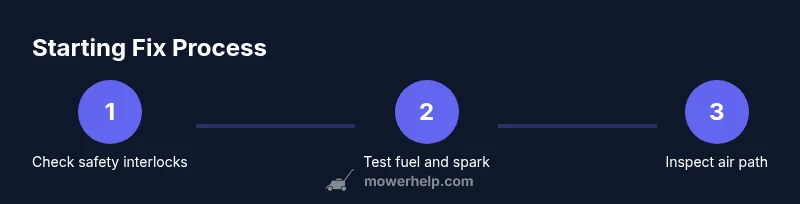
Check safety interlocks and operator presence controls
Inspect the safety switches, bail lever, blade engagement, and throttle settings. Ensure nothing is engaged that would disable starting. If any switch is stuck or mispositioned, correct it before trying to start again.
Tip: A quick visual audit of all safety controls at the start saves time later. - 2
Inspect fuel supply and quality
Look in the tank for clear fuel and check lines for cracks or kinks. If fuel smells sour or looks dirty, drain it and replace with fresh fuel. Reconnect all fuel components securely and gently.
Tip: Always dispose of old fuel safely according to local rules. - 3
Check spark plug and ignition system
Remove the spark plug, inspect the electrode for wear or fouling, and clean or replace as needed. Re-gap to the manufacturer’s specification and reconnect the wire securely.
Tip: A clean, properly gapped plug improves ignition consistency. - 4
Examine air intake and carburetor
Remove or inspect the air filter; replace if dirty. If the engine still won’t start, spray carburetor cleaner into the idle circuit according to the product instructions after cooling.
Tip: Do not spray carb cleaner into a hot engine. - 5
Test the electric start and battery (if applicable)
For electric mowers, test the battery with a multimeter or charger. Replace or recharge if the voltage is low after a full cycle. Reconnect all electrical connections securely before testing again.
Tip: Ensure terminals are clean and tight to prevent voltage drop. - 6
Attempt restart and verify outcome
Attempt a controlled restart with the choke in the appropriate position. Listen for a steady firing sound and watch for consistent exhaust. If the mower still won’t start, revisit each subsystem or seek professional help.
Tip: Keep a written checklist of tests to avoid skipping steps.
Got Questions?
What is the most common reason a mower won't start?
Fuel quality, ignition issues, and air flow problems top the list. Start with fresh fuel, a clean spark plug, and a clear air path, then test safety switches.
Common reasons are fuel, spark, and air flow problems. Start with fresh fuel, clean spark plug, and clear air path, then test safety switches.
Can a starting issue be fixed without a new spark plug?
Yes, if the plug is fouled or dirty you can clean it. If the electrode is worn or damaged, replace it for reliable ignition.
Yes, you can often clean a fouled plug, but replace it if worn for reliable ignition.
Should I drain old fuel before attempting to start?
If fuel smells sour or looks dirty, draining and replacing with fresh fuel helps prevent starting failures.
If the fuel smells sour or looks dirty, drain it and replace with fresh fuel.
Is it safe to start a mower while it's on the ground?
Yes, but ensure the mower is stable and the blade is disengaged. Keep hands away from moving parts and listen for unusual noises.
Yes, but make sure it's stable and you’re clear of moving parts.
When should I replace the carburetor?
Replace the carburetor only after cleaning and parts replacement fail to restore starting performance.
Only after cleaning and parts replacement fail to fix the problem.
Watch Video
The Essentials
- Identify the root cause before replacing parts.
- Fresh fuel and a clean air path are your first fixes.
- Safety interlocks must function correctly to start the engine.
- Regular maintenance prevents many starting problems.