How to Fix a Lawn Mower Pull Cord
Learn how to diagnose and repair a broken lawn mower pull cord with a safe, step-by-step approach. This guide covers tools, replacement cord options, and essential maintenance tips to keep your mower starting reliably.


This guide shows how to fix lawn mower pull cord safely and efficiently. You’ll inspect the cord and recoil for wear, replace frayed or broken parts, and reseat the starter housing. Gather basic tools, disconnect the spark plug, and work in a clean, well-lit area. If the starter remains seized after replacement, professional service may be required.
What causes a lawn mower pull cord to fail
Failures in the pull cord usually start with a frayed or broken cord and a worn recoil starter. Repeated pulling, sudden jerks, or a mower that has been stored improperly can stretch the cord and wear the spring inside the recoil housing. Over time, these issues cause the cord to bind, snag, or snap when you pull. According to Mower Help, these are the most common failure modes homeowners encounter, and most can be addressed with basic tools and careful, methodical steps. Understanding the difference between a simple cord fray and a starter-pulley binding helps you decide whether you can handle the repair yourself or need professional service. The key is to isolate the failure to the cord itself, the handle, or the recoil mechanism before proceeding with replacements.
Safety and workspace prep
Before you touch any moving parts, set the mower on a flat, level surface and disconnect the battery or spark plug to prevent accidental starts. If you’re dealing with a gas mower, work in a well-ventilated area away from open flames or hot surfaces. Gather your tools and lay out parts in a logical sequence, so you don’t lose track of which screws or cords came from where. Wear safety glasses and gloves to protect your hands from sharp edges and spring-loaded components. A tidy workspace reduces the risk of losing small pieces and helps you stay organized as you work through the repair steps.
Assess the damage: cord, spring, and housing
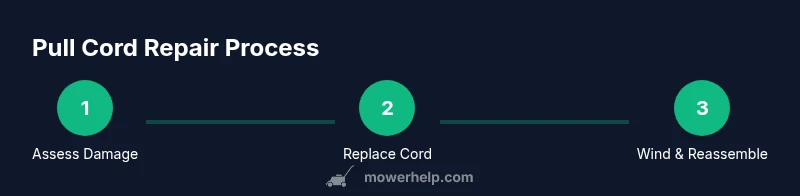
Carefully remove the recoil housing to inspect the pull cord and spring. Check for fraying along the cord, unraveling threads, or a stretched shield that won’t wind properly. The recoil spring should feel firm and free of kinks; if the spring is stuck or deformed, you may need a replacement kit for the starter assembly. If you notice the crankshaft or flywheel turning resistance when you pull, there might be a more serious engine issue that warrants a professional assessment. Pinpointing whether the cord is the culprit or the recoil mechanism is the first critical step to avoid unnecessary part replacements.
Tools and replacement parts checklist
Having the right parts on hand saves time and reduces frustration. You’ll typically need a replacement pull cord kit or a cord of the correct length, a screwdriver set (Phillips and flathead), needle-nose pliers, a small pry tool, and a utility knife or scissors for trimming. A push rod or thin punch can help guide the cord through tight channels, while a lubricant spray can ease reassembly. Ensure you have safety gear (gloves and eye protection) and a clean workspace. Double-check model compatibility if you’re purchasing a cord kit, since length and thickness vary by mower make and recoil design.
Replacing the pull cord: when and how
Replacing the cord involves removing the old cord from the handle and winding mechanism, then threading a fresh cord through the same path. It’s essential to cut a replacement cord slightly longer than the original, so you have room to tie a secure knot at the handle. Begin by loosening the screws that hold the recoil housing, then carefully lift to expose the winding mechanism. Remove the old cord, noting how it is anchored. Thread the new cord through the guide holes, tie the end to the handle, and prepare to wind the cord back into the housing. This step requires patience and attention to the cord's path to avoid pinching or misalignment.
Wind, secure, and reinstall the recoil starter
With the new cord threaded, slowly wind the cord onto the recoil wheel in the correct direction, keeping tension so it coils evenly. Secure the outer end to the handle if a stop or knot is present. Reinstall the recoil housing, ensuring all screws are snug but not overtightened. If the starter has a spring, test the tension by pulling the cord gently to ensure it retracts smoothly. Do not force the cord or twist the housing during reassembly, as this can kink the spring and cause future failures.
Reassembly and initial test procedure
Reconnect the spark plug and any hoses you removed during disassembly. Set the choke and primer (if equipped) to the starting position recommended by the manufacturer. Attempt a few light pulls to verify that the cord retracts smoothly and the engine turns over. If the engine starts, let it run for a few minutes to check for abnormal sounds, smoke, or hard starting. If you still can’t start the mower after replacing the cord, there may be a seized starter mechanism or another underlying issue requiring professional service.
Maintenance tips to prevent future pull cord failures
Regularly inspect the pull cord and recoil for wear, and replace the cord at the first sign of fraying. Store the mower in a dry, clean area to minimize corrosion and keep the recoil spring from sticking. Lubricate pivot points with a light lubricant as recommended by the manufacturer, and avoid yanking the cord with full force, which can stretch or snap the cord. Periodic checks of the air filter, spark plug, and fuel system help prevent starting problems that might be mistaken for a faulty pull cord.
What to do if the cord still won't retract after replacement
If the new cord winds poorly or won’t retract, the issue may lie with the recoil spring or housing alignment rather than the cord itself. Inspect the spring for kinks or missing segments, and ensure the winding shaft sits properly in its bearings. Misalignment can cause the cord to catch or bind on the housing. In such cases, compare your starter assembly to the manufacturer’s diagram and consider replacing the entire recoil starter kit for a reliable fix. If you’re unsure, consult a repair guide or seek professional help to avoid damage to the engine.
Final checks and safe testing
Before you finish, recheck all fasteners for tightness and confirm that no tools are left inside the housing. Perform a controlled start test in a safe area, keeping your hands and clothing away from the blade. If you hear unusual noises or see smoke, stop immediately and re-evaluate the assembly. Consistent maintenance after a successful repair will extend the life of the cord and recoil, reducing the likelihood of future starts failing due to cord wear.
Tools & Materials
- New pull cord kit or replacement cord(Match length and thickness to your mower's recoil design)
- Safety gloves(Protect hands from sharp edges and springs)
- Safety glasses(Eye protection during disassembly)
- Screwdriver set (Phillips and flathead)(Remove recoil housing screws)
- Needle-nose pliers(Grip and guide the cord through small passages)
- Utility knife or scissors(Trim replacement cord length)
- Socket set and wrenches(Remove mounting bolts and secure housing)
- Lubricant spray (optional)(Ease reassembly of moving parts)
- Thin punch or push rod (optional)(Guide cord through tight channels)
Steps
Estimated time: 60-90 minutes
- 1
Disconnect spark plug and secure mower
Locate the spark plug boot, disconnect it from the spark plug, and ground the metal wrench against the engine to prevent accidental ignition. This keeps you safe while you work on the recoil assembly.
Tip: Always double-check that the spark plug is fully disconnected before starting any internal work. - 2
Remove recoil housing screws
Use the appropriate screwdriver to remove the screws holding the recoil housing in place. Keep track of screws and small parts so they don’t get mixed up during reassembly.
Tip: Take a photo of the housing orientation before removing it to aid correct reassembly. - 3
Inspect the cord and handle
Check the cord for fraying, cracking, or stiffness. Inspect the handle for cracks or loose connections that could cause a weak grip when pulling.
Tip: If the cord shows any wear, replace it rather than attempting a temporary fix. - 4
Thread in the new cord
Thread the replacement cord through the guide holes and connect it to the handle. Leave a small length slack to avoid kinking as you wind the cord.
Tip: Work slowly to prevent the cord from snagging on inner components. - 5
Wind the cord onto the reel
Carefully wind the cord onto the recoil wheel in the proper direction, maintaining even tension. Check that the cord retracts smoothly when you pull it.
Tip: Do not over-wind; leave a little room for the cord to retract without binding. - 6
Reassemble and test
Reinstall the recoil housing, reconnect the spark plug, and perform a controlled start test in a safe area. Listen for smooth operation and ensure there are no unusual noises.
Tip: If it fails to start, revisit the orientation and path of the cord and spring.
Got Questions?
Can I fix a lawn mower pull cord myself?
Yes. Most pull cord issues can be resolved with basic tools by replacing the cord and inspecting the recoil starter. If the starter mechanism is damaged, you may need to replace the entire recoil assembly.
Yes, you can fix it yourself if you have the right replacement cord and basic tools. If the recoil starter is damaged, consider replacing the entire starter.
What are signs the pull cord needs replacement?
Frayed strands, a stretched or hard-to-pull cord, or a cord that won’t retract are signs the cord should be replaced. If the handle is cracked, replace it too.
Look for fraying, stiffness, or a non-retracting cord. Also check the handle for damage.
Do I need to replace the recoil starter when the cord breaks?
Not always, but if the recoil spring is worn, seized, or the housing is misaligned, a complete starter replacement is often the most reliable fix.
Not always, but if the spring or housing is damaged, replacing the starter is usually best.
Is it safe to repair gasoline mowers myself?
Yes, with proper precautions: work in a ventilated area, disconnect spark and fuel, and keep ignition sources away during disassembly and repair.
Yes, with good safety habits and proper tools.
How long does a pull cord repair typically take?
Most repairs take about 60 to 90 minutes depending on mower model and cord length. Complex issues may take longer if the recoil needs replacement.
Usually an hour to an hour and a half, depending on model.
Will replacing the pull cord affect warranty?
In many cases, do-it-yourself cord replacement does not void basic warranties, but check your mower’s warranty terms before proceeding. If the warranty is active, consider professional service for coverage.
Check your warranty terms; DIY may be acceptable, but verify with the maker.
The Essentials
- Inspect cord and recoil before replacing parts.
- Dish out safety first: spark plug, fuel, and ignition must be secured.
- Thread and wind carefully to ensure smooth recoil action.
- Test start in a safe area and recheck for any binding or noise.
- Regular maintenance prevents future pull cord failures.