Lawn Mower Sounds Like It's Revving: Troubleshooting Guide
Discover how to diagnose and fix a lawn mower that sounds like it's revving. This guide covers quick checks, a diagnostic workflow, and step-by-step fixes with safety tips for homeowners and DIY enthusiasts.


Most likely, a lawn mower that sounds like it's revving is running with a lean air-fuel mix or throttle misadjustment. The quickest fixes are to check the throttle linkage, clean or replace a dirty air filter, and inspect the carburetor for blockages. If the noise continues after these checks, stop and evaluate fuel quality and ignition safety.
Understanding the symptom: why your lawn mower revs
When a mower sounds like it’s revving, you’re hearing RPMs that rise above normal idle or a frantic chatter that doesn’t match the throttle position. The root cause is almost always an air-fuel imbalance, a throttle that’s not returning to idle, or a restriction somewhere in the intake path. According to Mower Help, homeowners frequently report this symptom after sitting unused for a period, after refueling, or when a choke linkage sticks. The key is to separate the sound from the engine itself: is it a true high RPM, or a fluttering that mimics revving? Distinguishing the pattern helps you pick the right fixes without diving into unnecessary disassembly. While revving can be alarming, it’s usually a solvable maintenance issue rather than a major repair. This section helps you connect the phrase “lawn mower sounds like it’s revving” to practical checks you can perform safely in your driveway.
Note: Always prioritize safety. If you smell fuel, hear a loud backfire, or see smoke, stop immediately and follow the safety steps outlined later.
Quick checks you can do before disassembly
Before pulling apart the carburetor, try these simple checks to rule out the most common causes:
- Set the throttle to the recommended position and verify the throttle linkage moves freely without sticking.
- Inspect and replace a dirty air filter; a clogged filter reduces air flow and can skew the air-fuel mix.
- Remove and inspect the spark plug for fouling or excessive wear; replace if needed.
- Check fuel quality and ensure the fuel cap vent is not blocked; stale fuel or poor venting can alter combustion.
- Look for visible vacuum leaks around the air intake boot and gaskets; a loose hose can cause a lean condition.
If these basic checks don’t restore normal speed, move to the next sections for deeper diagnostics and safe corrective steps.
Electrical ignition and spark: not always the obvious culprit
Ignition components play a significant role in how an engine responds to throttle input. A weak or misfiring spark can cause irregular combustion, which might manifest as a sustained rev or uneven engine behavior. Inspect the spark plug for wear, oil fouling, or cracks in the porcelain. If the plug looks suspect, replace it with a plug recommended for your mower model. Also test the kill switch and ensure it returns cleanly to the off position when released. A faulty kill switch can keep the engine partially engaged, producing unusual throttle response even when you think you’ve set the controls to idle. If you don’t find obvious ignition faults, proceed with carburetor and air-fuel checks described in the next section.
Fuel and carburetion factors: fuel quality and carb behavior
Fuel quality dramatically changes how your lawn mower runs. Ethanol-blended fuels can absorb moisture and varnish carb passages if left sitting in the tank for weeks. If you’re using old gasoline, consider draining and replacing with fresh fuel. The carburetor must supply a balanced air-fuel mix at idle and during throttle changes. Dirty passages, a sticky float, or varnish buildup can cause the engine to lean out, resulting in a high idle or revving sensation. Cleaning or rebuilding the carburetor often resolves these symptoms. If you’re unsure how to service the carburetor, a staged approach—cleaning the exterior, then the jets, and finally a rebuild kit if needed—can help you avoid costly mistakes.
Pro tip: Always disconnect the spark plug before touching the carburetor or fuel system to reduce the risk of accidental startup.
Airflow and vacuum leaks: keep the intake path airtight
Even a tiny air leak can upset the air-fuel balance. Inspect the air intake housing for cracks or loose clamps, and check the intake boot and gasket where the carburetor attaches to the engine. Vacuum leaks pull unmetered air into the engine, often causing a high idle or revving sensation. Replace any cracked hoses and reseal joints with proper gasket maker if necessary. If you suspect a leak but can’t locate it, use a spray bottle of soapy water around suspected joints while the engine is running; bubbles indicate a leak where air is entering.
As you inspect, keep in mind that a steady, rhythmic rev is more consistent with a vacuum issue, while an irregular flutter can point to ignition or carburetor problems. This distinction helps you narrow down the fixes more quickly.
Mechanical wear and drive components: belts, pulleys, and clutch
Beyond the engine, revving can stem from worn drive components or a belt that’s slipping or engaging early. Check the drive belt for cracks or glazing and verify pulleys rotate smoothly without binding. Worn belt surfaces can cause delayed clutch engagement or slipping, which might be perceived as revving or erratic engine behavior. Lubricate moving parts as recommended by the mower manual, and replace any worn bearings or bushings. If you notice a mismatch between throttle position and engine speed, you may have a mechanical drag issue that needs a specialist’s touch.
Keep in mind that repairs involving the clutch or drive system typically require more mechanical skill; if you don’t have the tools or experience, it’s wise to involve a professional.
Safety-first steps if the engine revs high: cut power, assess, and proceed
If the mower is revving uncontrollably, your first priority is safety. Turn off the engine, remove the spark plug boot, and disconnect the ignition to ensure the engine cannot start. Allow the engine to cool before inspecting components. Keep hands, clothing, and long hair away from pulleys and moving parts. When you reassemble, verify all safety switches and guards are in place and functioning. If at any point you encounter unfamiliar parts or the problem resurfaces after basic maintenance, stop and seek professional help. These precautions reduce the risk of injury and prevent further damage to the mower.
When to call a pro and what to expect: professional benchmarks
Some revving issues require tools or expertise beyond DIY basics. If you notice persistent high idle after performing the checks above, or if you see signs of fuel leaks, cracked carburetors, or a compromised ignition system, a professional mower technician can diagnose with specialized tests. Expect a diagnostic scan, a carburetor inspection or rebuild, fuel system assessment, and a safety check of all controls. Students and homeowners can benefit from a professional tune-up to restore reliable performance and prevent future revving symptoms.
Maintenance habits to prevent future revving: a proactive approach
Create a simple maintenance routine that covers air, fuel, ignition, and the electrical system. Regularly replace air filters, inspect spark plugs, and use fresh fuel with a stabilizer if your mower sits between uses. Clean the carburetor and throttle linkage during seasonal servicing, lubricate moving parts as recommended, and store fuel in properly sealed containers. A short pre-use check can catch revving issues before you mow, saving time and reducing the risk of damage. By staying on top of routine maintenance, you’re less likely to encounter revving again, and more likely to deal with it quickly if it arises.
Summary and next steps: a practical checklist you can reuse
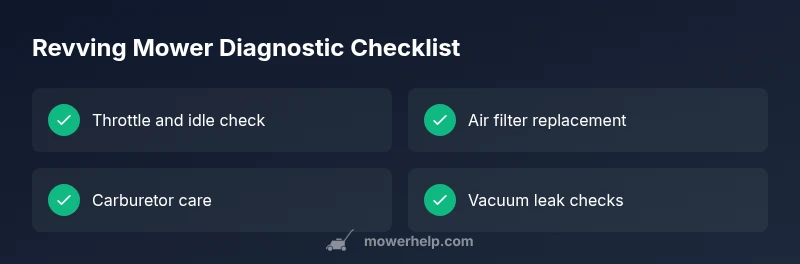
- Start with quick checks: throttle, air filter, spark plug, and fuel quality.
- Inspect for vacuum leaks and clean the carburetor if needed.
- Verify drive components and safety switches are intact.
- When in doubt, consult the manual or a professional mechanic for a precise diagnosis.
- Maintain a regular service schedule to prevent revving in the future.
Steps
Estimated time: 45-60 minutes
- 1
Power down and prep
Disconnect the spark plug boot, remove the battery if applicable, and allow the engine to cool. Gather tools and read the manual for safety guidelines.
Tip: Double-check you’re in a well-ventilated area away from sparks. - 2
Check throttle and idle
Move the throttle to the idle position and verify it returns smoothly. If it sticks, clean the linkage and adjust the idle screw as per the manual.
Tip: A sticky linkage is a common cause of unintended revs. - 3
Inspect air filter
Remove the air filter and inspect for dirt or oil. Clean or replace as needed to restore proper airflow.
Tip: Avoid running the engine with a clogged filter. - 4
Examine spark plug and ignition
Check for fouling or wear; replace if necessary. Ensure the kill switch and wiring are intact.
Tip: A weak spark can mimic revving symptoms. - 5
Look for vacuum leaks
Check hoses and gaskets around the intake for cracks or loose clamps. Seal or replace leaking parts.
Tip: Even a small crack can cause lean conditions. - 6
Carburetor care
If symptoms persist, clean the carburetor passages or perform a rebuild with a kit following the manufacturer’s instructions.
Tip: Do not overtighten screws; follow torque specs from the manual. - 7
Test run
Reconnect fuel, start the mower, and test at various throttle settings to confirm normal speed and response.
Tip: Observe for abnormal smoke or smell which indicate other issues.
Diagnosis: Lawn mower sounds like it's revving even at idle
Possible Causes
- highVacuum leak in intake system
- highStuck or misadjusted throttle linkage
- mediumDirty or restricted air filter
- lowIgnition or spark plug issues
Fixes
- easyInspect and reseat throttle linkage; adjust idle as needed
- easyReplace or clean air filter
- mediumCheck for vacuum leaks and replace gaskets or hoses
- hardClean carb passages or rebuild carburetor
Got Questions?
What does it mean if my mower revs at idle?
Revving at idle usually points to an air-fuel balance issue or throttle misadjustment. Start with the throttle, air filter, and spark plug checks, then inspect the carburetor if needed.
If your mower revs while idle, it’s usually an air-fuel or throttle problem. Begin with throttle and air filter checks, then look at the carburetor if it still revs.
Can a dirty air filter cause revving?
Yes. A clogged air filter restricts air and can cause an improper air-fuel mix, leading to high or irregular revving. Replace the filter and test performance.
A dirty air filter can cause revving by starving the engine of air. Replace it and re-test.
Should I adjust the idle screw if revving occurs?
Only if you’re confident in your mower model’s specs. Incorrect idle settings can worsen performance or cause safety risks. Consult the manual or a pro before changing settings.
Don’t adjust the idle screw unless you know the correct spec for your mower. It can be risky.
Is revving dangerous to the engine?
Sustained revving can lead to overheating and excessive fuel use. Stop the mower if noise is abnormal and address the underlying cause promptly.
Long-lasting revving can harm the engine; stop and check the cause promptly.
When should the carburetor be replaced?
Carburetor replacement is considered when cleaning and rebuilds fail to restore correct function or if internal damage is evident. A professional can confirm the need.
If cleaning doesn’t fix the carburetor, replacement may be needed and a pro can help decide.
What safety steps should I take before troubleshooting?
Always disconnect the spark plug, work in a well-ventilated area, and wear protective gloves and eyewear. Keep fuel away from open flames and store tools safely.
Disconnect spark plug and wear safety gear before you start any checks.
Watch Video
The Essentials
- Check throttle and idle settings to prevent revving
- Inspect and replace dirty air filters regularly
- Use fresh fuel and avoid stale mixtures
- Clean or rebuild the carburetor if needed
- Call a pro if safety concerns arise or symptoms persist