Troubleshooting: Lawn Mower Won't Stay Running
A practical, step-by-step guide to diagnose and fix why your lawn mower won't stay running, from fuel and air flow to ignition and safety switches. Learn safe, proven methods to get back to mowing.


Most often, the lawn mower won't stay running due to fuel or air issues or a failing ignition. Start by checking fuel quality, air filter, and spark plug, then inspect the carburetor and safety switches. If it stalls under load, it may be overheating or vibrating loose components. Document symptoms for patterns.
Why a lawn mower won't stay running: common culprits
According to Mower Help, the most frequent culprits are fuel quality, air flow, ignition health, and safety switches. When the engine refuses to stay running, the root cause is often a chain of simple issues rather than a single complex failure. In many yards, the symptom shows up as brief stalls, rough idle, or sputtering under load—the classic sign that something in the fuel-air-or-electric system is off. By thinking through the problem with a systematic checklist, you can restore reliable operation without expensive repairs. The goal is to identify the first issue you can fix in minutes and then validate whether the mower runs smoothly through a test cut. This block sets the stage for the diagnostic flow and the step-by-step fixes that follow.
Brand notes: The approach here aligns with practical, field-tested guidance shared by the Mower Help team.
Quick checks you can perform before using tools
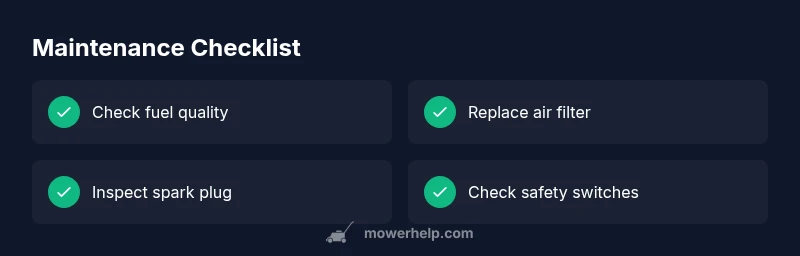
Before you reach for wrenches, run through these quick checks that take minutes:
- Check fuel level and freshness. If fuel is old, cloudy, or stored in an opened container, replace it with fresh fuel.
- Inspect the air filter; a clogged filter starves the engine of air and causes stalling.
- Look at the spark plug for wear, deposits, or a gap that's too wide; replace if needed.
- Ensure the safety shut-off and blade engagement levers are in the correct position and connected.
- Confirm the choke and throttle linkage move freely and aren’t sticking. If any item is off, address it and test the mower before moving on to deeper diagnostics.
Fuel system and storage: how fuel quality affects running
Fuel quality directly impacts combustion. Old gasoline, mixed fuels, or fuel stored for long periods can degrade and varnish carburetor jets. If your mower runs briefly and then dies, it’s often a sign the fuel is not being properly vaporized or delivered. Start with a full drain of old fuel, a fresh fill, and a quick carburetor flush if available. Use ethanol-free fuel where possible and store fuel in a clean, sealed container. After refreshing fuel, perform a controlled test run: a short cut in a small, level patch helps confirm stability before mowing a larger area.
Air intake and filters: the overlooked culprit
A restricted air path starves the engine of air needed for combustion, causing stalling or hesitation. Remove the air filter and inspect for oil residue, dirt, or damage. Clean or replace as needed and inspect the intake housing for obstructions. Even a thin layer of dirt on the filter can cut air flow by a noticeable amount. After cleaning, start the mower and listen for a steadier idle. If you hear rasping or popping, the problem may move toward the ignition or carburetor.
Ignition system health: spark plug, coil, and wiring
Spark quality matters. A fouled or worn spark plug can cause misfires, sputtering, and sudden stalls. Inspect the plug gap with a gauge and replace if the electrode shows wear or heavy deposits. Check the ignition coil and wiring for corrosion, loose connections, or damaged insulation. A failing coil may deliver inconsistent spark and cause the engine to cut out under load. Always disconnect the spark plug wire before inspecting to prevent accidental starts.
Carburetor basics: choke, jets, and idle screws
Carburetor issues are a common source of stalling. Varnish buildup from old fuel can clog passages, reducing fuel delivery during acceleration. Clean the carburetor passages using the manufacturer’s recommended method, or consider a rebuild kit if jets and passages are heavily varnished. Ensure the choke returns smoothly to normal, and verify the throttle linkage moves freely without sticking. Reassembling incorrectly can worsen symptoms, so follow a step-by-step guide or schematic to avoid misadjustment.
Safety switches and electrical sanity checks
Modern mowers rely on several safety switches that shut off power when a lever or handle is released. A faulty switch can cause the engine to die unexpectedly. Inspect all safety interlocks and wiring for wear, frayed insulation, or loose connections. If you test by wiggling the levers and the mower dies only when a switch is disturbed, focus on replacing that component. Always disconnect the battery or unplug power source before servicing electrical parts.
Overheating, vibration, and mechanical wear
Overheating can occur if air flow is blocked or the cooling fins are clogged with grass clippings. Excessive vibration can loosen components and affect fuel delivery. Clean the cooling fins, ensure the muffler is free of debris, and check vibration mounts for looseness. A worn blade or deck issue can also disturb balance and cause stalling under load. Address mechanical wear promptly to prevent recurrent stalls.
Prevention and maintenance to keep it running smoothly
Adopt a regular maintenance routine: change oil (if applicable), replace air filters, inspect spark plug gaps, and clean air passages after every mowing season. Use fresh fuel and stabilizers during storage. Keep the carburetor clean and inspect gaskets for leaks. A simple log noting dates of maintenance and observed symptoms helps identify recurring patterns and triggers.
When to call a pro and safe operation reminders
If you’ve tried the above steps and the mower still won’t stay running, it’s time to seek professional help. A certified tech can perform compression tests, carburetor rebuilds, or ignition system diagnostics with specialized tools. Safety reminders: always disconnect spark plugs, wear eye protection, and work in a well-ventilated area.
Diagnostic flow quick reference
This section distills the troubleshooting process into a practical sequence to follow during a mowing session. Start with fuel and air checks, then ignition health, followed by carburetor assessment, safety switch testing, and finally mechanical inspection. Validate by running a controlled test cut after each fix.
Steps
Estimated time: 45-60 minutes
- 1
Refresh fuel
Drain the old fuel from the tank, fill with fresh gasoline, and dispose of the old fuel properly. Add a fuel stabilizer if you store the mower for extended periods. Reconnect any disconnected lines and ensure the fuel valve is open before starting.
Tip: Always work in a well-ventilated area and wipe up spills immediately. - 2
Check air intake and filter
Remove the air filter and inspect for dirt, oil, or damage. Clean or replace the filter, and inspect the air intake for blockages. Reinstall securely and make sure the housing is sealed.
Tip: A fresh filter can often restore steady idle in minutes. - 3
Inspect spark plug
Remove the spark plug, inspect for wear or fouling, and measure the gap. Replace if it’s worn or deposits are heavy. Re-gap to the manufacturer’s spec before reinstall.
Tip: Keep a spare spark plug and gap tool on hand for quick fixes. - 4
Assess ignition system
Check the ignition wire for cracks or loose connections. If you have a test light or multimeter, verify the coil is delivering a spark. Address any damaged wiring or components.
Tip: Disconnect power before handling electrical parts to avoid shocks. - 5
Carburetor check and choke
Inspect carburetor for varnish, clean passages with the recommended cleaner, or perform a rebuild if jets are clogged. Ensure choke and throttle linkage move freely.
Tip: If you’re rebuilding, follow the service manual step-by-step to avoid misassembly. - 6
Test run and observe
Start the mower and observe at idle and under load. If it dies, repeat checks from fuel to ignition to identify the latest change that fixed or worsened the issue.
Tip: Document the symptoms and fixes to detect recurring patterns later. - 7
Safety interlocks final check
Verify all safety levers and interlocks return to their normal positions. A misaligned switch can cause sudden shutdowns even after other fixes.
Tip: If a switch is faulty, replacing it is safer and more reliable than bypassing it.
Diagnosis: Engine stalls or dies after starting or during mowing
Possible Causes
- highLow-quality or stale fuel
- highClogged air filter
- mediumWorn spark plug or weak ignition
- mediumCarburetor varnish or fuel jets clogged
- lowFaulty safety switch or wiring
Fixes
- easyDrain old fuel and replace with fresh fuel; use stabilizer if long storage
- easyClean or replace the air filter; clean air intake housing
- easyInspect/replace spark plug; verify proper gap
- mediumClean carburetor passages or rebuild; check choke/throttle linkage
- easyTest safety switches and wiring; repair or replace as needed
Got Questions?
What is the most common cause of a lawn mower that won't stay running?
Fuel quality and air flow problems are the most common culprits, followed by ignition issues. Start with fresh fuel, a clean air filter, and a good spark plug before moving to carburetor checks.
Fuel quality and air flow problems are the most common culprits. Start with fresh fuel, a clean air filter, and a good spark plug.
How often should I replace the spark plug?
Check the spark plug at the start of each mowing season and replace if worn or fouled. Maintaining proper gap is essential for consistent ignition.
Check the spark plug at the start of each mowing season and replace if worn.
Can stale fuel cause stalling and poor performance?
Yes. Stale or contaminated fuel can varnish carburetor jets and cause stalling. Drain old fuel and replace with fresh fuel, ideally ethanol-free if available.
Stale fuel can varnish carburetor jets and cause stalling. Drain old fuel and use fresh fuel.
Is it safe to operate with a dirty air filter?
operating with a dirty air filter reduces airflow and can cause stalling. Clean or replace the filter to restore proper air intake.
A dirty air filter reduces airflow and can cause stalling. Clean or replace it.
When should I hire a professional?
If basic checks and carburetor cleaning don’t fix the issue, or you’re not comfortable with fuel and electrical work, seek a certified mower technician.
If basic checks don’t fix it or you’re not comfortable with fuel work, get a professional.
Can I adjust the carburetor myself?
Carburetor adjustment can help, but improper tuning can worsen performance. Follow the manufacturer’s service manual or have a pro perform adjustments.
Carburetor adjustment can help, but improper tuning can cause more problems. Follow the manual or have a pro adjust it.
Watch Video
The Essentials
- Identify root causes with fuel, air, and ignition checks.
- Refresh fuel, clean air path, and inspect spark at minimum.
- Test safety switches and wiring to prevent unexpected shutdowns.
- Carburetor cleaning or rebuild often resolves stalling issues.
- Maintain a routine to prevent future stalls and extend mower life.