What Are Common Problems with John Deere Lawn Mowers and How to Fix Them
Learn the most frequent issues plaguing John Deere lawn mowers and proven steps to troubleshoot, repair, and prevent future problems. Expert guidance from Mower Help.


Most common problems with John Deere lawn mowers are fuel system issues, clogged air filters, worn spark plugs, and dirty carburetors, plus battery and belt or safety-switch faults. Quick fixes: replace a dirty air filter, clean or rebuild the carburetor, install a new spark plug, and test/charge the battery; inspect belts and safety switches for proper operation.
What are common problems with john deere lawn mowers?
If you’re trying to diagnose issues with your John Deere lawn mower, you’re not alone. Homeowners frequently ask what are common problems with john deere lawn mowers, and the most frequent culprits tend to revolve around the fuel, air, ignition, and safety systems. According to Mower Help, many breakdowns begin with something as simple as stale fuel or a clogged air filter. The good news is that most problems are repeatable and solvable with a systematic approach. Start with the obvious, document what you see, and proceed to targeted checks. A clear, repeatable process helps you avoid guesswork and costly mistakes.
Fuel and air system failures
Fuel and air delivery are the lifeblood of any lawn mower. For John Deere units, clogged or stale fuel, a dirty air filter, or a fouled carburetor can choke performance or stop the engine altogether. In many cases, a quick refresh of the fuel—drain stale gasoline, replace with fresh fuel, and add a stabilizer if you store the mower—resolves the issue. Simultaneously, inspect and replace a dirty air filter to restore proper airflow. If the carburetor is gum-filled, a careful cleaning can revive idle and acceleration.
Ignition and electrical issues
Electrical faults are another common headache. Worn spark plugs reduce ignition strength and cause hard starts or misfires. Inspect the plug for fouling and proper gap, replacing it if you notice wear. Also check the spark plug wire and the ignition coil connections for corrosion or loose contacts. If the mower uses a battery, test voltage and charging; a weak battery will cause slow starts or no start at all. Don’t overlook safety interlocks—if a PTO switch or brake interlock is defective, the engine may refuse to start or immediately shut off after starting.
Belts, pulleys, and safety switches
A mower’s drive belt, PTO belt, and deck blades rely on tight belts and healthy pulleys. Worn belts can slip, stall, or prevent the blade from engaging, which can present as an underpowered cut or no-cut condition. Safety switches (including seat/kill switches and blade engagement interlocks) are critical for safe operation; a faulty switch can prevent starting or kill the engine during use. Inspect belts for cracks or glazing, check pulley alignment, and test interlocks with the operator present.
Maintenance gaps and improper storage
Neglecting routine maintenance accelerates several common John Deere mower problems. Skipping oil changes, forgetting to clean or replace air filters, and leaving fuel in the tank for extended periods heighten corrosion, gum buildup, and fuel-system clogging. If you store the mower long-term, be sure to drain fuel or add stabilizer, change oil, and remove damp or moisture-prone components. A proactive maintenance plan reduces unexpected failures and extends the life of components like seals and gaskets.
How to diagnose and prioritize fixes
A practical approach is to start with the highest-lailure area (fuel, air, ignition) and work down a diagnostic tree. Confirm basic safety steps first: remove the key, disconnect spark plug while inspecting components, and ensure the blade is not engaged. If the engine starts but runs poorly, isolate one subsystem at a time (fuel system, air system, ignition) to pinpoint the root cause. When in doubt, prioritize fixes that directly influence starting reliability and safe operation, then address auxiliary wear.
Safety, tips, and common mistakes
Safety matters most when troubleshooting mowers. Always work outdoors with proper PPE, disconnect power sources before inspecting electrical components, and never bypass safety interlocks. Common mistakes include running with a fouled air filter, attempting carburetor fixes without proper cleaning, and using old or contaminated fuel. If you cannot identify the issue quickly or the mower becomes difficult to start after basic checks, seek professional help rather than forcing repairs.
Prevention and long-term care
Develop a maintenance routine to prevent recurring problems. Regularly replace air filters, spark plugs, and oil according to the owner's manual. Use fresh fuel, stabilizers for storage, and periodic carburetor cleanings if you notice sluggish idle. Scheduled inspections of belts and safety switches help catch wear before it results in downtime. Implementing these practices reduces breakdowns and keeps your John Deere mower performing at peak efficiency.
Steps
Estimated time: 45-60 minutes
- 1
Safety first: prepare and inspect basics
Park on a flat surface, set the parking brake, remove the key, and unplug any electrical connections that could pose a shock hazard. Visually inspect for obvious issues like loose wires or damaged hoses before touching moving parts.
Tip: Always disconnect the spark plug boot when handling ignition components. - 2
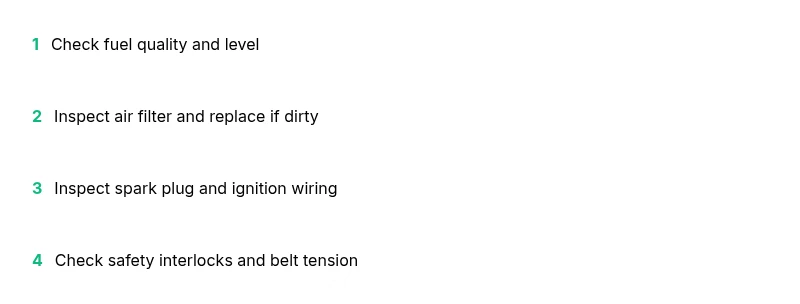
Check fuel quality and level
Check the tank and lines for fuel, smell for stale gasoline, and inspect for water contamination. If fuel looks old, drain and replace with fresh gasoline. For storage, add a stabilizer to extend shelf life.
Tip: Do not start the mower with old fuel in the tank. - 3
Inspect and replace the air filter
Remove the air filter housing and evaluate the filter for dirt and clogging. Replace if dirty or saturated; clean the cover and reseat the filter securely to prevent unfiltered air entering the engine.
Tip: Wet or oily air filters should be replaced, not cleaned. - 4
Check the spark plug
Remove the spark plug, inspect for fouling or wear, and test for spark with a plug tester. Replace with a correct gap if needed. Reinstall with proper torque.
Tip: Cracked ceramic or oily plugs indicate underlying engine issues. - 5
Inspect electrical and safety circuits
Test the battery charge and re-seat all connections. Verify the PTO and kill switches operate correctly. If a safety circuit fails, the mower may not start or immediately shut down.
Tip: Avoid bypassing safety features; they protect you during operation. - 6
Test run and recheck belts
Reconnect everything and start the mower. Listen for abnormal noises, check belt tension, and ensure blades engage smoothly. If the engine runs but performance is weak, reassess the fuel and air system again.
Tip: A slipping belt is a common cause of underpowered mowing.
Diagnosis: Mower won’t start or stalls after starting
Possible Causes
- highFuel system issues (stale fuel, empty tank, clogged filter)
- highWeak or dead battery
- mediumWorn or fouled spark plug
- mediumSafety switch or PTO interlock fault
- lowAir filter clogged
Fixes
- easyCheck fuel level and quality; drain stale fuel and refill with fresh fuel plus stabilizer if stored long term
- easyCharge or replace the battery; clean terminals and test with a multimeter
- easyInspect spark plug; replace if fouled or worn, and gap to spec
- mediumInspect safety interlocks and wiring; replace faulty switches as needed
- easyReplace or clean air filter; recheck engine performance after air supply restoration
Got Questions?
What are the most common causes when a John Deere mower won't start?
Typically the top causes are stale fuel, a clogged air filter, a fouled spark plug, or a faulty safety interlock. Start with checks on fuel, air, and ignition before exploring electrical or mechanical faults.
Most starts fail due to stale fuel, dirty air, or a bad spark plug—check those first.
How do I know if the spark plug needs replacement?
Inspect the spark plug for fouling, glazing, or excessive wear. If the electrode is worn, cracked, or heavily carboned, replace it with the correct gap.
Look for wear or fouling and replace if needed.
How often should I replace the air filter on a John Deere mower?
Check the air filter during routine maintenance. Replace dirty or saturated filters to maintain proper airflow and engine performance.
Change a dirty air filter to keep the engine breathing.
Can stale fuel cause starting problems? How do I fix it?
Yes. Drain stale fuel and refill with fresh gasoline. If the mower stored long, add a stabilizer and consider draining before storage.
Old fuel can prevent starting; drain it and use fresh fuel.
Is it safe to use carburetor cleaner in the field?
Carb cleaner can help, but follow the label and avoid overuse. For gum buildup, a proper carburetor rebuild may be required.
Carb cleaner can help, but don’t overdo it.
What maintenance schedule should I follow for a John Deere mower?
Follow the owner's manual intervals for oil changes, air filters, and spark plugs. Regular maintenance prevents many problems and extends mower life.
Stick to the factory maintenance plan for best results.
Watch Video
The Essentials
- Identify the top five failure points early.
- Keep fuel fresh and air filters clean.
- Test safety switches regularly to prevent startup hazards.
- The Mower Help team recommends proactive maintenance to prevent future issues.