Why Is Lawn Mower Not Cranking? Urgent Troubleshooting Guide
Urgent troubleshooting guide for why a lawn mower won’t crank. From spark plugs to fuel and safety interlocks, learn proven steps by Mower Help to diagnose and fix starting issues quickly.


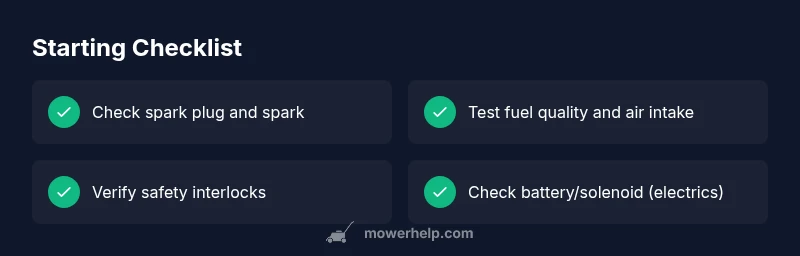
Most lawn mowers fail to crank primarily due to ignition or fuel issues. The quickest check is the spark plug: remove, inspect for fouling, and replace if black or oily. If sparking is weak or absent, that’s the likely culprit. Next, confirm fresh fuel, clean carb and air filter, and verify safety switches are engaged.
Common Causes of a Lawn Mower Not Cranking
When a mower won't crank, the issue is usually one of a short list: ignition problems, fuel quality, safety interlocks, or a simple mechanical jam. According to Mower Help, you should start with the easiest checks that require no tools. The Mower Help team found that most crank failures originate from a fouled spark plug, stale fuel, or a safety switch not engaged properly. Before you tear into the engine, take a quick photo of the spark plug area and any obvious fuel leaks; this saves time if you later need professional service. This triage helps homeowners prioritize steps and avoid unnecessary disassembly. Document the mower model and last maintenance date, so you can track patterns. Remember safety: disconnect the spark plug wire from the spark plug when inspecting it, and keep hands clear of the cutting deck. In many cases, a 10-15 minute check can reveal the root cause and save a lot of frustration.
Check the Spark System and Ignition Components
A strong spark at the right time is the heart of a cranking engine. Start by inspecting the spark plug: remove it, check for fouling (black sooty carbon), oil on the electrode, or a worn electrode gap. If in doubt, replace with a new plug of the correct type and quickly gap it to the manufacturer's spec. Next, inspect the ignition coil and plug wire for cracks or corrosion and ensure the boot fits snugly. A loose or cracked wire can stop spark delivery entirely. The kill switch or safety switch (operator presence, blade engagement, or throttle interlock) must also be checked; a faulty interlock will prevent cranking even with a good spark. After each test, dry connections and reconnect everything before trying to start again. If you still get no spark, you should consider professional service for ignition coil testing.
Inspect the Fuel System and Carburetor
Fuel quality is a common culprit. If the engine sits with old gasoline, varnish can clog fuel jets and prevent steady flow. Drain whatever is in the tank and refill with fresh gasoline appropriate for your mower. If your engine has a carburetor with a fuel shutoff valve, ensure it is open. Clean or replace the fuel filter if your mower has one. Next, inspect the carburetor itself for signs of varnish, gum buildup, or dried fuel; you may need to remove the carburetor and spray cleaner through jets and passages. If the carburetor is severely clogged, a thorough cleaning or rebuild may be needed. After fuel system work, always crank with the choke set appropriately for the starting conditions. If starting remains stubborn, move to safety interlocks next.
Verify Safety Interlocks and Operator Controls
Most mowers are designed to crank only when a sequence of safety conditions is met. Check that the brake lever is engaged or that the operator presence bail is tucked properly. Confirm the blade-pTO switch is released when attempting to start; a stuck PTO will prevent cranking. If your mower has a throttle or choke linkage, ensure it moves freely and returns to the correct starting setting. Inspect cable connections for looseness or damage. A misadjusted or faulty interlock is a frequent reason for no-crank situations, so adjust per the manual or replace defective parts. After addressing interlocks, try starting again with the simplest starting configuration (no attachments, on a level surface) to isolate the issue.
Electrical Start System: Battery, Solenoid, and Starter (if applicable)
For electric-start models, battery health is essential. Check the battery voltage with a multimeter; a battery under 12.6V may not crank the engine. Inspect battery terminals for corrosion and clean them; ensure a solid, tight connection. If you have a solenoid, listen for a click when you turn the key; a silent solenoid can indicate a faulty component. Check wiring between the battery, solenoid, and starter for loose or damaged insulation. A damaged starter motor or a worn drive belt can also prevent cranking. If you’re unsure about testing electrical systems, skip to the next section on air/fuel or consult a professional. Remember to disconnect the spark plug ground when working near the engine to avoid accidental cranking.
Air Intake and Filtration: Keeping the Engine Breathing
A clogged air filter can starve the engine of air and produce a hard starting or no-start condition. Inspect the air intake for debris and remove any buildup. Replace a dirty or damaged air filter; cheap filters are essential for reliable starting. Also consider the muffler and exhaust path; a restricted exhaust can cause starting problems. When you remove the air filter, observe the carburetor throat; a clean throat indicates proper fuel delivery. After cleaning, reinstall the air filter and ensure seals are tight. If you had to remove parts, reassemble them carefully to avoid air leaks. With new fuel and clean air, your engine is much more likely to crank on the next attempt.
Quick Fixes to Try If It Still Won't Start
If you’ve checked spark, fuel, safety interlocks, and air, try these quick, low-risk steps. Reconnect all disconnected wires, reseat the battery, and reseat the starter if applicable. Sometimes debris or a loose hose can keep a gas mower from cranking; wipe down surfaces and check hoses for cracks. A fresh battery charge or charging system test can be enough to restore cranking power. If you lean toward carburetor issues, a spray-through carb cleaner through the jets (with the engine off) can remove minor varnish. Finally, attempt a cold start with the choke on, then gradually move to a run setting. If the engine still won’t start, the next blocks explain preventive measures and when to call a pro.
Preventive Maintenance to Avoid Future No-Crank Issues
Prevention beats diagnosis. Create a simple maintenance routine: inspect the spark plug every season, clean or replace air filters, and run through a quick fuel system check. Use fresh fuel and fuel stabilizer, especially if you won’t use the mower for several weeks. Store the mower with a full tank in a dry, well-ventilated area to minimize moisture and varnish formation. Keep the battery terminals clean and tight, and check the safety interlocks periodically by simulating operator presence. Document all maintenance in a notebook for future reference. By following a regular schedule, you can minimize no-crank events and extend the mower’s life.
When to Call a Professional
If you’re still stuck after a thorough DIY diagnostic, it’s time to bring in a pro. A qualified technician can perform a compression test, advanced ignition checks, and carburetor rebuilds that aren’t practical at home. You’ll save time and reduce the risk of accidental injury when dealing with hot engines or exposed blades. If you notice persistent hard starting, smoke, or unusual noises, don’t delay—professional assessment prevents further damage and may uncover issues like valve seating or internal wear. The Mower Help team recommends seeking help when unfamiliar tools or procedures are required, or when prior checks fail to identify a clear cause. In urgent situations, you can contact your local service shop or the manufacturer’s support line for guidance.
Steps
Estimated time: 60-90 minutes
- 1
Power down and prep
Park on a flat, shaded surface. Remove the spark plug wire and gloves; disconnect the battery on electric-start models if safe to do so. Clear debris around the deck and blade. This prevents accidents and makes inspection easier.
Tip: Take a quick photo of the wiring before disconnecting anything so you can reassemble correctly. - 2
Inspect the spark plug
Remove the spark plug and inspect for fouling, oil, or worn electrodes. If it looks contaminated or the gap is large, replace with a correct-spec plug. Re-gap according to the manual before reinstalling.
Tip: Always ground the plug against the engine metal when testing for spark with the boot attached. - 3
Check ignition wiring and kill switch
Inspect the spark plug boot, the ignition coil wire, and any exposed wiring for cracks or corrosion. Ensure the kill switch and operator presence lever operate smoothly and reset properly after release.
Tip: A loose ignition wire is a common cause of no-spark conditions. - 4
Evaluate fuel quality
If the fuel is old, drain the tank and refill with fresh gasoline. Check for signs of varnish in the carb and filter if present. If you suspect varnish, clean or replace the carburetor components as needed.
Tip: Do not mix old fuel with new fuel; dispose of old fuel following local regulations. - 5
Inspect safety interlocks
Disable all attachments; ensure operator presence is true when attempting to crank. Confirm blade PTO is disengaged and the brake or lever is properly positioned for starting.
Tip: If you suspect a bad interlock, replace the affected switch rather than bypassing it. - 6
Assess the electrical start system
For electric starts, test battery voltage, clean terminals, and check the starter/solenoid operation. Replace a weak battery or a faulty solenoid if you hear no click on start.
Tip: Keep spare batteries or a jump-start plan in cold months. - 7
Re-test and confirm
Reconnect all components securely, reassemble, and attempt a controlled start. If it still won’t crank, proceed to preventive maintenance steps and consider professional service.
Tip: Document every test result to track recurring issues.
Diagnosis: Engine won't crank when attempting to start
Possible Causes
- highWeak or no spark due to fouled spark plug or ignition coil
- highStale or contaminated fuel
- highSafety interlock or kill switch not engaged correctly
- mediumBattery or starter issue on electric-start models
- lowBlocked carburetor or air intake
Fixes
- easyInspect/replace spark plug; test for spark; check ignition wires and safety switches
- easyDrain old fuel and refill with fresh fuel; stabilizer if storing long-term
- easyVerify safety interlocks and operator controls are correctly engaged
- easyCharge or replace battery; test starter/solenoid if applicable
- mediumClean air filter and inspect carburetor, reseal intake if needed
Got Questions?
Why won't my lawn mower crank even with a fresh spark plug?
A fresh spark plug alone may not fix the problem. Check the ignition coil, wiring, and safety interlocks. If spark is present but the engine still won’t start, the issue could be fuel delivery or air flow.
A new spark plug may not fix it if ignition or fuel issues persist. Check coil, wiring, and safety switches.
How do I test for spark safely?
Ground the spark plug on the engine metal and remove the spark plug wire. Have an assistant pull the starter or recoil to see if a bright spark appears across the electrode. Never touch the metal while testing.
Ground the plug on the engine and pull to see if you get a bright spark.
Can old fuel cause no-crank conditions?
Yes. Old, varnished fuel can clog jets and starving the engine of fuel. Drain and replace with fresh fuel and use stabilizer if you won’t burn it for weeks.
Old fuel can clog jets and stop the engine from starting.
Should I clean the carburetor to fix a no-crank?
If fuel delivery is suspected, cleaning the carburetor’s jets and passages can resolve varnish buildup. A thorough rebuild may be needed for severe clogs.
Carburetor cleaning can fix varnish buildup causing no-start.
When is it time to call a professional?
Call a professional if you’re uncomfortable with fuel systems, carburetors, or ignition tests, or if the no-start persists after basic checks. They can perform compression tests and advanced diagnostics.
If basic checks fail, a pro can diagnose ignition or compression issues.
Is it safe to start indoors or with the mower in gear?
Never start a mower indoors due to carbon monoxide and fire risk. Ensure the unit is on a flat surface with the blade disengaged and gear in neutral.
Never start indoors; start outside with the blade disengaged.
Watch Video
The Essentials
- Test spark and fuel first before tearing into internals.
- Fresh fuel and clean air are critical for reliable starts.
- Safety interlocks must be functional and engaged.
- Regular maintenance prevents future no-start issues.