Why is My Lawn Mower Not Starting? Quick Diagnostics and Fixes
A comprehensive, urgent guide to diagnosing and fixing common lawn mower starting problems, with practical steps, safety notes, and maintenance tips to get you mowing again quickly.


Most starting problems come from fuel or ignition. Safety first: disconnect the spark plug boot, remove the blade safety, and check for spark. Ensure the engine has fresh fuel and delivers it to the carburetor. If it still won’t start, inspect the air filter and carburetor for clogs, then refill or replace as needed.
Why is My Lawn Mower Not Starting: Common Causes and First Steps
If you're wondering why is my lawn mower not starting, you're not alone. The most common culprits are fuel and ignition problems, often resolved with simple checks. According to Mower Help, many starting issues stem from stale gas, a dirty spark plug, or a clogged air filter. Before diving into complex repairs, perform the quick, safe checks described below. This section will lay out the typical failure modes and the fastest paths to a successful ignition, so you can get back to mowing sooner rather than later.
Safety First: Basic Precautions Before Troubleshooting
Safety is non negotiable when diagnosing starting problems. Disconnect the spark plug boot before touching the blade or any moving parts, wear eye protection, and work on a dry surface. If you have a gas mower, work in a well-ventilated area and keep ignition sources away from spilled fuel. Label and separate tools, and never test a hot engine. These precautions protect you from injuries and prepare you for methodical testing.
Quick Diagnostic Approach: Systematic Checks
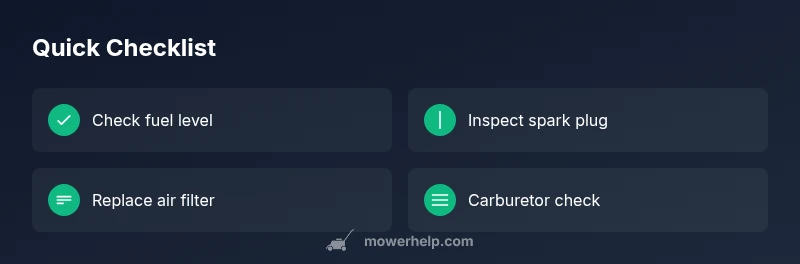
Start with the simplest explanations and progress to more involved tests. Begin by confirming there is fuel in the tank and that the fuel is fresh. Then inspect the spark plug for wear or fouling and test for a spark. Check the air filter for dirt and ensure the carburetor isn’t flooded or clogged. If the engine still refuses to start, review the safety switch and blade brake operation, since many mowers shut down if the bail lever isn’t in its correct position.
Fuel System: Is Fuel Your Problem?
Fuel issues remain the leading cause of starting failures. Drain dirty fuel and replace with fresh gasoline if allowed by your mower’s manual. Use the correct fuel type and avoid ethanol-heavy blends if your mower isn’t designed for them. Inspect the fuel line for kinks or leaks and ensure the fuel is reaching the carburetor. In push mowers, a clogged fuel filter can also inhibit starting, so replace it if present.
Ignition and Spark: Spark Plugs and Wires
A healthy spark is essential for ignition. Remove the spark plug, inspect for deposits, corrosion, or a worn electrode, and replace if necessary. When reinstalling, gap the plug to the manufacturer specification. If you have a spark tester, verify that the plug is producing a bright blue spark across a strong ground. If there’s no spark, investigate the wiring and ignition switch; in some models, a faulty safety sensor can interrupt spark generation.
Air and Carburetor: Air Filter, Carburetor, and Intake
A clogged air filter or dirty carburetor can keep air from mixing with fuel properly, preventing starting. Replace a dirty air filter and clean any dirt from the air intake. For carburetor issues, use the appropriate cleaner and follow the manual to avoid damage. If fuel sits in the carburetor bowls, allow it to evaporate or carefully drain the carburetor and refill with fresh fuel.
Putting It All Together: Step-by-Step Fixes You Can Do
With the above checks complete, you can proceed to the recommended fixes in a logical order. Start with the simplest remedies: replace stale fuel, clean or replace the spark plug, and swap a dirty air filter. If the mower still won’t start, perform a carburetor clean or rebuild per your model’s instructions, and verify the safety controls are functioning correctly. Document each action to track what works and what doesn’t.
Steps
Estimated time: 60-75 minutes
- 1
Power down and prep
Put the mower on a stable surface, disconnect the spark plug boot, and ensure the blade cannot move. Remove debris from around the engine to reduce fire risk and prepare your tools.
Tip: Keep the spark plug boot in your pocket so you don’t misplace it. - 2
Check fuel level and quality
Inspect the tank, confirm fuel is present and not visibly degraded. If in doubt, drain old fuel and replace with fresh gasoline appropriate for your engine.
Tip: Avoid refilling on a hot engine; work in a well-ventilated area. - 3
Test the spark plug
Remove the spark plug, inspect for wear or fouling, clean or replace as needed. Re-gap to spec and reconnect the boot for a spark test.
Tip: A bright blue spark indicates good ignition; a dull spark suggests replacement. - 4
Inspect air and intake
Check the air filter; replace if dirty. Ensure the intake pathway is clear and free of obstructions.
Tip: Even a slightly dirty filter can choke performance. - 5
Carburetor checks
If gas is reaching the carburetor but engine still won’t start, clean the carburetor jets and passages with appropriate cleaner. Do not force cleaners through delicate passages.
Tip: Always follow the manufacturer’s carburetor cleaning guidance. - 6
Safety system verification
Verify the bail lever or blade brake is functioning and fully engaged in the run position. A misadjusted switch can stop ignition.
Tip: Test with the spark plug reconnected to confirm the shutdown switch isn’t tripping.
Diagnosis: Lawn mower won't start
Possible Causes
- highFuel supply issue (empty, stale, or wrong fuel)
- highIgnition problem (bad spark plug, ignition switch, or wiring)
- mediumAir intake blocked (clogged air filter)
- mediumCarburetor clog or flooding
- lowSafety/kill switch engaged or faulty
Fixes
- easyCheck fuel level and freshness; replace with fresh fuel if old
- easyInspect and replace spark plug; confirm proper gap and test for spark
- easyReplace or clean air filter; ensure air intake is clear
- mediumClean or rebuild carburetor and check fuel lines
- easyTest and reset safety switch/bail lever or ignition shutoff
Got Questions?
What is the most common reason a lawn mower won't start?
Fuel problems or ignition issues top the list. Start with fresh fuel, then inspect the spark plug and ignition switch before moving to more advanced checks.
Fuel or ignition problems are most common. Start with fresh fuel and inspect the spark plug, then check ignition.
How can I test if the spark plug is working?
Remove the plug, inspect for wear or fouling, and use a spark tester or a quick spark check to see if it produces a strong blue spark when grounded.
Take out the spark plug, check for wear, and test for a bright blue spark with a tester.
Can stale gasoline prevent starting?
Yes. Gasoline oxidizes and loses octane; stale fuel can prevent starting or cause rough performance. Drain and replace with fresh fuel recommended by the manual.
Stale gas can stop starting. Drain it and use fresh fuel as your manual suggests.
What should I do if the mower still won’t start after fuel and spark checks?
Proceed to air/filters and carburetor cleaning, and verify safety switches. If unresolved, consider professional service to avoid damage.
If it still won’t start, check air and carb, then safety switches. If unsure, call a pro.
Is carburetor cleaning safe for DIY?
Carburetor cleaning can be DIY if you follow model-specific guidance. Use proper cleaners and avoid forcing fluids through delicate passages.
Carb cleaning is doable if you follow your model’s instructions and use proper cleaner.
When should I call a professional?
If you cannot identify or safely remedy the issue after basic checks, or if carburetor rebuilds and electrical diagnostics are outside your comfort zone, seek professional help.
If basic checks fail or you’re unsure, it’s time to call a professional.
Watch Video
The Essentials
- Check essentials first: fuel, spark, air
- Test safety switches to rule out shutdowns
- Replace stale fuel and dirty filters promptly
- Carburetor cleaning resolves many issues
- Document fixes to prevent repeat problems