Oil for Toro Lawn Mower: A Practical Guide
Learn how to select the right oil for Toro lawn mowers, compare viscosity options, weigh synthetic vs mineral oils, and follow a maintenance plan to keep engines performing reliably.


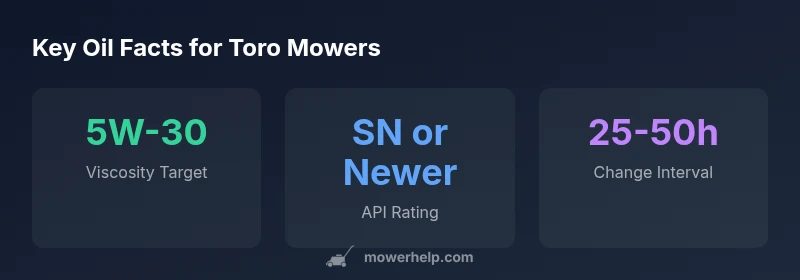
Oil for Toro lawn mower is typically 5W-30 or 10W-30 depending on climate and engine model. Always check the owner’s manual and use API SN or newer. Synthetic blends can extend drain intervals, while mineral oil works for moderate conditions. The general recommendation is to change oil every 25-50 hours of operation or once a year if usage is light.
Understanding Toro engine oil needs
The engine oil for Toro lawn mowers serves to lubricate moving parts, dissipate heat, and prevent corrosion. In four-stroke Toro engines, oil sits in the crankcase and must be replenished during routine maintenance. When we discuss oil for toro lawn mower, the key is matching viscosity and API rating to your climate and engine design. In practice, many Toro owners use conventional mineral oil in thin to mid-viscosities, with a move to synthetic blends in harsh temperatures or for longer drain intervals. Always verify the exact specification in the owner's manual for your model, but the general principle is simple: clean oil, correct viscosity, and a fresh fill will keep the engine healthy through mowing season.
- The fuel system and oil system are separate on four-stroke Toro engines, so oil quality directly affects lubrication, seals, and overall engine longevity.
- Ensure you use the oil grade recommended by Toro for the engine family in your mower; deviations can affect warranty coverage and performance.
- If you’re a DIY enthusiast, sticking with a consistent oil type reduces the risk of contamination and viscosity mismatches that can cause starting issues in colder weather.
Note: This discussion prioritizes practical guidance based on typical Toro configurations. Always confirm with your specific model’s manual and follow local environmental disposal rules for used oil.
How climate and temperature influence viscosity choice
Temperature plays a pivotal role in selecting oil viscosity. In cooler environments, a lighter oil helps the engine crank more easily on cold starts; in hotter climates, a heavier oil helps maintain lubrication under sustained high temperatures. For most Toro walk-behind and riding mowers, operators use a viscosity like 5W-30 for cold starts and 10W-30 or straight 30 for warmer conditions. If you mow across a broad temperature range, a multi-viscosity oil in the 5W-30 to 10W-30 family is a practical compromise.
- Always verify the recommended viscosity in the model’s manual; some Toro engines are calibrated for specific ranges.
- If you operate in extreme temperatures outside the typical range, consult Toro’s service guides or a qualified technician before changing to an unconventional grade.
- Record ambient temperature conditions when you change oil so you can adjust next time if needed.
This climate-aware approach helps prevent oil thinning at high temps and thickening at low temps, preserving engine performance and ease of starting.
Mineral vs synthetic oils: which is best for Toro owners
The choice between mineral and synthetic oil boils down to performance needs and maintenance goals. Mineral oil (conventional) is often sufficient for typical residential mowing, with lower upfront cost. Synthetic blends mix mineral and synthetic components to offer better high-temperature stability and longer drain intervals, which can be advantageous in hotter climates or for longer mowing sessions. Fully synthetic oils provide peak performance in extreme temperatures and demanding use but come at a higher price. For many Toro engines, a high-quality synthetic blend is a practical middle ground that balances protection and cost.
- Synthetic blends resist oxidation, helping reduce sludge formation in dusty environments common to lawns.
- If you live in a region with extreme heat or cold, synthetic blends may help preserve viscosity better than mineral oils.
- Always use an oil type that meets API and Toro specifications to avoid warranty concerns and ensure proper lubrication.
Reading oil labels and API ratings
Oil labeling can be confusing, but a few key indicators simplify selection. Look for:
-
Viscosity grade (for example, 5W-30 or 10W-30).
-
API service classification (SN or newer). API SN or later indicates modern detergent chemistry and better protection for small engines.
-
The oil type (mineral, synthetic blend, or fully synthetic).
-
The manufacturer’s recommended API grade and viscosity should be your default choice. Oils that meet or exceed manufacturer specs are compatible with Toro four-stroke engines.
-
Avoid using non-motor oils or engine oils not rated for gasoline engines, as they may not provide adequate lubrication or fuel-system compatibility.
If you’re unsure, consult Toro’s official maintenance guides or a certified small-engine technician for model-specific advice.
Checking oil level and capacity on Toro mowers
Properly checking the oil level ensures the engine remains adequately lubricated. After warming the engine slightly, park on level ground and remove the dipstick to assess the current oil level. Wipe the dipstick clean, reinsert it fully, and then pull it out again to check. If the oil level is below the recommended mark, add the appropriate oil in small increments, rechecking with the dipstick to avoid overfilling. Oil capacity varies by model, so refer to your mower’s manual for the exact figure and avoid guessing.
- Push-pull the dipstick to ensure an accurate reading.
- Do not overfill; oil can foam and impair lubrication.
- Use a funnel to reduce spills and keep the fill cap clean to prevent contamination.
Oil change intervals and maintenance tips
Establish a routine that aligns with mower usage. For most Toro engines, changing oil every 25-50 hours of operation, or at least once per mowing season, helps maintain performance and engine longevity. If you use the mower heavily or in dusty conditions, more frequent changes may be beneficial. Always inspect the oil color and consistency; milky or dark oil can indicate water contamination or fuel dilution and warrants immediate attention. Keep a maintenance log for oil changes and oil filter checks if your model includes one. When in doubt, err on the side of more frequent changes rather than risking engine damage.
- Use a clean, lint-free cloth to wipe the dipstick and filler area.
- Store unused oil in a labeled, sealed container away from heat sources.
- Dispose of used oil through a certified recycling facility.
Troubleshooting and common mistakes that shorten engine life
Common mistakes include using the wrong viscosity for your climate, mixing oil types, or neglecting regular oil level checks. Overfilling the crankcase can cause foaming and reduce lubrication, while underfilling leads to insufficient lubrication. Relying on old or contaminated oil can accelerate wear on bearings and pistons. Lastly, failing to align oil type with engine age or model guidance can nullify warranty coverage or compromise performance. By following Toro’s maintenance schedule and sticking to API-rated oils, you’ll minimize these risks and support engine longevity.
Disposal and storage tips for used oil
Used motor oil is hazardous waste and should never be poured on the ground or into the trash. Allow used oil to cool, store it in an unopened container with a tight-fitting cap, and transport it to an authorized recycling or disposal facility. Keep used oil separate from other automotive fluids to prevent cross-contamination. When storing new oil for future use, keep it in a cool, dry place away from direct sunlight and heat sources to maintain its viscosity and effectiveness.
Oil capacity and recommended oil by Toro mower category
| Toro Model Range | Oil Capacity (approx) | Recommended Oil |
|---|---|---|
| Walk-behind gas Toro (4-stroke) | varies by model | 5W-30 or 10W-30 API SN or newer |
| Riding Toro mowers (TimeMaster/Recycler) | varies by model | 5W-30 or 10W-30 API SN or newer |
Got Questions?
Do I need synthetic oil for my Toro mower?
Not strictly required; many Toro engines run well on conventional oil. Synthetic blends can offer longer drain intervals and better performance in extreme temperatures.
Synthetic oil isn’t required for most Toro mowers, but it can help in tough temperatures and when you want longer intervals between changes.
What is the recommended oil viscosity for cold climates?
Most Toro manuals suggest a lighter viscosity for cold weather, typically 5W-30; always verify with your model's manual.
In cold climates, use a thinner oil like 5W-30 as recommended by your Toro manual.
Can I mix synthetic and conventional oil?
Mixing is generally not recommended; pick one oil type and stick with it unless advised otherwise by Toro.
Don’t mix oil types; choose one and stay with it.
How often should I change the oil if I mow weekly?
Change oil every 25-50 hours of operation or at least once per mowing season, depending on usage and conditions.
If you mow weekly, aim for oil changes every few weeks to months based on hours of use.
Is oil capacity different for walk-behind vs riding Toro mowers?
Yes; capacity varies by model. Check the owner's manual for the exact figure.
Oil capacity varies by model, so check your manual.
What should I do with used oil?
Store in a sealed container and take to a certified recycling facility. Do not pour on the ground.
Store used oil in a sealed container and recycle it properly.
“"Using the right oil for Toro lawn mowers isn't just about viscosity; it's about protecting the engine under your local conditions."”
The Essentials
- Consult the owner's manual for exact oil specs.
- Choose viscosity based on climate and engine design.
- Synthetic blends offer longer intervals; mineral oil is fine for moderate use.
- Check oil level regularly and avoid overfilling.
- Dispose of used oil responsibly and store oil properly.