Riding Lawn Mower Rental Costs: A Practical Guide 2026
Discover riding lawn mower rental costs, what drives daily rates, delivery, insurance, and hidden fees. Learn to estimate total costs with Mower Help Analysis, 2026 to compare options effectively.


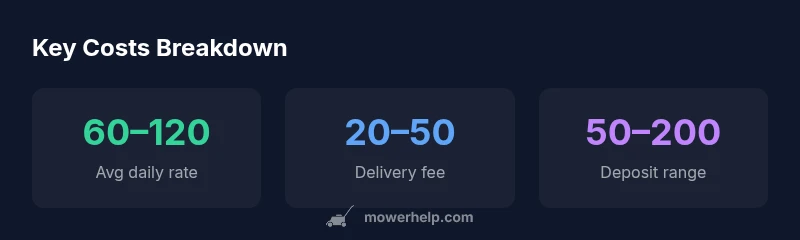
On average, riding lawn mower rental costs run roughly $60–$120 per day, with discounts for weekly or multi-day periods. Prices vary by region, model, and added services like delivery, fuel, and insurance. Shopping around and combining a longer rental can lower the overall rate. Some shops charge separate delivery or pickup fees, and fuel surcharges may apply if the rental doesn't come with a full tank.
Understanding what drives the cost of riding lawn mower rentals
Renting a riding lawn mower is not a single price tag. Several factors determine what you pay on a given day. The model’s size and horsepower influence the base rate, as do deck width and cutting capabilities. Delivery distance, fuel policies (whether the mower arrives full and returns with gas), and optional add-ons such as safety gear or insurance coverage can all add to the total. Regional demand and seasonal spikes also shift prices. When you compare quotes, make sure you’re evaluating similar equipment and service levels, not just the headline daily rate. This helps homeowners estimate total cost over their rental period accurately.
Key considerations:
- Match models: Compare deck sizes, horsepower, and auxiliary features (rear-view camera, mulching, bagging).
- Clarify fuel policy: Is the tank full on pickup, or is refueling charged separately?
- Factor service: Maintenance, breakdown coverage, and replacement equipment influence the bottom line.
- Check for hidden costs: Delivery, mileage, clean-up fees, and taxes can alter totals.
Typical price ranges by rental duration
Prices vary by location, but you can expect distinct patterns based on how long you rent. Daily rates tend to be higher on a per-day basis, while weekly or multi-day rentals often include a discount that reduces the average daily cost. A common day range is $60–$120, with longer terms dropping the per-day rate by 10–30%. Delivery, pickup, and fuel rules can push prices up or down, and premium brands or larger deck machines command higher starting prices. Always ask for a written breakdown that shows the daily rate, any flat fees, taxes, and whether the rate includes maintenance or replacement equipment in case of issues.
- Compare quotes from at least 2–3 providers.
- Look for bundled services (delivery + setup + fuel) to simplify budgeting.
Hidden costs to watch for
Some rental agreements include base rates but attach extra charges that inflate the total. Common hidden costs include delivery or mileage fees, fuel surcharges if you return with less fuel, insurance or damage waivers, deposits, taxes, late return penalties, and penalties for missing equipment accessories. Always review the rental contract for the exact terms and ask clarifying questions about what is included. A written, itemized quote helps you spot any discrepancies before you sign.
Pro tip: negotiate a fixed total for the period rather than a per-day rate when you can.
How to compare rental providers: tips and questions to ask
To get the best value, compare not just the headline daily rate but the entire cost structure. Ask about delivery radius, guaranteed uptime, fuel policy, and what happens if the mower breaks down. Check whether insurance is included, the size and power of the mower, and any required deposits. Read reviews and ask for customer testimonials about on-time delivery and customer service. A provider with clear terms and proactive support can save you headaches and money in the long run.
Checklist to bring to discussions:
- Desired deck size and horsepower
- Preferred rental duration and pickup/delivery needs
- Clarity on fuel policy and return requirements
- Confirmed total cost with taxes and fees
Timing your rental for the best price
Seasonality impacts availability and pricing. Peak lawn-care seasons tend to raise prices or limit promotions, while early spring and late fall may offer more opportunities for discounts. Booking in advance and avoiding weekends can yield better delivery options and lower rates. Some rental shops offer weekday-only specials or loyalty pricing for repeat customers. If your project is flexible, shift dates to off-peak times to maximize savings.
Planning ahead also gives you time to inspect the equipment and request a backup model if needed.
Renting vs owning: when it makes sense
If you only need occasional help with a large yard, renting is often cheaper and less risky than buying a riding mower. Owning incurs upfront costs, maintenance, storage, and potential repair bills. For seasonal surges or one-off projects, renting makes financial sense. For frequent, year-round mowing, buying a new or used unit might be justifiable over several seasons, especially if maintenance costs are predictable and affordable. Do a break-even calculation using your expected mowing hours, local rental rates, and maintenance costs to decide.
Step-by-step checklist before you rent
- Define yard size and terrain to pick the right deck width and power.
- Decide on delivery vs pickup; confirm distance and fees.
- Confirm fuel policy, return condition, and what counts as “full tank.”
- Ask about insurance options and required deposits.
- Obtain a written, signed quote with all fees itemized.
- Inspect the mower on pickup and document any pre-existing issues.
- Confirm what happens if the machine breaks down during rental.
Following this checklist reduces surprises and helps you budget accurately.
Regional price variations and how to estimate your total cost
Prices can vary widely by region due to demand, vendor competition, and local taxes. A quick way to estimate your total cost is to determine the daily rate, then add delivery, fuel, and statutory taxes. If you plan a multi-week rental, multiply the weekly rate by the number of weeks and apply any long-term discounts. Consider alternate models or smaller decks to reduce cost without sacrificing results. Always compare a few providers within your area to locate the best overall value.
Common riding mower rental cost ranges by duration
| Rental Duration | Typical Cost | Notes |
|---|---|---|
| 1 day | $40–$150 | Delivery may be extra; model varies |
| 1 week | $250–$700 | Weekly discount often applied |
| 2 weeks | $450–$1,350 | Best value for larger yards |
| 1 month | $1,000–$2,000 | Maintenance may be included; check terms |
Got Questions?
What is the typical daily rental rate for a riding lawn mower?
Most vendors price by day, and you’ll commonly see rates around $40–$150 per day depending on location and model. Rates drop with multi-day rentals when a longer term is chosen.
Most riders cost by the day, typically about forty to one hundred fifty dollars depending on where you are and the mower size.
Do I need insurance to rent a riding mower?
Insurance policies vary by provider. Some include basic coverage; others require you to purchase coverage or provide your own. Always confirm what is covered and what isn't before signing.
Insurance depends on the rental company; check what they cover and whether you need your own policy.
Are delivery and setup included in the rental price?
Delivery and setup are often extra, especially for longer distances or remote locations. Some vendors offer bundled options; get a written quote with all delivery and setup fees.
Delivery may be extra; always ask for a full quote before booking.
Can I rent for a single day or only weekly?
Most providers offer daily, multi-day, and weekly terms. Short-term rentals are convenient for quick projects, while longer terms usually lower the per-day rate.
You can rent for a day or longer; discounts apply for longer terms.
What factors cause price variation across regions?
Equipment type, demand, season, and delivery distance all influence price. Local competition can also drive promos or price drops.
Prices vary by area due to demand and distance; shop around in your region.
Is it cheaper to rent or buy a riding mower?
For occasional use, renting is often cheaper and lowers maintenance risk. Frequent use or long-term needs may justify buying, especially when maintenance costs are predictable.
Renting is usually cheaper for short-term needs; buying may pay off if you mow regularly.
“Renting a riding lawn mower is a practical balance of convenience and cost when you know all the inputs. A clear, itemized quote helps homeowners avoid sticker shock.”
The Essentials
- Compare daily and weekly rates to maximize value
- Ask about delivery, fuel, and insurance up front
- Watch for hidden fees and taxes in the final quote
- Longer rentals generally reduce the daily rate
- Renting can be cheaper for short-term needs than buying