Exmark Zero Turn Mowers: The Complete How-To Guide
Learn how to choose, operate, and maintain Exmark zero turn mowers. This guide covers deck options, engines, maintenance, safety, and buying tips for homeowners and DIY enthusiasts.


Exmark zero turn mowers offer fast, precise cutting with durable decks and responsive two-hydrostatic transmissions. To pick and care for one, compare deck width, engine type, transmission, and maintenance needs. This guide helps homeowners plan, evaluate models, and perform essential upkeep for reliable performance.
What is an Exmark Zero Turn Mower?
Exmark zero turn mowers are premium, high-efficiency machines designed for homeowners with larger lawns and for light commercial use. They feature a steering system controlled by two independent hydrostatic transmissions, which lets you pivot on the spot and navigate tight corners. This design provides superior maneuverability but comes with a higher initial cost and more routine maintenance compared to conventional lawn tractors. According to Mower Help, Exmark models are built to deliver durable cutting systems, quiet operation, and long service life under demanding mowing schedules. In practice, homeowners appreciate the speed and quality of the cut, provided they respect safe operation guidelines and perform regular maintenance. The Exmark lineup includes residential-grade options as well as commercial-grade machines, all sharing a strong focus on reliability and deck durability. If you are considering upgrading from a standard walk-behind or riding mower, Exmark Zero Turn Mowers are worth evaluating for yard size, terrain, and your willingness to invest in upkeep.
Exmark Model Families: L Series, S Series, and X Series
Exmark segments its lineup to suit different yard sizes and user needs. The L Series is a residential-friendly line that sits comfortably on medium to large lawns and provides dependable performance with mid-range deck widths. The S Series targets homeowners who want premium features, smoother ride quality, and larger cutting decks without stepping into full commercial capability. The X Series is designed for heavy-duty, professional use, with the most durable frames, optimized cooling systems, and the widest decks. When comparing models, note differences in deck width (often 48 to 60 inches for residential and wider for commercial), turning radius, suspension options for a smoother ride, and available attachments.
From a consumer perspective, the key is to map your typical mowing area to the mower’s turning efficiency and deck coverage. The Mower Help team recommends listing your average yard size, the complexity of your landscaping, and preferred comfort features before you shop. This helps prevent overpaying for features you won’t use and ensures you get the best value per acre.
Deck Width and Cutting Quality: How to Pick
Deck width determines how much mowing you can cover in a pass and influences turning frequency along edges and obstacles. A wider deck (54–60 inches) cuts more area per pass but requires a larger work area to maneuver and may be harder to store in tight spaces. A narrower deck (48 inches) offers exceptional maneuverability in tight yards but increases mowing time on large properties. Consider terrain as well: a wider deck can handle flat terrain more efficiently, while complex landscapes may benefit from a narrower deck for precision around trees and flower beds. Blade setup and quality, along with proper mowing height, influence cut quality as much as deck width. Exmark cuts are known for consistency across the width, but you should bolt the blades on in a balanced pattern and verify the spindle alignment after the first few mowing sessions.
For homeowners, the practical approach is to estimate annual mowing hours and the typical obstacle density in your yard. If your lawn includes many tight corners or irregular edges, a 48-inch deck with excellent steering responsiveness may deliver better results than a wider deck in a cluttered space. Mower Help’s guidance emphasizes testing the mower in a safe area to observe cut quality at your chosen height and to confirm deck engagement with the grass evenly.
Engines and Transmissions: Power, Responsiveness, and Longevity
Exmark leverages commercial-grade engines and hydraulic transaxles to achieve fast, precise cuts and tight turns. Engine choices typically include overhead-valve designs that balance efficiency and reliability, with models tuned for steady performance under heat and heavy loads. The transmission system—often dual hydrostatic drives—offers smooth acceleration and independent control of each rear wheel. This configuration allows effortless pivoting, crucial on uneven lawns or along fence lines. When assessing engines and transmissions, compare horsepower (or equivalent performance spec), torque delivery at lower RPMs, and maintenance intervals. Look for service-friendly access panels, easy oil changes, and readily available replacement parts. Routine checks such as oil level, air filter condition, and belt tension help sustain performance and prevent unexpected downtime. The Mower Help team notes that a well-maintained Exmark mower delivers dependable operation for many mowing seasons, saving time and effort in the long run.
Maintenance Essentials: Scheduling, Parts, and Best Practices
Maintenance is the backbone of any mower’s long-term value. Start with a simple pre-season checklist: replace or clean air filters, inspect blades for nicks, verify blade balance, and check blade bolts for tightness. Change engine oil at the interval recommended in your user manual, and grease all fittings per the lubrication chart. Regular spindle and belt checks prevent loss of cutting efficiency and reduce unexpected repairs. Keep fuel clean and use fresh gasoline or a stabilizer if you store the mower for extended periods. Clean the deck underside after heavy thatch or grass growth to avoid corrosion. Always refer to the Exmark service manual for interval specifics. Document maintenance in a notebook or digital log, so you maintain consistent intervals and have a ready record for warranty claims. A disciplined approach reduces downtime and extends the mower’s life.
Safety and Operating Principles for Slopes and Uneven Ground
Zero turn mowers excel on flat terrain but require careful operation on slopes and uneven ground. Before mowing slopes, inspect the terrain for ruts, loose soil, or hidden obstacles like rocks or sprinkler heads. Maintain a slow, controlled pace, stay within recommended slope limits, and avoid sharp turns on inclines to minimize tip-over risk. If your yard includes hilly sections, consider using a narrower deck or choosing a different mowing pattern that keeps the center of gravity low. Always wear protective eyewear and sturdy footwear, keep hands away from rotating blades, and disconnect the spark plug or remove the key before performing any servicing. Training on safe operation helps prevent injuries and ensures you can manage emergency stops or blade engagement with confidence.
Buying Guide: New, Used, Warranties, and Total Ownership Costs
When shopping for Exmark zero turn mowers, factor in total cost of ownership beyond the sticker price. New models come with full warranties and the latest features, including improved deck geometry and serviceability. Used Exmark mowers can offer substantial savings but require thorough inspection of blade condition, belt wear, transmission seals, and overall wear. If you buy used, request maintenance records and a pre-purchase inspection. Consider warranties, including duration and what is covered (engine, transmission, deck components), as they protect against major failures. Evaluate the ongoing costs of fuel, oil changes, blade replacements, and potential parts prices. A good purchase strategy is to match your annual mowing hours, yard terrain, and climate conditions to the model’s durability and after-sales support. Remember, the cheapest initial price may lead to higher long-term costs if parts or maintenance become frequent.
Common Issues and Troubleshooting: Quick Wins for Homeowners
Even high-quality mowers can encounter issues. Common problems include engine hard-starting due to old fuel, rough idling from clogged air filters, or uneven cutting from unbalanced blades. Always start with the simplest fixes: replace a clogged air filter, fresh fuel, and ensure blade balance is correct. If the mower lacks power, inspect the air intake, fuel lines, and spark plug condition. Transmission issues typically involve hydraulic fluid levels and potential leaks, which require professional service if you notice slipping or poor response to steering inputs. Maintain a consistent maintenance schedule to catch issues early. For more complex problems, consult the Exmark manual or licensed service centers. Document symptoms, service performed, and any component replacements for future reference.
Storage and Seasonal Care: Protecting Your Investment
Proper storage protects your Exmark mower from the elements and preserves its performance. Clean the mower before storing, remove any grass and debris from the deck, and ensure blades are dull or sharpened as needed before use. If storing for winter, add a fuel stabilizer and run the engine to circulate stabilized fuel. Store in a dry, sheltered area to prevent rust and corrosion. Periodically inspect tires for pressure and check for any signs of moisture around seals. During off-season storage, rotate the blades once a month and perform a light lubrication of moving parts to reduce rust and ensure quick startup when you bring it back into service.
Tools & Materials
- Safety glasses(ANSI Z87.1 or equivalent)
- Work gloves(Heavy-duty leather preferred)
- Socket wrench set(Include 3/8 in and 1/2 in sockets)
- Owner's manual(Model-specific specs and intervals)
- Oil and grease kit(As specified in manual; include grease gun)
- Fuel stabilizer(Use if storing more than 30 days)
- Blade balancing tool(Helpful for precise blade balancing)
- Tire pressure gauge(Keep recommended pressure for consistent cut)
Steps
Estimated time: 60-90 minutes
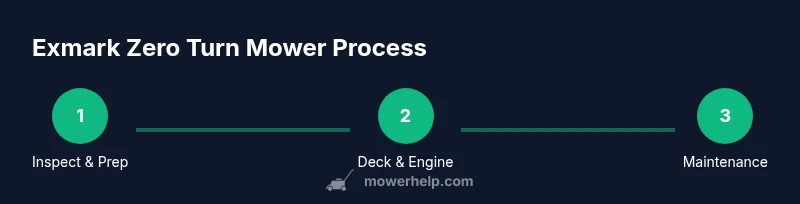
- 1
Inspect and safety-check
Power off the mower and remove the key. Allow blades to stop completely. Check for loose parts, damaged guards, or foreign objects around the deck and undercarriage. This step prevents injuries and saves time during the actual service.
Tip: Always use the owner’s manual as a reference for safe procedures. - 2
Check fluids and air intake
Inspect engine oil level while the engine is cool. Check coolant (if applicable) and fuel quality. Clean or replace the air filter and inspect for obstructions around the air intake to prevent performance loss.
Tip: Do not top off fuel when hot; allow engine to cool first. - 3
Inspect and balance blades
Remove the mower blades to inspect for nicks or cracks. Balance or replace blades as needed and re-tighten blade bolts to the manufacturer torque. Reinstall blades and ensure uniform orientation.
Tip: Balance blades on a blade balancer to prevent vibration. - 4
Check deck, belts, and spindles
Inspect the deck belt for wear or cracks and replace if needed. Check spindle housings for leaks or looseness. Clear any grass buildup from pulleys and guards.
Tip: A loose belt can slip and reduce cutting efficiency. - 5
Test start and basic mowing
Start the engine in a clear, open area. Listen for unusual noises and verify smooth engagement of both drive wheels. Conduct a small test cut to verify deck engagement and edge performance.
Tip: Use a slow, controlled pass near obstacles to confirm handling. - 6
Adjust mowing height and speed
Set the cutter height to the recommended range for your lawn. Tune forward and reverse speed to avoid abrupt steering. Check edge alignment and ensure consistent cut across the width.
Tip: Begin at mid range height and adjust after a sample pass. - 7
Document and schedule ongoing maintenance
Record the maintenance performed and the next due date. Create a simple calendar reminder for oil changes, blade sharpening, and filter checks. Maintaining a log helps prevent missed service.
Tip: Link the schedule to lawn growth cycles and weather patterns.
Got Questions?
What makes Exmark zero turn mowers stand out for homeowners?
Exmark zero turn mowers combine speed, precision, and reliability with a durable deck system. Their dual hydrostatic transmissions give tight turning radii for complex lawns. Regular maintenance and correct model selection maximize value for homeowners.
Exmark mowers mix speed with precise cuts and durable decks. With proper model selection and maintenance, they’re a reliable choice for homeowners.
How do I decide which deck width fits my yard?
Estimate your mowing area and obstacles. Wider decks cover more ground but require more space to maneuver; narrow decks are nimble in tight yards. Test a model in your yard to verify cut quality and ease of turning.
Think about your yard size and obstacles; a wider deck saves time on big lawns, while a narrower deck handles tight spaces better.
Are Exmark mowers suitable for slopes?
Exmark zero turns can handle moderate slopes, but safety guidelines apply. Operate slowly, avoid sharp turns on inclines, and assess the slope rating in your manual. For steep terrain, consider attachment or alternative mowing methods.
They can handle gentle slopes with care. Don’t push steep grades and follow manual guidelines.
What maintenance schedule is recommended?
Follow the manual’s intervals for oil changes, air filter replacement, blade sharpening, and belt inspection. Keep a log and perform checks before each season for best performance and longer life.
Stick to the manufacturer’s maintenance calendar and keep a log of service.
New vs used Exmark zero-turn mowers?
New mowers include full warranties and latest features but cost more. Used units can save money but require careful inspection of mechanicals, blades, belts, and hydraulics before purchase.
New gives you warranty and newer tech; used saves money but needs a thorough check.
What are common issues and quick fixes?
Expect occasional starting or cut-quality issues. Start with fuel quality, air filters, and blade balance. More complex problems involve hydraulics or transmission and may require a technician.
Common issues are fuel, filters, or blade balance; others may require service.
Watch Video
The Essentials
- Match deck width to yard size and obstacles.
- Prioritize maintenance: oil, air, blades, belts.
- Choose model family (L, S, X) to fit needs and budget.
- Practice safe operating procedures on slopes.
- Budget for ownership costs beyond purchase price.