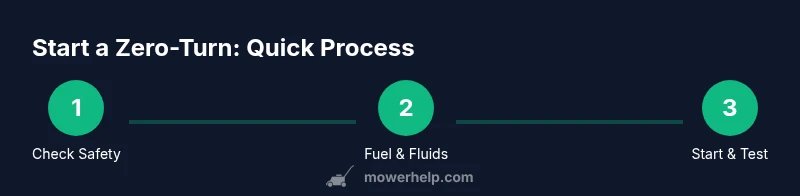
How to Start a Zero Turn Lawn Mower: Step-by-Step
Learn how to safely start a zero turn lawn mower with a clear, step-by-step process. This home maintenance guide from Mower Help covers pre-start checks, starting procedures for petrol and electric models, safety tips, and troubleshooting for common issues.


If you’re learning how to start a zero turn lawn mower, you’ll follow a calm, model-aware routine that emphasizes safety interlocks, fuel and oil checks, and the correct starting sequence for your engine type. This guide highlights PPE, environment, and troubleshooting for common start failures, with model-specific caveats to help you avoid stalls, backfires, and blade engagement hazards. By preparing properly, you’ll achieve a smooth, safe start every time.
Understanding Zero Turn Mowers
If you’re learning how to start a zero turn lawn mower, you’re seeking a reliable, safe routine that works across many models. Zero-turns use hydrostatic steering and a compact deck, which makes them agile but also sensitive to improper starting technique. According to Mower Help, the best starts come from a calm, organized pre-start routine and a clear understanding of safety interlocks. This guide explains what a zero-turn is, common engine configurations, and how the starting sequence fits into an overall maintenance plan. You’ll learn about fuel quality, oil level, and how parking brakes, blade engagement levers, and PTO switches interact with the ignition. By mastering the fundamentals, you’ll reduce the risk of stalls, backfires, or sudden blade engagement when you pull the starter cord or press the start button. The goal is a smooth, predictable start that leads to safe mowing and longer engine life. Expect model-specific differences; always refer to your owner's manual for exact instructions. For 2026 maintenance, a consistent start routine also helps detect wear before it becomes a breakdown, saving time and money on repair bills.
Safety First: Gear and Environment
Safety comes first when learning how to start a zero turn lawn mower. Wear appropriate PPE—eye protection, hearing protection, and sturdy gloves—before approaching the engine. Ensure you’re working in a well-ventilated, flat, and uncluttered area away from people and pets. Keep bystanders at a safe distance and verify that the mower is on firm ground with the parking brake engaged before you touch any controls. Referencing guidance from Mower Help, the most common starting errors stem from inadequate PPE, loose clothing, or ignoring interlocks. This section outlines essential safety protocols and the environmental setup that reduces the risk of injury or equipment damage. A thoughtful setup also makes the start smoother and helps you notice unusual sounds or smells early.
Pre-Start Checks and Setup
Before you attempt to start, perform a quick, thorough check of key components and fluids. Verify fuel quality and level, check oil level, and confirm the battery (for electric models) is charged. Confirm the mower deck is lowered or in the appropriate neutral state, the PTO is disengaged, and the blade brake is not engaged. Clear any debris around the mower and disconnect accessories that might interfere with starting. This stage is critical: even small issues—low oil, stale fuel, or a tripped safety switch—can prevent a safe start or damage the engine. By the end of this step, you should have a clean, ready-to-start mower with all safety features intact and the manual nearby for model-specific nuances.
Cold Start vs Warm Start: Sequence and Reasoning
Mowers vary in their starting sequence depending on temperature and engine design. A cold start generally requires a richer fuel mixture and, in many petrol engines, a brief choke period. A warm start often needs less choke and a quicker ignition sequence. The exact steps depend on your model, so consult the owner's manual for specifics. In all cases, start with the least aggressive engine setting and adjust gradually to avoid sudden surges that could cause skidding or stalling. This section explains why temperature matters and how to adapt the start routine safely across spring, summer, and fall.
The Starting Procedure for Petrol Engines
For petrol-powered zero turns, follow a conservative, model-appropriate starting sequence. With the engine off, ensure the throttle is in the correct position for starting, apply the parking brake, and verify that the blades are disengaged. Turn the key or press the start button while gradually engaging the throttle. If the mower is equipped with a choke, engage it only as long as needed to start, then move to run as the engine warms. After starting, let the engine idle briefly before applying power to the drive and cutting attachments. Always monitor for unusual sounds or smoke and shut down safely if anything seems off. This portion emphasizes patience and adherence to the model’s safety interlocks.
Battery-Powered Zero-Turn Start Considerations
Electric zero-turn mowers follow a similar safety-first philosophy but rely on battery health and electronic interlocks rather than a traditional carburetor choke. Ensure the battery is fully charged, check for any fault codes on the display, and confirm that the safety interlocks (seat switch, brake, and blade switch) are functioning. Press the start button or turn the key, then confirm that the drive levers respond smoothly. If the mower doesn’t respond, verify charger status, connections, and that the interlocks are seated correctly. Maintenance steps like battery conditioning and connector cleanliness help prevent start failures and prolong battery life.
Troubleshooting Common Start Issues
Starting issues are often tied to fuel, ignition, battery, or safety interlocks. If the engine cranks but won’t start, recheck the fuel supply, ensure there are no stale fuels, and confirm oil level is within the recommended range. A faulty spark plug or weak ignition coil can prevent ignition; inspect spark plugs for wear and replace if necessary. Safety interlocks can also prevent starting if a switch isn’t sensing proper seating or handle position. In many cases, a quick intermittent test of each safety switch and connector reveals the culprit and a simple fix.
Aftercare: Post-Start Routine and Maintenance
Once started, allow the engine to warm up for a few minutes before operation. Check for oil pressure stability, listen for unusual noises, and inspect the area for leaks or debris that could affect performance. If you notice anything unusual, shut down safely and perform a quick diagnostic against the manual. A post-start checklist helps you detect wear early and keeps your zero-turn mower reliable throughout the mowing season.
Quick Start Checklist (at-a-glance)
- Verify safety interlocks and eco-system checks are ready.
- Ensure fuel and oil levels are within specification.
- Confirm parking brake is engaged and blades are disengaged.
- Use the correct starting sequence for your model; don’t bypass safety features.
- Allow the engine to warm up before engaging drive or blades.
Tools & Materials
- Work gloves(Protect hands from sharp edges and hot surfaces.)
- Safety glasses(Shield eyes from debris and fluids.)
- Ear protection(Reduce exposure to loud engine noise.)
- Owner's manual(Model-specific start instructions and safety warnings.)
- Spark plug wrench(For inspection or replacement if needed.)
- Flat-head screwdriver(For panel access or adjustments on some models.)
- Rag/cloth(Wipe spills or clean air filters during prep.)
Steps
Estimated time: 45-60 minutes
- 1
Verify safety interlocks and area
Confirm the seat switch is working, the parking brake is engaged, and the blade PTO is off. Check that the area around the mower is clear of people, pets, and obstacles. This prevents accidental blade engagement and ensures you have a safe starting environment.
Tip: Test the seat switch by briefly lifting your weight—if the engine dies, the switch may be faulty. - 2
Position on level ground
Move the mower to a flat, dry surface with ample space for maneuvering. Ensure the deck is lowered or in the neutral position and that you have a clear exit path in case you need to stop quickly.
Tip: Avoid starting on slopes; level ground reduces rollaway risk. - 3
Check fluids and system readiness
Check fuel level and fuel quality, oil level, and battery charge (for electric models). Verify that there are no visible leaks and that air intakes are unobstructed. If you added fuel stabilizer, wait a moment to let it mix.
Tip: Never start with stale fuel; stale gas can cause hard starting or rough running. - 4
Review controls and switches
Ensure the throttle is in the correct starting position and the choke (if applicable) is engaged. Make sure the blade control is disengaged and the PTO switch is off. Confirm the drive levers are in neutral before starting.
Tip: If your model uses a key, don’t leave the key in the ignition when not in use. - 5
Start the engine
Use the prescribed starting method for your model (key, push button, or pull cord). If cold-start requires a choke, engage it only as long as needed to start, then move to run. Listen for steady engine sounds and a smooth idle.
Tip: If it doesn’t start after several attempts, stop and recheck fluids and interlocks before retrying. - 6
Test drive and warm-up
With the engine running smoothly, slowly release the parking brake and engage the drive control to test movement. Allow the engine to reach normal operating temperature before engaging blades for cutting.
Tip: Start at a low speed and increase gradually to avoid sudden load shifts. - 7
Shut down safely if issues arise
If you notice knocking, smoke, or strong gas odor, stop immediately. Shut off the engine, disconnect the spark source, and inspect the problem using the owner’s manual as a guide. Do not continue mowing until the issue is resolved.
Tip: Record symptoms and time of occurrence to aid in diagnostics or service. - 8
Post-start inspection
Re-check fluid levels, listen for unusual noises, and confirm all safety features function after startup. Clean around the mower and store tools properly to maintain readiness for your next mowing session.
Tip: A quick post-start check helps catch issues before they become bigger problems.
Got Questions?
What safety gear should I wear when starting a zero-turn mower?
Wear eye protection, hearing protection, and gloves. Keep loose clothing away from moving parts, and do the start in a well-ventilated area to avoid fumes. PPE helps protect you from debris and noise during startup and mowing.
Wear eye protection, hearing protection, and gloves for startup and mowing safety.
Why won’t my zero-turn mower start even after following the procedure?
Check safety interlocks, fuel quality and level, and oil level. Also inspect the battery (for electric models) and look for loose connections or blown fuses. If the engine cranks but doesn’t fire, you may have a spark or fuel delivery issue.
Check interlocks, fuel, oil, battery, and ignition. If it cranks but won’t start, there may be a spark or fuel issue.
Can I start a zero-turn mower indoors or in a garage?
Starting inside a garage or enclosed space is not recommended due to carbon monoxide buildup. Always operate outdoors in a well-ventilated area and avoid running engines near walls or vehicles that could trap exhaust.
No, start outdoors in a well-ventilated area to avoid CO buildup.
Why does my mower stall after starting?
Stalling can result from improper idle settings, a clogged air filter, or fuel issues. Check air intake, filter condition, and ensure the engine has a clean fuel supply and proper choke operation as needed. If it continues, consult the manual for model-specific idle settings.
Stalling usually means fuel or air issues or incorrect idle settings; check filters and choke.
Is it safe to use starting fluid on a zero-turn mower?
Starting fluid is generally not recommended for lawn mowers except in specific, manufacturer-approved circumstances. Misuse can flood the engine or cause damage. Always follow the manual and use safe, recommended starting methods.
Avoid starting fluid unless the manual advises it; follow manufacturer guidance to prevent damage.
Watch Video
The Essentials
- Verify all safety interlocks before starting.
- Follow your model’s exact starting sequence.
- Check fluids and area conditions prior to ignition.
- If in doubt, consult the owner's manual and stop safely.
- Post-start checks help ensure reliability for next use.