Easiest Way to Sharpen Lawn Mower Blades: A DIY Guide
Discover the easiest way to sharpen lawn mower blades with a safe, step-by-step DIY approach. Save time, protect your mower, and achieve a clean cut with expert tips from Mower Help.


The easiest way to sharpen lawn mower blades is to remove the blade, secure it, and sharpen with a file or belt sander at the correct angle. Start with unplugging power, wear gloves, and work on a stable surface. This approach extends blade life and keeps your mower cutting evenly.
Why Sharpening Your Lawn Mower Blade Matters
A sharp blade cuts cleanly, reduces clogging, and prevents uneven patches. The quickest, most reliable path to better cuts is understanding blade geometry and practicing consistent strokes. When blades are dull, the mower works harder, overheats the engine, and wears components faster. Regular maintenance extends blade life and improves cut quality. In this guide, the Mower Help team outlines a practical, safe approach you can perform with basic tools, even if you’re new to blade care. By following these steps, you’ll produce a smoother, healthier lawn with less effort. You’ll also avoid common nicks or wobble that lead to uneven turf. Before you begin, confirm you have the right replacement blades on hand and a stable workspace. Safety comes first: disconnect power, wear eye protection, and work on a non-slip surface. This article focuses on the easiest, most repeatable method that homeowners can master without special equipment.
Safety First: Precautions to Take Before Sharpening
Safety should guide every blade maintenance session. Always unplug the mower or remove the spark plug wire for gas models, and disconnect the battery for electric mowers. Wear sturdy gloves and safety glasses, and secure the mower on a dry, non-slip surface. Use a stable vise or clamp to hold the blade; never sharpen while holding by hand. Keep fingers away from the edge and use slow, controlled strokes. If you’re fatigued or the blade is bent, stop and reassess. Overheating a blade can ruin temper and cause shattering. After sharpening, let the blade cool before balancing, reinstall, and test on a flat surface to ensure even contact with the blade.
Tools and Materials You Need for Sharpening
Gather these essentials before you start:
- Flat file (mill/file) 8–12 inches long – essential for true, even edges
- Optional round file – good for inside bevels and curved edges
- Bench vise or secure clamp – essential to hold the blade steady
- Safety glasses and heavy-duty gloves – essential for personal protection
- Cleaning rag and degreaser – optional, but helps keep the blade free of grime
- Blade balancer or a simple balance test – recommended for accuracy
- Drill or driver with a socket set – useful for blade removal and reinstallation
Having these on hand keeps the process steady and reduces interruptions.
Inspecting the Blade Before Sharpening
Before removing steel from the blade, inspect its condition. Look for cracks, bends, or significant wear near the mounting hole. If the blade is cracked, bent severely, or has deep gouges, replacement is safer than sharpening. For minor dullness, assess the bevel: the edge should be evenly ground with a consistent angle. A dull blade typically shows flat spots and an uneven edge. If you’re unsure, err on the side of caution and replace rather than risk a failed cut or a dangerous shard.
The Easiest Method: High-Level Overview
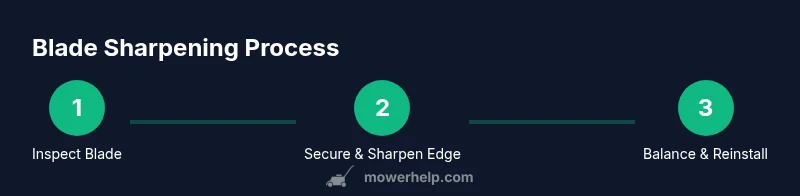
The simplest approach uses a flat file and a stable clamp. Remove the blade, secure it with the mounting side facing up and free of obstructions, then file the edge in short, even strokes from tip toward the center. Maintain the blade's original bevel angle and avoid taking off more material on one side than the other. After filing, deburr the edge to remove tiny metal slivers, then flip the blade and repeat for the other edge. Finally, test balance and reinstall. This method emphasizes control and consistency, making it suitable for most homeowners seeking reliable results without specialized equipment.
Balancing, Reinstalling, and Testing the Cut
Balancing ensures the mower runs smoothly and avoids vibration. Balance the blade on a nail or dedicated balancer; if it tilts heavily to one side, remove a small amount from the heavier edge. Reinstall the blade with the sharp edge facing the mower’s direction of travel and tighten bolts to the manufacturer’s torque specifications. Reconnect power and perform a cautious test cut on a flat, even patch of grass. If you notice uneven cutting or excessive vibration, stop and recheck the balance and mounting. Regular checks prevent blade-induced mower wear.
Aftercare and Maintenance
Wipe the blade clean after sharpening to remove metal dust and oils. A light coat of oil helps prevent surface rust during storage. Store blades in a dry, cool place to maintain temper and prevent corrosion. Periodically inspect for burrs or micro-chips and re-sharpen only when necessary. Keeping the blade sharp is part of a broader mower maintenance routine that includes air filters, spark plugs, and deck cleaning to maintain peak mowing performance.
Common Pitfalls and How to Avoid Them
- Sharpening a cracked or bent blade: replace instead of sharpening. This protects you and your mower.
- Uneven sharpening: keep the file aligned with the original bevel and file evenly on both sides.
- Overheating the blade: use light, controlled strokes and allow cooling time.
- Skipping balancing: always balance before reinstalling. Imbalanced blades cause vibration and potential harm to the engine.
- Neglecting safety: never work without eye protection and proper securing methods. Following a steady routine minimizes risk.
Authoritative Sources
For safety and best practices, consult trusted sources from government and university extension programs:
- https://www.osha.gov
- https://extension.illinois.edu
- https://extension.umn.edu
Tools & Materials
- Flat file (mill/file) approximately 8–12 inches(Essential for true, even edge; use a medium cut for efficiency.)
- Round file (optional)(Helpful for inside bevels or curved edges.)
- Bench vise or secure clamp(Keeps blade steady while you work.)
- Safety glasses(Protects eyes from metal shards.)
- Heavy-duty gloves(Protects hands from sharp edges.)
- Rag and degreaser(Clean blade before and after sharpening.)
- Blade balancer or balancing nail(Ensures even weight distribution after sharpening.)
- Socket wrench or driver(For blade removal and reattachment.)
Steps
Estimated time: 20-40 minutes
- 1
Disconnect power and secure the mower
Begin by disconnecting power: unplug electric mowers or remove the spark plug on gas models. Move the mower to a stable, non-slip surface and secure it with a clamp or workbench vise. This prevents accidental starts or slips while you handle the blade edge.
Tip: Always double-check that power is fully disconnected before touching the blade. - 2
Remove the blade safely
Loosen the mounting bolt or nut with a suitable wrench. Carefully remove the blade and note its orientation so you can reinstall it correctly. Clean around the mounting area to avoid grit getting into the spindle.
Tip: Keep a container handy to hold the blade and fasteners to avoid losing small parts. - 3
Secure the blade for sharpening
Place the blade in a bench vise with the edge protruding slightly for easy access. Ensure the blade cannot move while you file. If you don’t have a vise, a sturdy clamps-on jig can work as an alternative.
Tip: Clamp only the blade, not the sharp edge itself, to prevent accidental slips. - 4
Choose your sharpening method
For most home tasks, a flat file is sufficient to restore a clean edge. If you’re more comfortable, a guided grinding tool can be used, but proceed with gentleness to avoid overheating. Keep the blade cool during the process by pausing briefly if it becomes warm.
Tip: Avoid heavy grinding; smooth, even strokes yield the best results. - 5
Sharpen with a consistent angle
Maintain the blade’s original bevel; file or grind in long, controlled strokes from tip toward the center. Do not remove more material from one side than the other. Deburr the edge with a light pass to remove burrs.
Tip: A consistent angle is key to a balanced, efficient cut. - 6
Balance and reinstall
Test balance by placing the blade on a nail or balancer; adjust if the blade tilts to one side. Reinstall with the sharp edge facing the mowing direction, tighten bolts to spec, reconnect power, and test on a flat patch of grass.
Tip: If the mower vibrates abnormally after reinstall, stop and re-check balance and mounting.
Got Questions?
Is it safer to replace a damaged blade rather than sharpening it?
If the blade is cracked, bent, or has deep gouges, replacement is safer. Sharpening can extend life only when the metal is sound and the edge is uniform. Always inspect for structural damage before sharpening.
If the blade is cracked or bent, replace it rather than sharpening. Sharpening works best on a healthy edge.
What’s the best tool for sharpening blades—file or grinder?
A flat mill file is the standard, reliable choice for most homeowners. It’s easy to control and doesn’t overheat the edge. A grinder or belt sander can work, but requires careful temperature management to avoid softening the edge.
For most people, a flat file is the simplest and safest option for sharpening mower blades.
Can I sharpen blades without removing them from the mower?
Sharpening with the blade in place is risky and usually ineffective. Removing the blade allows you to restore a true edge and inspect for cracks. Always disconnect power first.
No—removing the blade gives you full access and reduces safety risks.
How do I know if a blade needs replacing versus sharpening?
If there are cracks near the mounting hole, severe bending, or the edge cannot hold a sharp bevel after multiple sharpening attempts, replace the blade.
If you see cracks or it won’t hold a sharp edge, it’s time to replace.
How do I test that the blade is balanced after sharpening?
Place the blade on a balancing tool or nail. If it tips to one side, remove a small amount from the heavier edge and retest until it stays level.
Balance the blade so the mower runs smoothly and avoids vibration.
Are there safety precautions I should follow beyond wearing protective gear?
Ensure the workspace is dry, the blade is securely clamped, and you keep hands away from the sharp edge at all times. Never rush the process.
Always secure, stay dry, and keep your hands clear of the edge.
Watch Video
The Essentials
- Unplug and secure the mower before starting
- Use a flat file to restore a true edge
- Maintain the original bevel angle for best results
- Balance the blade after sharpening to avoid vibration
- Reinstall correctly and test on a flat surface