How Much Does a Lawn Mower Blade Cost? Replacement, Sharpening, and Tips
Learn the costs behind lawn mower blade replacement and sharpening, including typical price ranges, factors that affect price, and practical tips to choose the right blade for your mower and budget.


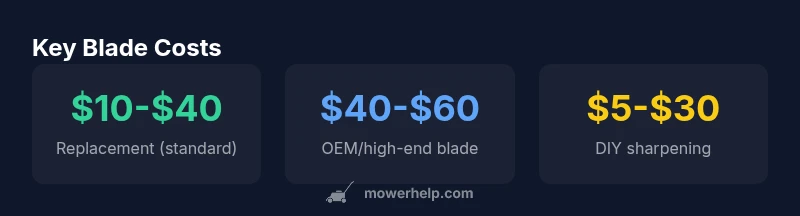
The cost to replace a standard lawn mower blade typically ranges from about $10 to $40, depending on blade type and mower model. Premium OEM or specialty blades can run $40-$60. If you sharpen your blade yourself, only the cost of sharpening tools or service applies, often $5-$15. Installation hardware may add a few dollars.
Why blade care matters
When homeowners ask how much lawn mower blade costs, they’re really asking about the broader value of blade maintenance. A sharp, properly matched blade improves cut quality, prevents engine strain, and reduces the risk of clogs and uneven wear. According to Mower Help, blade upkeep is a key part of preventive lawn-care budgeting. Regular inspection, proper mounting, and timely replacement or sharpening keep resonant vibrations down and ensure safety during operation. This section explains how blade care links to overall mower performance and long-term costs, so you can plan a maintenance routine that matches your mower model and yard size.
- Safety first: a dull blade can increase kickback risk and cause engine strain.
- Cut quality: a sharp blade produces cleaner lawns with fewer clumps and healthier grass.
- Efficiency: proper blade choice reduces load on the engine and can improve fuel economy or battery life in electric mowers.
Tip: Before you remove a blade, unplug the spark plug wire or disconnect power on electric mowers and use a sturdy wrench. Secure the blade with a nut spinner to avoid slips.
How blade types influence price
Blade design affects price as much as size and material. Standard high-lift blades are the most common and generally cheaper, designed for bagging or general mowing. Mulching blades are optimized for grinding clippings into fine mulch and may cost a bit more due to their dual action. Gator blades, with aggressive cutting teeth, often sit at the higher end of the price range but can shorten mowing time in dense grass. The key is to match blade type to deck design and mowing goals. The Mower Help team notes that price often correlates with material quality (steel alloys, heat treatment) and compatibility with your mower deck. Always verify compatibility with your model before purchasing.
- Consider the mower’s deck width and mounting hole pattern.
- Check if the blade is designed for bagging, mulching, or general purpose use.
- Look for corrosion-resistant coatings for longer life.
Pro tip: If you’re unsure which blade fits your mower, consult the user manual or contact customer support for the exact part number.
Estimating replacement costs for common setups
Prices for replacement blades vary widely based on design and brand. A typical standard blade for a common homeowner mower often sits in the $10-$40 range, while OEM or premium aftermarket blades can be $40-$60. With specialty designs such as heavy-duty steel or composite blades, prices can stretch further. As you budget, remember that some blades require special mounting hardware or spacers, which can add a few dollars to the total. Mower Help analysis shows that the total cost of ownership includes not just the blade but the gauge of steel, coating, and the blade’s life expectancy in your yard conditions.
- For light-duty lawns, standard blades usually suffice.
- For thick or damp grass, consider a mulch blade with appropriate compatibility.
- If you bag clippings frequently, factor in potential higher wear from frequent contact with debris.
Note on timing: Replacing a blade at the start of mowing season can prevent premature wear and maintain optimal performance. We recommend inspecting blades monthly during peak season and after significant impacts (e.g., rocks or stumps).
Sharpening vs replacing: cost and value
Sharpening a blade is often far cheaper than full replacement, particularly if you own a mid- or rear-discharge mower with a simple blade. DIY sharpening costs are typically $5-$15 for tools like a bench grinder or sharpening stone, plus any electricity used. Professional sharpening services usually charge $15-$30 per blade, depending on local labor rates and blade size. If the blade’s edge is severely chipped or the mounting hole is worn, replacement is usually the better value. Mower Help analysis suggests weighing blade life against sharpening frequency: a well-sharpened blade can extend its life by several mowings, but repeated sharpening reduces blade thickness and may eventually compromise safety.
- Frequency depends on mowing conditions and grass type.
- Inspect for nicks, cracks, or a bend—replace if any are present.
- For budget planning, assume 1-2 sharpenings per season for average lawns; heavy use may require more.
Practical tip: When sharpening, remove corrosion and restore a flat, true edge. Balanced blades reduce vibration and wear on the engine.
How to choose the right blade for your mower
Choosing the right blade starts with compatibility. Check your mower’s deck width, mounting pattern, and the intended mowing goal (bagging, mulching, or side-discharge). If you’re unsure, refer to the operator’s manual or contact the manufacturer for the correct blade part number. Budget-friendly blades are fine for standard grass in mild climates, but mulching blades can improve clipping quality in damp conditions. Consider the blade’s material (stainless steel, carbon steel, or high-strength alloys) for wear resistance and edge retention. For most homeowners, a reliable standard or mulching blade that matches the deck design provides the best blend of performance and value.
- Ensure the blade is balanced to avoid engine vibrations.
- Match blade type to your mowing style (bagging vs mulching).
- Verify the correct mounting hardware is included or account for it in the budget.
Checklist: deck size, blade length and width, mounting hole pattern, and intended cut style.
Installation tips and safety checks
Replacing a blade requires careful attention to safety and torque specifications. Start by disconnecting the ignition/spark plug or power source, then tilt or lay the mower on its side with the air intake facing upward to prevent fuel leakage. Remove the blade bolt with the appropriate wrench, note the blade orientation (top side vs bottom side), and inspect the spindle shaft for wear. Install the new blade with the correct orientation and tighten to the manufacturer’s torque spec. Recheck that the blade is centered and spins freely without rubbing. Finally, reseat the spark plug boot and test the mower at idle before attempting to cut.
- Use a blade balancer to confirm true balance after installation.
- Do not use damaged tools or worn sockets; replace if necessary.
- Store the mower until it’s ready to use to avoid accidental startups.
Maintenance practices to extend blade life
Routine maintenance extends blade life and ensures consistent performance. Clean the blade after mowing to remove grass residue and debris that can hold moisture and promote corrosion. Check for cracks or bends after impacts and replace immediately if detected. Keep the mower’s underside clean and free of grass buildup to prevent overheating. For those using mulching blades, ensure the mower’s deck is designed for mulch mode; incorrect configurations can wear blades unevenly. Finally, keep blades sharp and balanced, and schedule a seasonal blade inspection as part of your broader mower maintenance plan.
- Clean blades with water and a brush; dry thoroughly to prevent rust.
- Store blades dry and prevent exposure to moisture when not in use.
- Rotate through a couple of spare blades to minimize downtime during peak season.
Budgeting for blade care: planning and tools
Budgeting for blade care involves accounting for both cost of blades and maintenance tools. Plan for a replacement blade every season or two, depending on mowing frequency and yard conditions. Budget for occasional sharpening either at home or via a service, and consider the investment in a balancing tool and basic hand tools. If you own a premium mower, be prepared for higher-priced OEM blades but expect longer life and smoother performance. Keep a small spare blade on hand to minimize downtime after a strike to rocks or other hard objects.
- Estimated cost range per year: blade replacements plus sharpening supplies.
- Tools to buy: bench grinder, file, blade balancer, and a torque wrench.
- Set a maintenance calendar to track blade life and performance.
Bottom line: blade costs are not just the purchase price—maintenance and replacement frequency shape your true lawn care budget.
Common mistakes to avoid
Common blade mistakes include installing the blade upside down, using the wrong blade type for your deck, or overtightening the mounting bolt. Improper installation can cause dangerous kickback and damage the spindle. Avoid pushing a dull blade and rely on the correct sharpening schedule rather than relying on deal-price blades that aren’t compatible with your mower. Finally, neglecting routine blade inspection can lead to reduced cut quality and component wear. Regular checks and adherence to the manufacturer’s instructions are your best defense against costly mistakes.
Blade types and typical price ranges
| Blade Type | Typical Use | Typical Price Range | Notes |
|---|---|---|---|
| Standard high-lift | General-purpose mowing | $10-$40 | Common and versatile |
| Mulching blade | Mulch lawn clippings | $15-$50 | Best with mulch-capable decks |
| Gator blade | Aggressive mulching | $20-$60 | Higher lift and edge action |
Got Questions?
What factors influence lawn mower blade price?
Blade price depends on blade design (standard, mulching, or specialized designs), material quality, and OEM versus aftermarket status. Deck compatibility and mounting hardware can add to total cost. Expect higher prices for premium alloys and specialty blades.
Blade prices vary by design and material; check your mower’s requirements.
Can I sharpen a lawn mower blade at home?
Yes. Home sharpening is common and inexpensive if you have the right tools (grinder or file) and follow safety steps. Expect roughly $5-$15 for tools and energy, plus ongoing blade life depending on grass and maintenance.
You can sharpen blades at home with the right tools.
Are cheap blades worth buying?
Cheaper blades can work for light-duty mowing but may wear quickly or perform poorly in tough conditions. Balance cost with expected blade life and compatibility with your mower deck.
Cheap blades can save money short term but may cost more in wear and performance.
How often should I replace or sharpen blades?
Check blades monthly during peak season and inspect after impacts. Replace if chipped, cracked, or badly worn. Sharpening frequency depends on mowing conditions, typically every few uses for well-used blades.
Inspect blades regularly and sharpen or replace as needed.
Should I replace every time I sharpen?
Not always. If the blade is worn evenly with a good edge, sharpening may suffice. If there are chips or thinning edges, replacement is safer and maintains performance.
Sharpen when edge is even; replace if chips or thinning edges appear.
“Blade upkeep isn’t optional—it’s essential for safe, efficient mowing and long blade life. Match blade design to your deck and follow the manufacturer’s torque specs for best results.”
The Essentials
- Learn blade costs vary by type and OEM status
- Match blade to deck design for best results
- DIY sharpening saves money but assess blade life
- Professional sharpening adds cost but ensures balance
- Plan blade care within your mowing budget