How to Tell If Lawn Mower Blade Needs Sharpening
Learn how to tell if your lawn mower blade needs sharpening, plus safe methods, tool lists, and a practical step-by-step guide from Mower Help to achieve cleaner, healthier grass.


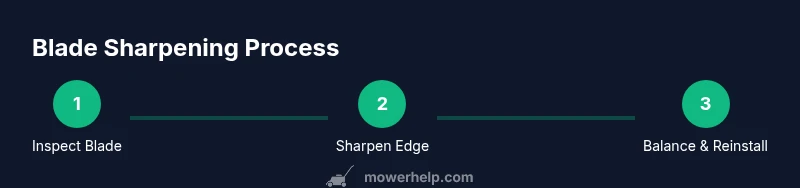
You will assess blade sharpness by inspecting edge quality, cutting performance, and mower ease of use. Key requirements include safety gear, a stable workspace, and a suitable sharpening method (file, grinder, or replacement) depending on blade condition. This quick check helps you decide the best next step.
Signs your lawn mower blade may need sharpening
If you’re asking how to tell if lawn mower blade needs sharpening, start by examining cut quality, mowing performance, and the blade itself. According to Mower Help, dull edges don’t cut cleanly and can cause ragged, brown turf and extra engine strain. Regular inspection helps you decide when sharpening or replacement is due.
Key indicators include:
- Ragged or torn blade edges after mowing
- Increased effort required to push or higher engine RPM without improved results
- Excessive vibration or uneven cutting height
- Grass clumps or streaks left on the lawn, even when the mower is slow and steady
- Visible nicks, bends, or dull burrs on the blade surface
If you notice any of these signs, plan a sharpening session soon to avoid more turf damage and engine wear. Mower Help recommends treating dull blades as a maintenance cue, not a one-off fix.
How to tell if the blade is dull vs damaged
A dull blade will cut grass inconsistently and create jagged edges, while a damaged blade may show cracks, bends, or a bent mounting hole. Start by inspecting the edge with a gloved finger; feel for a burr along the edge, and compare the left and right sides of the blade for symmetry. A clean, sharp edge should feel even and smooth. If you see any cracks or bending near the mounting hole, replace the blade instead of sharpening it. Sharpening a cracked blade can be dangerous and ineffective.
Also check for corrosion near the center or mounting area, which can indicate structural weakness. In those cases, replacement is the safer option for maintaining mower performance and safety.
Safe prep before sharpening
Before touching a blade, prepare a safe workspace and protect yourself. Disconnect the spark plug wire and, if applicable, move the mower to a well-ventilated area away from sparks. Remove the blade using the correct socket or wrench, keeping track of hardware. Wear sturdy gloves and eye protection, securing loose clothing and tying back long hair. Have a sturdy vise or bench to hold the blade steady while you work. Keep a metal container nearby for storing the removed blade safely and to prevent accidental contact.
Manual sharpening with a file
Manual sharpening is reliable and quiet. Secure the blade in a bench vise with the flat side facing you. Use a mill file or sharpening file to create a consistent bevel on the cutting edge, maintaining the original angle (often around 30–45 degrees depending on model) and ensuring all burrs are removed. Draw the file across the edge away from your body, applying light, even pressure. Flip the blade and repeat on the opposite edge if it is a dual-edge blade. When both sides are even and the edge is smooth, wipe clean and inspect for burrs. Balance and safety checks follow in the next steps.
Power tools and grinding options
If you choose to use a grinder, set the wheel to a gentle angle and avoid overheating the edge, which can weaken the blade. A bench grinder with a fine abrasive wheel works best when you maintain a light touch and rotate the blade to sharpen both sides evenly. Many homeowners also use a sharpening stone or a specialized mower blade sharpener. Always wear eye protection and a dust mask to avoid metal particles. After grinding, deburr the edge with a fine file to remove tiny shards and inspect edge uniformity.
Replacing vs sharpening: when to replace the blade
Sharpening can extend blade life, but it is not worth it if the blade is cracked, heavily chipped, bent, or worn beyond a safe thickness. Also consider the mounting hole wear and safety of the mower deck. When in doubt, replace the blade with a new one of the same size and type. New blades often restore cutting quality more reliably than a damaged or over-sharpened blade, and replacing may save time in the long run.
Aftercare: balancing, testing, and safety checks
After sharpening, balance the blade to prevent vibration and ensure safe operation. A simple balance test involves placing the blade on a nail or balancer; if it tilts to one side, remove material evenly from the heavier side. Reinstall the blade and reattach the spark plug. Run the mower on a small patch of grass at low speed and listen for unusual noises or vibrations. If you detect wobble, recheck mounting and balance before regular use.
Common mistakes to avoid
Avoid these mistakes: sharpening one edge only, over-sharpening which makes the edge brittle, reusing a dull or damaged blade, or skipping safety steps like disconnecting the spark plug. Work slowly, keep the workspace clean, and verify balance before reinstallation. Remember to inspect the blade mounting hardware for wear and replace if needed.
When to seek professional service
If you cannot inspect the blade safely, or you find cracks, serious wear, or a warped blade, seek professional service. A technician can replace the blade or perform precision sharpening with the right equipment. Regular maintenance from a qualified service provider helps maintain mower performance and blade life.
Tools & Materials
- Safety glasses(ANSI Z87.1 compliant)
- Work gloves(Cut-resistant preferred)
- Socket wrench or blade removal tool(Size depends on mower model)
- Bench vise(Helpful to stabilize blade)
- Metal file(Medium-cut or mill file)
- Angle guide or sharpening jig(Maintains consistent bevel)
- Bench or stable work surface(Avoids slips)
- Balancing tool or nail(Detects uneven edges)
- Replacement blade (optional)(If the blade is cracked or worn beyond repair)
Steps
Estimated time: 45-60 minutes
- 1
Prepare and safety check
Shut off power and disconnect the spark plug. Move to a stable workspace and gather your tools. This initial safety step prevents accidental starting and secures the blade for removal.
Tip: Double-check you’ve unplugged the spark plug before touching the blade. - 2
Remove the blade
Loosen and remove the mounting bolt or nut with the appropriate socket. Support the blade as it comes off to avoid dropping it and to keep the sharp edge intact.
Tip: Note blade orientation for correct reinstall later. - 3
Inspect the blade
Check for cracks, bending, and significant wear. If you find damage, consider replacement. A dull edge with no damage is suitable for sharpening.
Tip: If in doubt about damage, replace the blade to stay safe. - 4
Sharpen the edge
Secure the blade and use a file to create a consistent bevel. Maintain the original angle, drawing the file away from your body with even pressure.
Tip: Work on both sides if it’s a dual-edge blade to keep balance. - 5
Deburr and balance
Remove burrs with a light pass and test balance by eyeballing or using a balancing tool. A balanced blade reduces vibration during use.
Tip: If the blade tilts on the balancing method, remove a small amount from the heavier side. - 6
Reinstall and test
Reattach the blade with the correct orientation and torque specification from your mower manual. Reconnect the spark plug and run a short test cut on a patch of grass.
Tip: Stop immediately if you hear abnormal noises or see excessive vibration.
Got Questions?
How do I know if my blade is dull?
Dull blades leave ragged edges and require more effort to cut. Check cut quality and edge feel; a burr or inconsistent finish indicates dullness.
Dull blades cause ragged cuts and higher effort; check the edge and cut quality to confirm.
Is it safe to sharpen at home?
Yes, with proper safety steps: unplug the spark plug, secure the blade, and use the correct sharpening method. Follow the mower manual for torque and orientation.
Yes, with safety steps. Unplug the spark plug, secure the blade, and sharpen carefully.
Do I need to balance after sharpening?
Yes. Balancing prevents vibration and reduces wear on fixtures. If the blade tilts or feels heavy on one side, adjust or re-sharpen evenly.
Yes, balance helps prevent vibration and wear.
Can I sharpen the blade while it’s on the mower?
No. Always remove the blade before sharpening to avoid accidental starts or injuries.
No, you must remove it first for safety.
How often should I sharpen blades?
Sharpen when you notice reduced cut quality or increased effort. Regular season checks are recommended rather than a fixed interval.
Watch the cut quality and effort; sharpen as needed.
What if the blade has cracks?
A cracked blade should be replaced immediately. Sharpening cracked blades can be dangerous and ineffective.
Replace it if cracked.
Watch Video
The Essentials
- Identify dullness by cut quality and effort
- Choose sharpening method based on blade condition
- Balance blade after sharpening to prevent vibration
- Replace cracked or bent blades, don’t sharpen them
- Always prioritize safety when handling mower blades