How to Use a Lawn Mower Blade Sharpener: A Complete Guide
Learn to safely use a lawn mower blade sharpener to restore sharp edges, extend blade life, and improve cutting performance. This guide covers tool selection, setup, sharpening technique, safety, and maintenance for homeowners and DIY enthusiasts.


By mastering how to use lawn mower blade sharpener, you will safely restore a clean, even edge and extend blade life. Before you start, gather eye protection, gloves, a stable work surface, the correct sharpener for your blade type, and a wrench for blade removal. This guide covers setup, sharpening technique, and post-sharpening checks.
Why a sharp mower blade matters for homeowners
A sharp mower blade slices cleanly through grass, delivering a uniform cut and reducing damage to the turf. According to Mower Help, preserving a sharp edge also minimizes blade wear and heat buildup during mowing, which helps extend blade life and maintain mower performance. This section explains the practical benefits of keeping edges sharp and how a dull blade changes cutting dynamics. When a blade is sharp, your mower works more efficiently, reducing engine strain and improving the health of your lawn. Mastering how to use lawn mower blade sharpener starts with understanding what a sharp edge looks like and recognizing when to sharpen. A well-balanced edge reduces vibration and produces a neat, consistent finish across the entire lawn. As you read, keep in mind that proper sharpening is a skill you can learn with practice, not a one-time trick. The goal is to cultivate confidence in your maintenance routine so you can keep your mower performing at its best season after season.
If you’re new to blade care, plan to set aside a dedicated workspace and a clear, dry day for sharpening. Keep the blade cool during sharpening to avoid temper loss, which can make the edge soft and prone to dulling. With the right approach, you’ll notice the mower glides more smoothly and the cut looks healthier after a job well done. Remember, this is not just about a sharp edge; it’s about safer operation, longer tool life, and a better-looking lawn.
Choosing the right lawn mower blade sharpener
Choosing the right sharpener depends on blade type, frequency of sharpening, and the space you have to work. There are manual files, sharpening stones, bench grinders, and dedicated blade sharpeners. A manual file gives you control for quick touch-ups and is affordable, while a power sharpener or bench grinder can dramatically speed up the process for larger blades or frequent maintenance. Before purchasing, verify compatibility with your blade width, bolt pattern, and mounting method. Look for a sharpener that maintains a consistent angle and offers adjustable guides to keep the edge straight. For most homeowners, a purpose-built blade sharpener with a guided angle and comfortable grip offers a good balance between accuracy and ease of use. If you own mulching blades, look for a sharpener designed to manage taller, curved blades without removing too much material. By the end of this section, you should know which sharpener type aligns with your mower and blade design, so you can proceed with confidence.
Safety and workspace readiness
Safety comes first when sharpening mower blades. Start by disconnecting power: for gas mowers, remove the spark plug wire; for electric mowers, unplug the cord or remove the battery. Move the mower to a stable, well-lit workspace and secure the blade with a vise or clamp. Wear eye protection and heavy gloves to shield your hands from sharp edges and metal shavings. Clean the blade and surrounding area so you can clearly see the edge and any nicks. Keep a metal brush handy to remove debris and prevent slips. Finally, verify that the sharpener you’re using is compatible with your blade’s material and that you’re following the manufacturer’s safety recommendations. When you feel confident about the setup, you’re ready to proceed with sharpening in a controlled, safe manner.
Mower Help analysis shows that proper setup and protective gear significantly reduce risk and improve the quality of the edge you create. A clean, organized workspace makes it easier to maintain a steady hand and a steady angle throughout the process.
Sharpening technique: angles, strokes, and verification
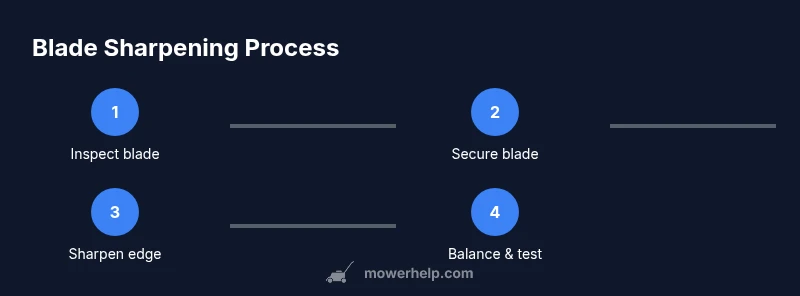
Begin with a blade inspection to identify any cracks, bends, or heavy wear that would require replacement rather than sharpening. Set your sharpener to the recommended angle for your blade type, typically in the 30–35 degree range for many standard blades. Secure the blade so it cannot move, then make deliberate, even passes along the edge in a consistent direction. If the blade has two cutting edges, sharpen each edge evenly to avoid creating an unbalanced cut. Keep the edge cool by pausing to wipe away heat and metal fragments. After sharpening, deburr the edge with a fine file or stone to remove burrs and ensure a smooth, safe finish. Finally, inspect for uniform edge height and ensure there are no burrs that could throw off balance during use. Adopting a measured, patient approach is key to achieving a professional result.
Maintenance after sharpening and troubleshooting common issues
Once sharpening is complete, wipe the blade clean and apply a light coat of oil if recommended by the blade manufacturer or sharpener instructions. Recheck blade balance using a simple balance test: the blade should remain level when rested on a fulcrum. Reinstall the blade following your mower’s manual, reattach any safety guards, and test with a few light passes on a flat surface before mowing the lawn. If the mower tends to pull to one side, recheck both edges to confirm even sharpening and verify your blade is properly balanced. If you notice new nicks after use, inspect for hidden rocks or debris in the mowing path and consider a quick touch-up if needed. Keeping a routine sharpening schedule helps catch wear early and maintains cutting quality.
Getting the most from your sharpener across blade types
Different blade designs respond differently to sharpening. Mulching blades require a sharp edge that preserves shredding performance, while standard steel blades emphasize a balanced, even edge. High-lift blades benefit from a precise grind along curved contours to maintain suction. Carbide blades may wear more slowly and require gentler grinding to avoid overheating. Always follow the blade manufacturer’s guidance for angle and depth. After sharpening, store your sharpener in a dry place, replace worn guides or wheels as needed, and periodically check blade balance. Regular maintenance not only improves cut quality but also extends mower life.
Tools & Materials
- Safety glasses or goggles(Protect eyes from flying debris)
- Work gloves(Leather or cut-resistant for edge protection)
- Sturdy work surface or bench(Stable, non-slip surface with space for blade movement)
- Lawn mower blade sharpener(Choose based on blade type and compatibility)
- Wrench or socket set(Common sizes: 17mm or 3/4 inch; remove blade bolt)
- Vise or clamp(Keeps blade stationary during sharpening)
- Rag and degreaser(Clean edge and remove grease before sharpening)
- Angle gauge or guide(Helpful for consistent sharpening angles)
- Lubricant (optional)(Light oil for smoother reassembly)
Steps
Estimated time: 60-90 minutes
- 1
Prepare and secure the workspace
Move the mower to a clear area, disconnect power (unplug or remove battery), and lay out protective gear. Check that the blade is accessible and the sharpener is ready. This first step prevents accidents and ensures you have a stable base to work from.
Tip: Double-check that the mower cannot start inadvertently by removing the spark plug wire or battery. - 2
Remove and secure the blade
Use the appropriate wrench to loosen the blade bolt while holding the blade with a rag to avoid cuts. Keep the blade aligned as you lift it away from the mower. Place the blade on the vise or clamp with the edge facing up and accessible for sharpening.
Tip: Always separate the blade from any reactive components and confirm the blade is cool before handling. - 3
Inspect and decide
Look for cracks, bends, or excessive wear. If present, replace the blade instead of sharpening to avoid failure during use. If the blade appears sound, wipe it clean so you can clearly see the edge before sharpening.
Tip: Any sign of cracking means replacement is safer than continuing. - 4
Set the sharpening angle
Configure the sharpener to the recommended angle for your blade (commonly 30–35 degrees). Use the guide to maintain a consistent edge along the entire blade length. Check both edges if you are dealing with a double-edged blade.
Tip: Keep a steady hand and avoid forcing the blade; let the sharpener do the work. - 5
Sharpen one edge, then the other
Run smooth, even strokes along the blade edge, maintaining the chosen angle. Deburr lightly with the sharpener or a fine file to remove any burrs that form during grinding. Do not overheat the edge; pause to let it cool as needed.
Tip: Sharpen gradually and avoid removing excess material in a single pass. - 6
Balance, deburr, and reassemble
Perform a quick balance check on the blade; an unbalanced edge can cause vibrations. If needed, deburr the edge with a fine stone. Reinstall the blade according to your mower’s manual, reattach guards, and tighten the bolt securely.
Tip: A balanced blade improves safety and mowing quality. - 7
Test and cleanup
With the blade reattached, run a few short passes in an unobstructed area to verify cutting quality and balance. Clean the work area, store the sharpener, and wipe down tools before storing.
Tip: If cuts look ragged, recheck edge balance and angle.
Got Questions?
Can I sharpen a lawn mower blade without removing it?
Sharpening is safest and most effective when the blade is removed from the mower and secured. Sharpening while mounted can lead to unstable edges and personal injury.
For safety, remove the blade and sharpen it off the mower.
What angle should I use when sharpening a lawn mower blade?
Most blades are sharpened at about 30 to 35 degrees, but always check the blade manufacturer's specification for the exact angle.
Typically around 30 to 35 degrees, per your blade guidelines.
How often should I sharpen my mower blade?
Sharpen when you notice ragged cuts or increased resistance, and inspect blades regularly as part of routine maintenance.
Sharpen when the cut quality declines or you feel more resistance.
Can I use a bench grinder to sharpen mower blades?
Yes, but monitor heat to avoid temper loss and ensure you maintain a consistent angle to prevent an uneven edge.
A bench grinder can work if you manage heat and angle carefully.
Will sharpening affect blade balance?
Sharpen evenly on both edges and test balance after sharpening to prevent vibrations.
Balance is important—check it after sharpening.
What if the blade is cracked or bent?
If cracked or bent, replace the blade rather than sharpening to ensure safe operation.
If it’s cracked or bent, replace it.
Watch Video
The Essentials
- Safety first: disconnect power and secure the blade.
- Choose a compatible sharpener and maintain a consistent angle.
- Balance and test the blade before mowing.
- Regular maintenance extends blade life and improves cut quality.