How to Use Work Sharp for Lawn Mower Blades
A practical, expert guide to using a Work Sharp system to sharpen lawn mower blades safely. Learn setup, step-by-step sharpening, safety, testing edge quality, and maintenance tips from Mower Help.


With the right setup, you can safely sharpen lawn mower blades using a Work Sharp system. This guide covers preparing the tool, selecting belts, a clear step sequence, safety practices, and how to test blade sharpness before mowing. Following these steps helps you achieve a crisp edge without overheating or damaging the blade.
Why Work Sharp for Lawn Mower Blades
According to Mower Help, using a dedicated sharpening system like Work Sharp can provide controlled metal removal, maintain a consistent bevel, and minimize heat buildup. These advantages help you revitalize dull blades without warping, reducing the need for frequent blade replacements. The approach is especially appealing to homeowners and DIY enthusiasts who want predictable results, a clean cut, and a safer workflow around the mower deck. When properly set up, a Work Sharp system supports the goal of work sharp for lawn mower blades, delivering repeatable edges that improve cut quality and overall mower performance.
Understanding blade sharpness and edge geometry
A sharp lawn mower blade is more than a needle-like edge. It has a defined bevel angle, a clean primary edge, and, ideally, a tiny burr removed in a follow-up pass. Dulling often results in a rounded edge, micro-chips, or a burr that can snag grass rather than slice it. When sharpening, you should aim to restore the original bevel without removing excessive metal, which weakens the blade's temper. This section explains how bevels influence cutting efficiency, how burrs form during grinding, and why even small deviations in angle can lead to uneven cuts or increased resistance in the grass.
Selecting the right Work Sharp setup for mower blades
Work Sharp systems offer different belt types and guide accessories that influence results on mower blades. For blades that are standard straight-edge designs, start with a coarse belt to remove nicks quickly, then progress to medium and fine belts to refine the edge. The goal is to create a uniform edge without overheating any single spot. Use a jig or an alignment guide to keep the blade at a consistent angle along the entire cutting edge. In this context, the phrase work sharp for lawn mower blades becomes a practical goal: controlled material removal, stable angles, and a balanced, durable edge.
Safety first: PPE and setup
Sharpening blades involves sharp edges and rotating equipment. Before you begin, disconnect the spark plug, remove the blade, and secure the mower or the blade in a vise or clamp. Always wear eye protection, cut-resistant gloves, and a long-sleeve shirt to guard against sparks and hot metal. Ensure your work area is dry, well-lit, and free of flammable materials. A clean, stable workspace reduces the risk of slips and accidental contact with the sharp edge. Remember: doing work safely makes the difference between a quick tune-up and a dangerous incident.
Preventing heat damage and preserving blade temper
Excessive heat is the enemy of temper in steel blades. When you grind too aggressively or allow the blade to overheat, the blade can become brittle and prone to cracking. To prevent this, use short bursts, pause to cool the blade between passes, and monitor the surface for a consistent color change rather than deep darkening. The Work Sharp system can be set up to deliver controlled removal with heat dissipation, but you still need to manage pressure and speed. This is a key reason to approach blade sharpening as a series of small, cool passes rather than a few long, intense ones.
How to test edge sharpness and balance
After sharpening, test the edge on a piece of scrap metal or a soft material like a sheet of newspaper to ensure a clean slice, not a torn edge. Gently feel the edge with a gloved finger to detect any burrs, then remove burrs with a light, final pass. Balance is critical for safe mowing: a blade that is heavier on one side can cause vibration, wear on the spindle, and an uneven cut. A quick balance check can be done by finger-feeling the blade while it rests on a soft surface or consulting a balancing guide if your mower model requires it. The goal is a stable, true edge that remains balanced during operation.
Common mistakes and how to avoid them
Common errors include sharpening too aggressively, overheating the blade, failing to remove burrs, and neglecting blade balance. Another frequent issue is rushing the setup and misaligning the blade with the sharpening guide, which yields an uneven bevel. To avoid these pitfalls, take your time, verify the blade’s angle with a gauge, and pause often to check temperature and edge quality. If you notice vibration during mowing, reassess balance and recheck the bevel consistency.
Maintenance routines and long-term care
Sharpening should be part of a broader mower maintenance plan. Regularly inspect blades for chips, cracks, or bends, and rotate blades if you have more than one. After sharpening, wipe away metal shavings, coat the edge lightly with oil to prevent rust, and reinstall with proper torque settings as outlined in your mower manual. Routine checks of the spindle, blade bolts, and deck condition help keep your mower running smoothly and extend blade life. Keeping a clean, sharp edge reduces the workload on the motor and improves cut quality over time.
Tools & Materials
- Work Sharp sharpening system(Stable base; ensure compatible belts for metal grinding)
- Safety eyewear(Impact-rated lenses; wraparound style preferred)
- Cut-resistant gloves(Grip and protection during blade handling)
- Blade removal tool or socket wrench(Appropriate size for your mower blade bolts)
- Bench vise or blade clamp(Secure blade firmly without bending)
- Soapy water or rubbing alcohol(Clean blade before sharpening; remove debris)
- Cleaning rag or paper towels(Wipe debris and dry blade after sharpening)
Steps
Estimated time: 30-45 minutes
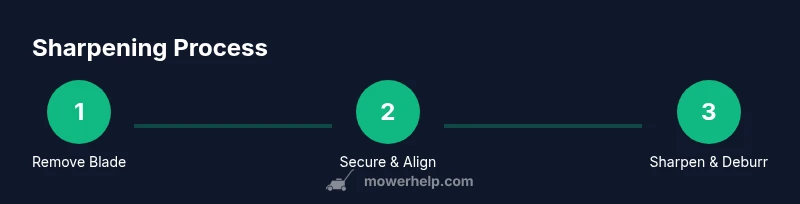
- 1
Remove blade safely
Power off the mower, disconnect the spark plug lead, and remove the blade using the correct socket tool. Keep track of hardware and note blade orientation for reinstallation.
Tip: Always wear gloves when handling a sharp blade; never rely on bare hands to determine edge quality. - 2
Inspect blade condition
Check for cracks, warping, or severe nicks. If damage is extensive, replace the blade instead of sharpening. Minor nicks can usually be repaired with careful sharpening.
Tip: Mark damaged areas with a non-permanent marker to guide your passes. - 3
Secure blade and set angle
Clamp the blade securely in a vise or blade holder. Align the sharpening guide so the edge meets the belt at the intended bevel angle.
Tip: Double-check alignment before turning on the Work Sharp; a misaligned edge will create uneven sharpness. - 4
Sharpen with controlled passes
Make short, light passes along the edge, feeding the blade consistently across its length. Avoid grinding in one spot to prevent heat buildup.
Tip: Cool the blade in short pauses to prevent temper loss. - 5
Deburr and test edge
Lightly deburr the edge to remove any burrs and run a quick test on paper or cardboard to gauge sharpness. Do not over-sharpen; keep the edge true and even.
Tip: A burr indicates you need one more light pass—not a heavy grind. - 6
Balance, reinstall, and test mowing
Reinstall the blade with correct orientation and torque. Start with a dry test on grass or soft material to verify balance and cutting results.
Tip: If you notice vibration or heat after reinstallation, stop and recheck balance and angle.
Got Questions?
Can I use a Work Sharp system on all mower blades?
Most standard steel mower blades can be sharpened with a Work Sharp system if you maintain proper angles and avoid damaging edges. Some specialty blades may require different approaches or replacement.
Most standard mower blades can be sharpened with Work Sharp, as long as you maintain the correct angle and avoid damage.
What belt types and speeds work best for mower blades?
Use a progression from coarse to fine belts to remove nicks and refine the edge. Avoid excessive speed or pressure that can overheat the metal.
Start with a coarse belt to clean up nicks, then move to finer belts to polish the edge.
Should I balance the blade after sharpening?
Yes. An unbalanced blade can cause vibration and wear on the mower spindle. Check balance by placing the blade on a balanced surface or following your mower's guidance.
Absolutely balance the blade after sharpening to prevent vibration.
Is sharpening better than replacing a damaged blade?
If the blade is cracked, bent, or heavily warped, replacement is safer. For dull or nicked blades, sharpening can restore performance when done correctly.
Sharpen if the blade is structurally sound; replace if there are signs of damage.
How often should I sharpen mower blades?
Frequency depends on mowing conditions and blade wear. Inspect blades regularly and sharpen when you notice reduced cutting quality or more friction.
Check blades often; sharpen when cut quality declines.
What safety steps are mandatory when sharpening?
Always unplug or disconnect power, remove the blade, secure it firmly, wear eye protection, and keep hands away from the edge during sharpening.
Unplug, remove the blade, secure it, and wear PPE at all times.
Watch Video
The Essentials
- Wear PPE and disconnect power before work.
- Keep blades cool to protect temper.
- Test sharpness and balance before mowing.
- Follow a step-by-step sharpening sequence.
- Maintain blades and deck to extend sharpness.