Lawn Mower Blade Sharpener Harbor Freight: DIY Guide
A comprehensive DIY guide to sharpening lawn mower blades using Harbor Freight tools. Learn tool selection, safety, step-by-step sharpening, blade balancing, and maintenance for clean cuts and a longer blade life.


With this guide, you’ll learn how to safely sharpen a lawn mower blade using Harbor Freight tools. We cover selecting a blade sharpener, prep and safety steps, even bevel setting and blade balancing, plus reinstall tips. By the end, your mower will cut cleaner with less effort, and you’ll do it confidently—thanks to Mower Help's step-by-step approach.
What a blade sharpener does for lawnmowers
A blade sharpener returns a sharp, even edge to your mower blade, which reduces resistance as it cuts through grass and improves overall mowing quality. A sharp blade produces a clean, suction-free cut, which helps the grass heal quickly and reduces the chance of disease. Regular sharpening also lowers the motor load, which can extend engine life and save fuel. When you use a lawn mower blade sharpener harbor freight option, you’re accessing affordable tools at a retailer many homeowners trust. This article explains how sharpeners work, what bevels are important, and how to pick a device that fits your mower and budget. We’ll also share practical steps, safety checks, and maintenance routines, so you can perform sharpener-based upkeep without calling a pro. According to Mower Help, maintaining a sharp edge is a cornerstone of routine mower maintenance, especially for households with dense or tall grass. By understanding the basics of sharpening, you’ll be ready to decide between simple hand files, grinder attachments, or embracing an affordable Harbor Freight sharpener as a core part of your DIY toolkit.
Why Harbor Freight is a popular source for sharpening tools
Harbor Freight is widely used by DIY homeowners because it offers budget-friendly options without compromising safety and basic performance. For blade sharpening, you’ll typically find manual files, sharpening stones, belt grinders and inexpensive sharpening kits. The price range on these tools is generally lower than premium brands, making it feasible to experiment or maintain several blades without frequent replacements. Mower Help analysis shows that most buyers start with a simple hand file or stone and move up to a powered sharpener only if they regularly sharpen multiple blades or maintain large lawns. The brand’s low entry cost is appealing for first-timers, while the availability of accessories enables gradual upgrades. When selecting a Harbor Freight sharpener, focus on compatibility with common mower blade sizes, ease of use, and the ability to secure the blade safely. If you shop during sales, you can often find a solid mid-range option that balances performance and price. In short, Harbor Freight serves as a practical starting point for homeowners who want to tackle blade maintenance without expensive gear.
Safety and prep before sharpening
Safety comes first when handling sharp blades. Always disconnect the spark plug on gas mowers, remove the battery on electric models, and ensure the mower is on a flat, stable surface. Wear eye protection and cut-resistant gloves to guard against sharp edges and metal chips. Clean the blade and surrounding area so you can see the bevel clearly, and keep a wrench handy to detach the blade from the mower spindle. If you’re using a Harbor Freight sharpener, read the instruction manual for the device’s mounting method and recommended wheel or stone grit. Marking the bevel angle lightly with tape can help you keep the edge uniform, but do not rely on guesswork; check your blade with a marking gauge or a simple bevel guide. Finally, keep children and pets away from the work area to prevent accidents.
Types of blade sharpeners you’ll find
Blade sharpeners come in several forms, from simple manual files to dedicated grinder attachments and bench grinders. Manual files and stones are forgiving and suitable for occasional maintenance, especially on standard 2- to 3-inch bevel blades. Belt grinders or angle grinders with a small grinding wheel are faster, but you must control heat to avoid warping or losing temper in the blade. Harbor Freight carries affordable options that pair with standard blades, and you can choose a device with adjustable angles to maintain a consistent bevel. For most homeowners, a basic handheld sharpener paired with a steady clamp is enough to bring a dull edge back. If you frequently sharpen blades or manage large properties, a small benchtop sharpener with a dedicated blade holder can speed up the process while keeping accuracy high.
The sharpening workflow in practice
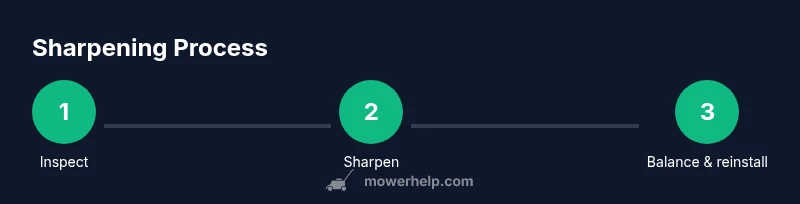
Morning dew, a cool blade, and a steady hand make a difference. Start by removing the blade and inspecting for damage; a nicked or cracked blade should be replaced, not sharpened. Secure the blade in a clamp or bench vise so it won’t move during sharpening, and set your sharpener’s angle to match the original bevel. Light, consistent strokes along the edge remove material evenly; avoid grinding from both sides at once unless your blade requires symmetrical beveling. Frequently wipe away chips and cool the blade if you sense heat buildup. Check progress by feeling a light burr and testing the edge on a blade-friendly test surface. When satisfied with the edge, deburr any burrs with a fine stone, reassemble the parts, and clean up your workspace.
Common mistakes and how to avoid them
Overheating can ruin the blade’s temper, so avoid prolonged grinding in one spot. Uneven strokes create uneven edges, reducing cut quality and potentially throwing off balance. Don’t ignore blade balance; a razor edge can still cause vibration if the other side is heavy. Avoid sharpening if the blade is cracked or bent; in that case, replacement is safer and cheaper in the long run. Finally, don’t forget to clean and oil the blade after sharpening to prevent rust and corrosion and to keep it ready for the next season.
Maintenance after sharpening and blade care
Sharpening is just one part of blade maintenance. After sharpening, balance the blade using a blade balancer, check for nicks or warps, and reinstall it following the correct torque recommendations for your mower model. Clean the blade’s mounting area and the underside of the deck to prevent grass buildup. Oil or coat the edge lightly to prevent rust, and store the sharpening tools in a dry place. Periodically inspect the blade’s mounting hardware to ensure the blade is fastened securely and the spindle is aligned. Finally, keep a note of your sharpening schedule so you can plan replacements before the blade becomes dangerously dull.
Tools & Materials
- Blade sharpener (Harbor Freight option or equivalent)(Manual file guide or sharpening wheel compatible with mower blades)
- Safety glasses(Impact-rated; wrap-around is best)
- Cut-resistant gloves(Grip and protection from sharp edges)
- Wrench or socket set(Remove/install blade safely)
- Bench vise or blade clamp(Secure blade firmly during sharpening)
- Metal file or sharpening stone(Coarse for shaping, fine for finishing)
- Degreaser/soap and water(Clean blade and sharpening tools)
- Blade balancer (optional)(Check balance after sharpening)
- Rags or paper towels(Clean surfaces and wipe oil)
Steps
Estimated time: 40-60 minutes
- 1
Prepare safety and remove the blade
Power down the mower and disconnect the spark plug or power source. Use a wrench to remove the blade from the spindle and keep the blade flat on a stable surface. This prevents accidental starts and minimizes injury risk.
Tip: Set the blade on a padded surface to avoid nicking the edge during handling. - 2
Secure the blade
Clamp the blade securely in a bench vise or dedicated blade clamp so it cannot float during sharpening. A stable setup prevents slips and makes bevel control easier.
Tip: Double-check that the blade is perpendicular to the clamp to avoid angled edges. - 3
Check for damage
Inspect for cracks, bends, or large nicks. If you find any structural damage, replace the blade instead of sharpening. Damaged blades can break during use and cause injury.
Tip: Mark any damaged areas with a marker for easy avoidance during sharpening. - 4
Set the bevel and tool alignment
Match the original bevel angle using the sharpener’s guide or a simple angle shim. Align the sharpening tool with the blade edge so you remove material evenly from both sides if required by your blade design.
Tip: Avoid forcing a different angle; small, consistent adjustments preserve blade geometry. - 5
Sharpen with controlled strokes
Use light, steady strokes along the edge. Keep the blade cool by pausing to wipe away chips and avoid overheating the metal, which can temper the blade incorrectly.
Tip: Work in short passes to maintain heat control and edge symmetry. - 6
Deburr, balance, and reinstall
Finish with a fine stone to remove burrs, then balance the blade using a balancer or a nail test. Reinstall the blade following your mower’s torque specs and reconnect the power source.
Tip: Always recheck sharpness after balancing and before mowing.
Got Questions?
Can I use Harbor Freight tools to sharpen a lawn mower blade?
Yes, Harbor Freight offers affordable sharpeners and stones suitable for mower blades. Ensure tool compatibility with your blade and follow safety steps.
Yes, Harbor Freight tools can sharpen mower blades if you choose the right sharpener and follow safety steps.
How often should I sharpen a lawn mower blade?
Sharpen when you notice dull cuts, increased effort, or uneven grass. Do not wait until the blade is heavily nicked or damaged.
Sharpen when the cut quality declines or the mower requires more effort; don’t wait for severe dullness.
Is sharpening better than replacing blades?
Sharpening is suitable for lightly damaged blades; replace if there are cracks, serious nicks, or bending. Replacement is often safer and cheaper long-term.
Sharpen if the blade isn’t cracked or bent; replace if there’s serious damage.
What safety gear is essential when sharpening?
Always wear safety glasses, cut-resistant gloves, and detach the spark plug or power source to prevent accidental starts.
Wear eye protection and gloves, and disconnect power before starting.
How do I know the blade is balanced after sharpening?
Use a blade balancer or the nail test to confirm even weight. Rebalance if one side is heavier before reinstalling.
Balance it on a balancer or nail test and adjust as needed.
Can I sharpen a blade while it’s still mounted on the mower?
No. Always remove the blade and secure it before sharpening. On-mower sharpening is unsafe and can damage the mower.
Do not sharpen while the blade is on the mower; remove it first.
Watch Video
The Essentials
- Sharpen blades evenly to maintain balance and mowing efficiency.
- Choose the right Harbor Freight sharpener for your blade size and budget.
- Always prioritize safety and blade condition before sharpening.
- Balance and deburr after sharpening for best results.