Lawn Mower Blade Sharpening: A Complete DIY Guide
Master lawn mower blade sharpening with a safe, repeatable process. This guide covers tools, methods, safety, and maintenance to keep your mower cutting cleanly and efficiently.


Sharpening lawn mower blades restores cutting efficiency, reduces engine strain, and yields a cleaner, healthier cut. This guide provides safe methods, the right tools, and a repeatable process that works for most mower brands. By following the steps, you’ll extend blade life and keep your lawn looking neat all season.
Why blade sharpening matters
According to Mower Help, a dull lawn mower blade struggles to slice grass cleanly, tearing blades instead of cutting. This creates ragged edges that stress the engine and require more fuel. Regular sharpening maintains mowing performance, reduces clumping, and improves the lawn’s overall health. When you compare sharp blades to dull ones, you’ll notice faster mowing, less effort, and a noticeably better finish. For homeowners, sharpening is a cost-effective way to extend mower life and reduce maintenance costs over a season or two. As you sharpen, keep the blade’s original bevel; removing too much metal changes balance and cut quality, so work gradually and check frequently.
Brand context: The Mower Help team notes that consistent blade edge maintenance is a cornerstone of effective mower maintenance and performance. Treat blade care as a routine task, not a one-off fix, to sustain peak cutting results throughout the year.
Blade geometry and cutting action
Most mower blades use a beveled edge designed to slice through grass rather than crush it. When sharpening, you must respect the existing bevel angle rather than attempting to re-create a new angle from scratch. Maintaining a uniform angle along the full cutting edge ensures clean cuts and reduces the chance of grass tearing, which can invite disease and thatch buildup. After sharpening, inspect the edge for a crisp line with no nicks. A small nick can throw off balance and vibrate the mower, so address any imperfections before reattaching.
Understanding blade geometry also helps you diagnose issues. If you notice uneven wear on one side, your blade may have struck a hard object or the mower deck might be dragging. In that case, remove the blade for inspection, deburring, and possible realignment before mowing again.
Tools & safety basics
Sharpening requires protective gear and the right tools to avoid injuries. Before you begin, disconnect the spark plug on gas mowers (and the battery on electric models) and wear cut-resistant gloves and safety glasses. A stable work surface with a vise or clamps is essential so the blade doesn’t move while you work. Keep a clean workspace, use a marker to track your sharpening progress, and make sure you have a way to dispose of metal shavings safely. If you’re unsure about the blade’s condition, it’s safer to replace it rather than risk an imbalanced or damaged edge.
Safety cannot be overstated: never attempt to sharpen a damaged or cracked blade, and always work away from your body.
Choosing sharpening method: file, stone, or grinder
There are several ways to sharpen a mower blade, and each method has trade-offs. A hand file or sharpening stone is the safest option for preserving the bevel and gives you precise control. A bench grinder or angle grinder can speed the job, but it requires careful handling to avoid removing too much metal or overheating the edge. If you use a grinder, apply light, even pressure and cool the blade frequently to prevent temper loss. For most DIYers, starting with a file and a medium-grit stone provides a good balance of control, accuracy, and time.
If you plan to switch methods, practice on an old blade first to get a feel for how much material to remove and how to maintain a consistent angle. Remember: the goal is a sharp, balanced edge that creates a clean cut rather than a rough scrape.
Common sharpening mistakes to avoid
A frequent mistake is oversharpening one side, which creates an imbalanced blade and vibrations. Another is changing the bevel angle mid-edge, which can weaken the edge and reduce life. Some DIYers forget to deburr the edge after sharpening, leaving micro-burrs that dull quickly. Overheating the edge from grinding can temper the metal and weaken the blade. Finally, reinstalling a dull or bent blade is unsafe and invites further damage to the mower and the lawn.
Take your time, check balance, and confirm there are no nicks or irregularities before you reinstall.
Maintenance after sharpening
After sharpening, clean the blade to remove metal shavings and oil. Reinstall the blade following the manufacturer’s torque specs and ensure the blade is balanced. A simple balance test—hang the blade on a nail through the center hole—can reveal minor imbalances. If you detect vibration after installation, recheck alignment and torque. Keeping a regular sharpening schedule aligned with mowing frequency helps sustain cutting quality and mower longevity. When in doubt, consult your mower’s manual or a repair professional.
Authoritative sources and further reading
For safety and maintenance best practices, you can consult university extension resources and government safety guidance. For example:
- https://extension.umn.edu/yard-and-garden-care
- https://extension.illinois.edu
- https://www.osha.gov
These sources offer general tool safety guidelines and maintenance reminders that complement home sharpening steps and help you stay compliant with safety standards. Using trusted references supports better, safer DIY work.
Quick recap on technique and safety
Sharpen with a steady hand and a maintained bevel. Use protective gear, a secure vise, and a clean workspace. Choose a method you’re comfortable with—file or stone for control, grinder with caution for speed—and always verify balance after sharpening. With consistent practice, your mowing sessions will be cleaner, faster, and safer.
Tools & Materials
- Workbench or sturdy worktable(Stable surface with non-slip mat)
- Bench vise or clamps(Secure blade firmly during sharpening)
- Wrench or socket set(To remove blade nut or bolt)
- Cut-resistant gloves(Protect hands from sharp edges)
- Safety glasses(Eye protection against metal shavings)
- Flat file or triangular file(Coarse bevel shaping)
- Sharpening stone (coarse to fine)(70-2000 grit range depending on method)
- Coolant or water(Keep metal cool during grinding (optional))
- Marker or paint pen(Mark edges to track progress)
- Torque wrench (per mower spec)(Tighten blade to spec after reinstalling)
- Rag or brush(Clean shavings and debris after sharpening)
Steps
Estimated time: 60-90 minutes
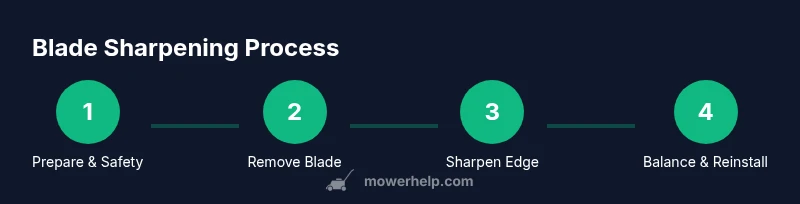
- 1
Prepare and safety-check
Power off the mower, disconnect the spark plug (gas models) or unplug the battery (electric models). Put on gloves and safety glasses. Move to a stable work surface and clear the area of debris.
Tip: Double-check that the spark plug cap is removed and the blade cannot move. - 2
Remove the blade safely
Use the correct wrench to loosen the blade nut. Note the blade orientation for reinstallation, then remove the blade and set it on a flat surface.
Tip: Keep the blade the same way it came off to preserve balance. - 3
Secure and inspect
Clamp the blade in a vise with the flat side facing up. Inspect for cracks, bends, or excessive wear. If damaged, replace rather than sharpen.
Tip: A damaged blade can be dangerous to sharpen and re-install. - 4
Choose sharpening method
Decide between a hand file/stone or a bench grinder. If you’re new to sharpening, start with a file or stone to control metal removal and maintain the bevel.
Tip: Use light, controlled strokes to avoid removing too much material at once. - 5
Sharpen the edge
Maintain the existing bevel and work along the entire cutting edge. Do not create a new bevel; light strokes ensure a sharp, durable edge. Check frequently for flatness and symmetry.
Tip: Wipe away filings often to see the true edge. - 6
Deburr and balance
Remove burrs with a fine stone or light file. Check balance by placing the blade on a nail; if it tilts, adjust or re-check.
Tip: Balanced blades cut cleaner and vibrate less during use. - 7
Reinstall with correct torque
Reattach the blade keeping the original orientation. Tighten to the manufacturer’s torque spec using a torque wrench if available.
Tip: Do not overtighten; overtightening can bend the blade or mount. - 8
Test cut and clean up
Reattach ignition, start the mower, and perform a light test cut. Check for vibrations and listen for abnormal sounds. Clean the workspace and store tools safely.
Tip: If you notice wobble, stop and re-check balance and mounting alignment.
Got Questions?
Do I need to balance a lawn mower blade after sharpening?
Yes. A balanced blade reduces vibration, prevents deck wear, and produces a cleaner cut. Use balance tests or a simple nail method to verify.
Yes. A balanced blade reduces vibration and helps your mower cut cleanly. Do a quick balance check after sharpening.
Can I sharpen a blade that is damaged or bent?
If a blade is cracked, bent, or severely worn, replace it. Sharpening a compromised blade can cause breakage and safety hazards.
If the blade is damaged or bent, replace it instead of sharpening.
Is it safer to use a grinder or a file/stone?
A file or sharpening stone offers better control and reduces the risk of overheating. A grinder can be faster but requires careful technique and cooling.
Files are safer for beginners; grinders are faster but need careful handling.
How often should I sharpen lawn mower blades?
Inspect blades regularly; sharpen when you notice ragged cuts or increased mowing effort. Annual or seasonal sharpening is common for many homeowners.
Sharpen when you see ragged cuts or extra effort, typically every mowing season.
Can I sharpen the blade while it’s still mounted?
No. Always remove the blade, disconnect power, and secure the blade before sharpening to prevent injury.
No—remove and secure the blade before sharpening for safety.
What should I do if the blade wobbles after reinstallation?
Stop the mower, recheck blade orientation, mounting hardware, and torque. A wobble often indicates a balance issue or loose mounting.
If it wobbles, stop and recheck alignment and torque.
Watch Video
The Essentials
- Maintain the original bevel when sharpening
- Use a stable, secure setup to avoid slips
- Balance is essential for smooth operation
- Choose a sharpening method you can control
- Verify torque and test cut before final use