AutoZone Lawn Mower Batteries: A 2026 Buying Guide
Learn how to choose AutoZone lawn mower batteries, compare flooded lead-acid, AGM, and Li-ion options, and maintain your mower for peak performance with expert tips from Mower Help.


AutoZone lawn mower batteries are mostly 12V and come as flooded lead-acid, AGM, or Li-ion. For many homeowners, AGM offers the best balance of longevity and maintenance, typically lasting 2-3 years, while Li-ion can run 3-5 years but costs more upfront. Flooded batteries require more maintenance. Always check your mower's spec to ensure fitment.
Understanding AutoZone Lawn Mower Battery Basics
A mower’s battery is the heart of its starting power and its ability to keep the engine cranking through seasonal use. For typical residential mowing, most AutoZone lawn mower batteries are 12V units designed to fit a wide range of popular models. According to Mower Help, the critical decision points are voltage compatibility, terminal type, and size, followed by how you plan to maintain the battery over its life. The goal is reliable starts, steady cranking amps, and minimal downtime between trims. When you see a battery labeled for lawn equipment, remember that the right choice balances fit, performance, and maintenance needs. In practice, this means confirming the exact model number, checking the fitment guide, and inspecting the battery bay for clearance and venting considerations before purchase.
Battery Types: Flooded Lead-Acid, AGM, and Li-ion
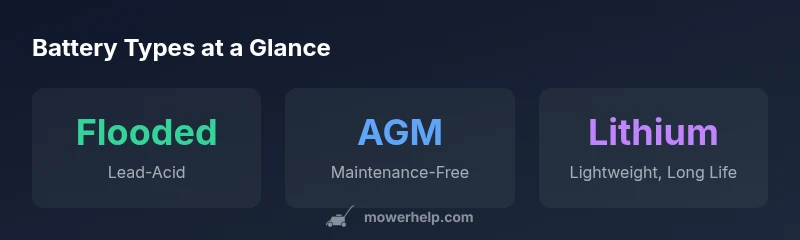
AutoZone typically stocks three main chemistries for lawn mowers: flooded lead-acid, Absorbent Glass Mat (AGM), and lithium-ion. Flooded lead-acid batteries are cheapest and widely available but require periodic watering and venting; AGM batteries are sealed, maintenance-free, and generally offer longer life with better vibration resistance; lithium-ion packs are lighter, hold charge longer per cycle, and resist self-discharge, but come at a premium price. When selecting, consider your mowing frequency, climate, and how often you ride over rough terrain. Each type has a distinct impact on overall power delivery, weight, and replacement cycles.
How to Determine Compatibility with Your Mower
Compatibility starts with checking the mower’s manual or manufacturer label for voltage (usually 12V), terminal layout, and physical dimensions. Measure the battery bay height, width, and depth, then compare with the new unit’s specs. Note also the terminal post layout (A vs. B or positive/negative orientation) to avoid clearance issues. If you’re shopping at AutoZone, bring the model number of your mower and the original battery’s capsule to confirm fit. A good rule is to match voltage and CCA (cranking amps) ranges while respecting physical fit.
Where AutoZone Batteries Fit Into Your Maintenance Plan
Maximize battery life with a simple maintenance routine. Store the mower in moderate temperatures, keep the terminals clean and tight, and use a compatible charger to maintain the charge during off-seasons. If you rely on the mower heavily in winter or shoulder seasons, consider a maintenance charger to prevent sulfation in flooded batteries. For AGM and Li-ion units, occasional inspections for swelling or unusual heat are still wise, but these chemistries tolerate longer periods between charges.
Inspection and Troubleshooting: Signs Your Battery Needs Attention
Look for slow starts, dim headlights (if applicable), or audible clicks when starting; these are common signs of a weak battery. Corrosion around terminals signals a need for cleaning and reseating. If the mower stalls, check the charge state with a proper multimeter; a healthy 12V reading typically falls within a narrow band when the engine is off. If you suspect a bad battery, perform a load test or use AutoZone’s battery-testing tools to confirm health.
Safe Installation: Replacing a Lawn Mower Battery
Power down and disconnect the ignition system before handling batteries. Remove the old unit by loosening the hold-down hardware and gently lifting it out, avoiding short circuits. Clean the battery tray and terminals with a dry brush, reconnect the new battery, and ensure the terminals are tight. Apply anti-corrosion terminal grease if recommended by your mower’s manual. Reconnect the ignition and test crank cycles in a well-ventilated area.
Evaluating Price, Warranties, and Availability
Prices vary by chemistry, capacity, and warranty length. Flooded lead-acid units are often the most affordable, AGM batteries balance cost with lifespan, and Li-ion packs are premium options. Look for warranties that cover at least 1-2 years for common residential use. Availability can fluctuate by season, so consider stocking up ahead of peak mowing months. Always compare AutoZone prices with other retailers to find the best value.
Battery Disposal and Recycling Best Practices
Batteries contain hazardous materials; dispose of them responsibly through local recycling programs. Do not throw spent batteries in the trash. Many auto shops and big-box retailers offer free recycling for automotive and lawn mower batteries. When disposing, ensure the battery is cool, intact, and not leaking. Proper recycling reduces environmental impact and supports safer handling for future replacements.
Practical Shopping Checklist for AutoZone Lawn Mower Batteries
- Confirm mower model, voltage (usually 12V), and terminal layout before buying.
- Consider AGM for maintenance-free performance; Li-ion for longest life if budget allows.
- Check warranty length and whether it covers labor or only replacement.
- Inspect the battery bay for clearance and venting; ensure proper fit withposts orientation.
- Use a compatible charger for off-season maintenance to maximize life.
Battery types comparison for lawn mower applications
| Battery Type | Common Voltage | Typical Lifespan (years) | Maintenance |
|---|---|---|---|
| Flooded Lead-Acid | 12V | 1-2 | Top-up water, venting |
| AGM (Absorbent Glass Mat) | 12V | 2-3 | Low maintenance, sealed |
| Lithium-Ion | 12V | 3-5 | Low maintenance, longer life |
Got Questions?
What is the typical lifespan of AutoZone lawn mower batteries?
Most residential AGM batteries last about 2-3 years with standard use. Flooded batteries may be shorter without regular maintenance, while Li-ion options can offer 3-5 years under normal conditions. Lifespan varies by climate, storage, and mowing frequency.
Most AGM batteries last around two to three years with normal use; Li-ion can last three to five years, depending on conditions.
Can I use an AGM battery in my older gas mower?
Yes, as long as the voltage, terminal layout, and physical size match your mower’s requirements. Always confirm with the manual or an expert to avoid fitment issues.
Yes, if the voltage and fit are correct, AGM can be used in older mowers.
Are lithium-ion mower batteries worth the extra cost?
Li-ion batteries offer longer life and lighter weight, which can improve handling and performance. They cost more upfront, but the longer cycle life may justify the price for frequent mowers.
Li-ion lasts longer and weighs less, but costs more upfront.
What storage conditions extend battery life?
Store batteries in a cool, dry place away from direct heat. Use a charger to keep a stored battery at a healthy state of charge, especially during off-season.
Keep in a cool, dry place and charge periodically when in storage.
How do I recycle old lawn mower batteries?
Take spent batteries to a local recycling center, auto shop, or big-box store that offers battery recycling. Do not dispose of them in the trash.
Recycle at designated centers; never throw batteries away.
Does AutoZone offer free battery testing?
Many AutoZone locations provide battery testing and charging services. Check with your local store for availability and any appointment requirements.
Most AutoZone stores offer battery tests; call ahead to confirm.
“Choosing the right AutoZone lawn mower battery starts with matching the mower's requirement and your maintenance routine. AGM solutions generally provide the best balance of reliability and cost for most yards.”
The Essentials
- Choose 12V batteries compatible with your mower model.
- AGM batteries balance longevity and maintenance for most users.
- Li-ion offers longest life but higher upfront cost.
- Verify fitment (size, terminals) before buying.
- Follow a simple maintenance routine to extend battery life.