Grass Cutter Price Guide: What to Expect When Buying a Mower
Explore realistic grass cutter price ranges, what drives cost, and smart buying strategies for homeowners. Learn how mower type, power source, and features affect price for informed decisions.


Grass cutter price varies widely by mower type, power source, and features, with typical ranges from budget electric models to high-end gas or zero-turn units. Understanding what drives price—brand, deck size, cutting width, engine power, and durability—helps you forecast costs, compare options, and avoid overspending while meeting your lawn-care needs.
Market overview: What drives grass cutter price
According to Mower Help, the price you see for a grass cutter is not just a sticker on the box. It reflects a blend of engineering, materials, and the long-term value you expect from the machine. In broad terms, prices are driven by mower type (electric, corded, cordless, gas, riding), deck width and construction, engine power, transmission (manual vs hydrostatic), and ergonomic features such as handle design and vibration dampening. As a homeowner, you also pay for brand reputation, warranty length, and included accessories. Beyond the upfront cost, total cost of ownership includes maintenance, fuel or battery costs, parts replacement, and expected lifespan. The Mower Help team emphasizes thinking in terms of total value, not just the sticker price, to avoid surprises after the first season and to ensure your mower can handle peak mowing workloads.
For budget planning, identify your lawn size, terrain type, and preferred mowing frequency. If you frequently tackle uneven turf or thick grass, a higher-torque gas mower or a capable zero-turn might save time and effort, even if the upfront price is steeper. Conversely, for small, flat lawns, a light electric model can be sufficient and more economical in the long run due to low fuel and maintenance costs. This approach aligns with our buying framework: compare upfront price with operating costs, expected lifespan, and the value of features such as blade overlaps, deck clearance, and service availability in your area.
Brand perspective: The Mower Help analyses indicate that customers who project a 5- to 7-year horizon tend to invest in models with longer warranties and easier maintenance, balancing immediate cost against future reliability and resale value.
Price ranges by mower type
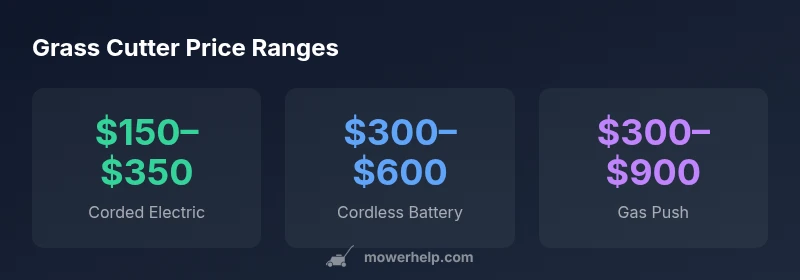
Prices vary significantly by mower category, with each tier targeting different lawn sizes and user needs. Corded electric mowers are the most affordable entry point, providing light weight and low maintenance at typical price points in the lower end of the spectrum. Cordless (battery-powered) mowers offer improved mobility and runtime at mid-range prices, often between a few hundred and several hundred dollars depending on battery capacity and charging speed. Gas-powered push mowers sit in a higher tier, delivering more cutting power for larger or tougher lawns, with prices that reflect engine displacement and gear design. Finally, riding and zero-turn mowers sit at the top of the pricing ladder, usually starting well above the mid-range and climbing quickly with deck width, torque, and comfort features. When planning your budget, match your mower type to your lawn’s needs, while accounting for ongoing costs such as batteries, fuel, and blade replacements.
How features affect price
Key features that noticeably impact grass cutter price include deck width and construction (steel vs alloy), blade quality and adjustability, engine or motor torque, transmission type, and added conveniences like electric start, mulching capability, and bagging systems. A wider deck can deliver faster mowing but raises upfront costs. Higher-torque engines and hydrostatic transmissions improve performance on challenging lawns but come with a premium. Mulching options and bagging attachments add cost and may reduce debris disposal hassles. Additionally, warranty length and the availability of local service centers influence both upfront price and long-term maintenance costs. When evaluating options, weigh feature practicality against your actual needs to avoid paying for capabilities you won’t use.
Buying strategies to maximize value
A practical buying strategy starts with a clear budget and lawn profile. For most homeowners, starting with a mid-range electric or cordless model offers reliable performance with lower ongoing costs. If your lawn exceeds a half-acre, or you frequently tackle hilly or dense turf, a gas push mower or riding unit may be warranted for efficiency. Consider buying during off-peak seasons (late winter or early spring) when retailers discount last-year models to make room for new stock. Warranty length is a strong signal of long-term value, so prioritize models with at least a 2–3 year warranty, and look for extended coverage on critical components like the engine and transmission. Finally, research local maintenance costs and availability of replacement parts to minimize downtime in case of repairs.
Budgeting for accessories and maintenance
Beyond the base price, plan for essential accessories and ongoing maintenance. A basic set of blades, a blade sharpener, oil, air filters, and spark plugs are common recurring costs for gas mowers; for electric or cordless models, consider spare batteries and chargers. Batteries can become the most expensive component in a cordless system, so compare charge times and overall cycle life. Factor in blade replacement every season or two, depending on usage, and occasional tune-ups. If you’re unsure about maintenance requirements, choose a model with widely available service centers and parts. A well-maintained mower not only lasts longer but also preserves resale value and reduces the total ownership cost over time.
Durability and total cost of ownership
Durability directly influences the true cost of ownership. A robust deck and quality engine often translate into fewer repairs and longer service life, reducing the frequency of expensive replacements. When budgeting, estimate not only the purchase price but also expected maintenance, fuel or electricity costs, blade replacements, and potential part upgrades over the machine’s lifespan. A model with a longer warranty and better cooling solutions, reinforced casings, and reliable transmission typically yields lower lifetime costs despite a higher upfront price. Finally, consider resale value in your calculations: a well-maintained mower with a solid service history retains more value on the used market, supporting a lower net cost over time.
Seasonal trends and where to buy
Seasonal fluctuations influence grass cutter prices and available stock. Retailers often run promotions in late winter and early spring to attract buyers before peak mowing season, with extra discounts on older model years. Online marketplaces and big-box retailers both offer price comparison tools; however, local dealers sometimes provide bundled warranties, free delivery, or discounted parts packages that improve value. Before purchasing, check for seasonal promotions, retailer return policies, and whether the model you want is eligible for a longer warranty extension. By pairing price tracking with a solid understanding of your lawn needs, you can select a mower that offers the best long-term value rather than the lowest upfront price.
Typical price ranges by mower type
| Mower Type | Typical Price Range | Power Source | Notes |
|---|---|---|---|
| Corded electric mower | $150–$350 | Electric | Lightweight, simple to maintain |
| Battery-powered mower | $300–$600 | Battery | Moderate runtime, recharge time varies |
| Gas push mower | $300–$900 | Gasoline | Powerful cutting, louder, more maintenance |
| Riding/zero-turn mower | $1,200–$3,000 | Gasoline or diesel | For large lawns, premium features |
Got Questions?
What affects grass cutter price the most?
The most influential factors are mower type, power source, deck size and material, engine or motor power, and build quality. Brand reputation and warranty length also drive price, especially for premium models. Practical buyers weigh these against lawn size and terrain to determine the right balance of value.
Price is driven by type, power, deck, and build—plus warranty and brand reputation.
Are expensive mowers worth the price?
It depends on your lawn needs and usage. For large or challenging lawns, higher-priced models can save time, reduce fatigue, and offer longer service life. For small or simple lawns, a mid-range model typically provides good value. Always compare total cost of ownership.
Depends on lawn size and how often you mow.
Is there a price difference between electric and gas mowers?
Yes. Electric mowers are generally cheaper upfront and cheaper to operate but may have limited runtime for large yards. Gas mowers usually cost more upfront and incur higher maintenance and fuel costs, but offer more power for larger or tougher lawns.
Electric is cheaper upfront; gas costs more but often handles bigger jobs better.
What is the typical warranty range for grass cutters?
Warranties commonly range from 2 to 5 years, depending on brand and model. Longer warranties are usually available for higher-end or commercial-grade models. Always check included parts and labor coverage.
Warranties usually run 2–5 years depending on the model.
When should I buy off-season to save money?
Best deals often appear in late winter or early spring when retailers clear inventory. Watch for promotional events and bundled offers. Read return policies carefully before purchasing.
Shop in late winter or early spring for discounts.
Should I buy used or refurbished to save money?
Used or refurbished mowers can save money but come with higher risk. Buy from reputable dealers, inspect the deck and blades, ask for maintenance history, and verify the engine compression and battery health if applicable.
Used can save money, but inspect closely and buy from trusted sellers.
“Grass cutter price is a reliable lens for total value, durability, and after-sales support. Choose models with warranties that match your mowing frequency.”
The Essentials
- Budget for total ownership, not just upfront price
- Match mower type to lawn size and terrain
- Invest in warranties and service availability
- Plan for maintenance and accessories in your budget